 Save to Pinterest
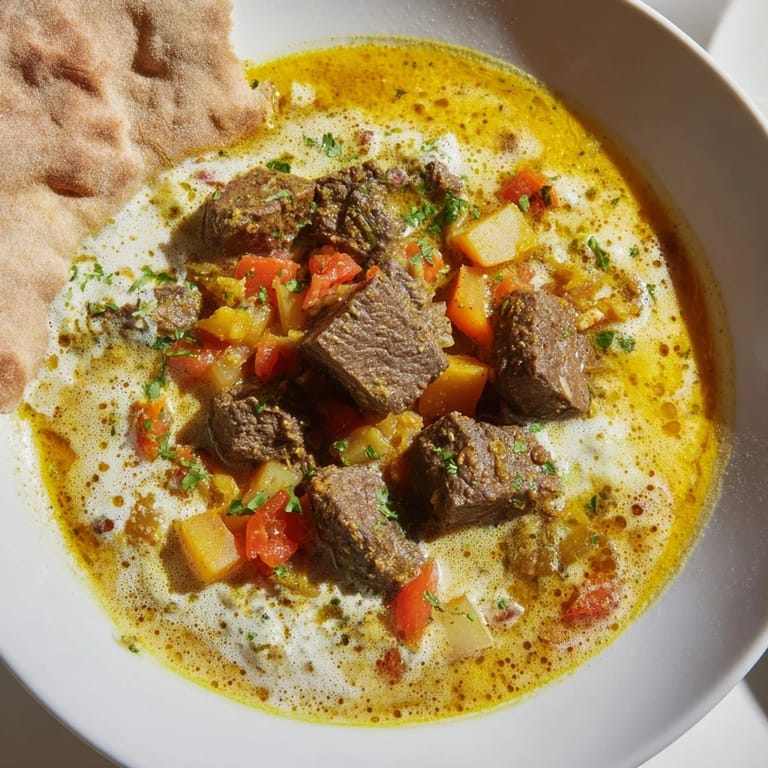
 The first time I tasted Yemeni saltah, I was struck by how it arrived at the table in layers—molten broth, tender meat, soft bread underneath, and that cloud of whipped fenugreek on top like edible silk. My friend's mother in Sana'a assembled it right in front of us, moving with the ease of someone who'd made this dish a thousand times, and I realized then that saltah wasn't just food; it was a ritual of warmth and abundance compressed into a single bowl.
I made this for a group of friends who'd never had Yemeni food before, and watching them discover the interplay of spices, the way the bread soaks up that savory broth, and how the fenugreek adds this unexpected aromatic lift—it reminded me why I love cooking from other cultures. One friend asked if the foam was actually fenugreek, and when I said yes, they kept looking for more, which made me laugh because that's exactly how I felt the first time too.
Ingredients
- Beef or lamb (500 g): Cut into 2 cm cubes so they stay tender through the long simmer; the connective tissue breaks down and keeps the meat moist.
- Vegetable oil (2 tbsp): Use enough to coat the pot generously—this is where your aromatics build their foundation.
- Onion (1 large): Finely chopped onion becomes almost jammy and sweet as it cooks, carrying the depth of the whole dish.
- Garlic (3 cloves): Minced fine so it disappears into the broth rather than staying chunky.
- Tomatoes (2 medium): Fresh tomatoes add brightness; if you only have canned, that works too—just drain excess liquid.
- Green chili (1): Optional but highly recommended; it adds a whisper of heat and herbaceous edge without overwhelming.
- Potato and carrot (1 medium each): Cubed so they soften evenly and absorb the spices throughout cooking.
- Water or beef broth (4 cups): Broth deepens flavor, but water works perfectly fine and lets the spices shine.
- Cumin, coriander, black pepper (1/2 tsp each): These three create the aromatic backbone—warm, slightly earthy, with a gentle pepper bite.
- Turmeric (1 tsp): Gives that golden hue and a subtle earthiness that ties everything together.
- Ground fenugreek (1/2 tsp in stew, 2 tbsp for hulbah): The fenugreek in the stew is subtle; the whipped version on top is where it becomes the star.
- Salt (1 tsp): Taste as you go—meat and broth release their own salt, so add gradually.
- Yemeni flatbread (2 large): Malawah or lahoh is traditional, but pita works if that's what you can find.
- Fenugreek topping ingredients (tomato, cilantro, chili, lemon): These keep the hulbah bright and fresh against the rich, warm stew below.
Tired of Takeout? 🥡
Get 10 meals you can make faster than delivery arrives. Seriously.
One email. No spam. Unsubscribe anytime.
Instructions
- Brown the foundation:
- Heat oil over medium heat and let the onions soften until they're golden and smell sweet—this takes about 5 minutes. Add garlic and chili, let them bloom for just a minute until fragrant, then add your meat cubes and brown them on all sides, which takes another 8 to 10 minutes and creates that deep, savory base you can't skip.
- Build the flavor:
- Stir in your tomatoes, potato, carrot, and all the spices—cumin, coriander, black pepper, turmeric, and ground fenugreek—and let them cook together for about 5 minutes so everything starts melting into each other. You'll see the oil separate slightly and smell that distinctive warm spice cloud that tells you it's working.
- Simmer low and slow:
- Pour in your water or broth, bring it all to a boil, then lower the heat to low, cover the pot, and let it bubble gently for 1 to 1.5 hours until the meat becomes so tender it nearly falls apart and the vegetables are soft enough to break with a spoon.
- Whip the fenugreek magic:
- While the stew simmers, soak your ground fenugreek seeds in cold water for an hour—this softens them completely. Drain away the water, then whisk or beat the soaked seeds vigorously with a fork or small whisk until a light, airy foam forms, which takes surprising energy but is absolutely worth it.
- Fold in brightness:
- Gently fold diced tomato, fresh cilantro, minced chili, lemon juice, and a pinch of salt into your fenugreek foam, keeping it as airy as possible—you want that cloud effect to stay intact.
- Assemble and serve:
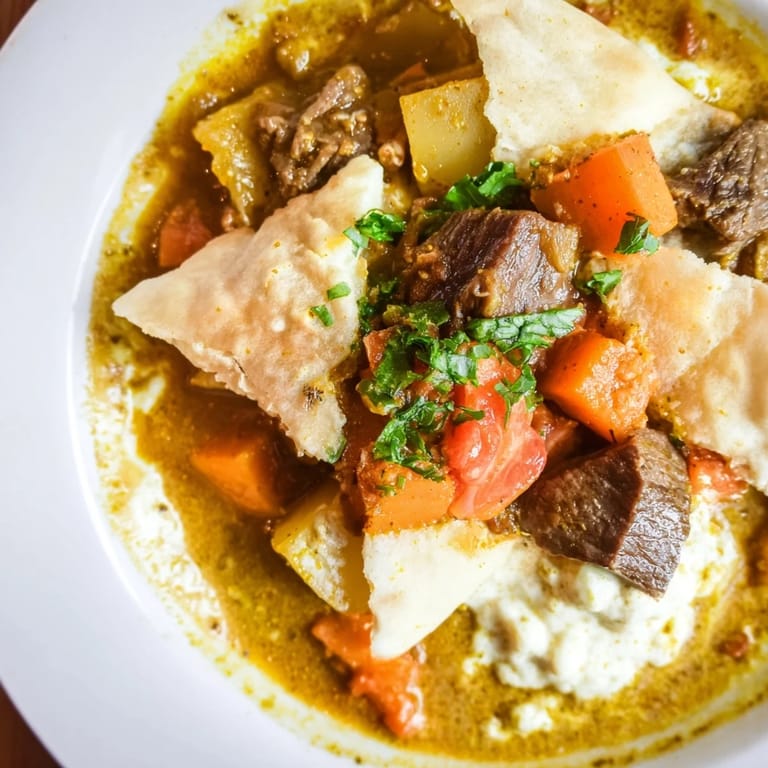
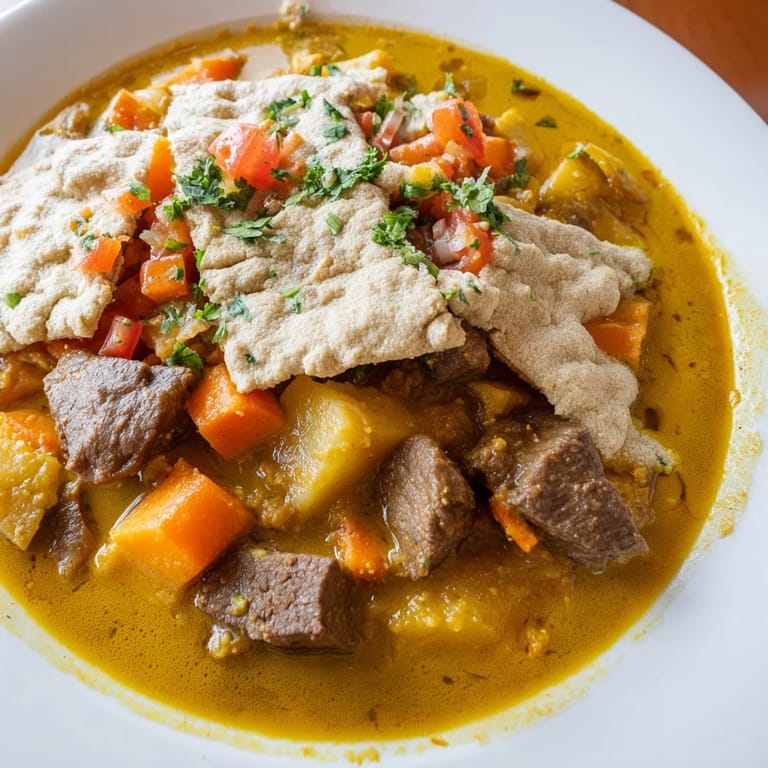
- Tear your flatbread into bite-sized pieces and scatter them in the bottom of serving bowls, then ladle the hot stew over until the bread is soaked but still has some structure. Top each bowl with a generous spoonful of the fenugreek foam and serve immediately so everyone eats it while the heat and textures are at their best.
 Save to Pinterest
 There's something deeply satisfying about watching someone experience saltah for the first time—the way their spoon hits all those layers, the surprise of the fenugreek's unique flavor, the comfort of bread softening into broth. It stopped being just a recipe for me the moment I realized it's how people feed each other in Yemen, not because it's fancy or complicated, but because it's generous and warm.
The Story Behind Saltah
Saltah is Yemen's national dish, found in homes from mountain villages to city kitchens, and it's been that way for generations. The beauty of it is that it uses humble ingredients but treats them with such intention—each spice, each layer, serves a purpose. When bread soaks in broth alongside meat and vegetables, you're not eating separate components; you're eating something that's greater than the sum of its parts, which is maybe why it feels so comforting despite being relatively straightforward to make.
Choosing Your Bread Wisely
The bread matters more than you'd think because it's not just a base—it's a vehicle that absorbs all that spiced broth and becomes something tender and flavorful. Malawah, with its layered, slightly crispy exterior, is traditional and holds up beautifully to the hot liquid without disintegrating. If you're in a place where malawah is hard to find, lahoh works similarly, and in a pinch, pita or even naan will work, though they're slightly different in texture. The key is choosing something sturdy enough to soak without turning to mush but soft enough to eat easily without a fork.
Making the Hulbah Your Own
The fenugreek foam seems intimidating until you actually make it, and then it becomes almost meditative—soaking, draining, whisking until your arm aches slightly and suddenly this light, fluffy cloud appears. Some versions add extra cilantro or mint, others include a dash of ghee for richness, and some people make it spicier by adding more chili. What matters is that you're building something aromatic and textural that contrasts with the deep, slow-cooked warmth of the stew.
- If fenugreek seeds are all you can find, soak and whip those instead—they take slightly longer to break down but the result is just as good.
- You can prep the hulbah ahead and keep it in the fridge, but whip it fresh right before serving so it stays airy and light.
- Taste as you fold in the tomato and cilantro—you want brightness, so don't be shy with the lemon juice.
 Save to Pinterest
 Saltah is the kind of dish that brings people together because it's meant to be shared, mixed, and savored slowly. Make it for people you want to feel cared for, and watch as they discover why it's been a comfort food in Yemeni homes for so long.
Recipe Frequently Asked Questions
- → What cut of meat works best for this stew?
Use beef or lamb cut into small cubes to ensure tenderness after long, slow cooking.
- → How is the fenugreek topping prepared?
Soak ground fenugreek seeds in water for an hour, then whisk until frothy before folding in tomato, cilantro, chili, lemon juice, and salt.
- → Can I substitute the traditional flatbread?
Yes, pita or naan can be used if Yemeni flatbreads like malawah or lahoh are unavailable.
- → What are key spices in the broth?
Cumin, coriander, turmeric, black pepper, and fenugreek create the stew's distinctive aroma and depth.
- → Is there a vegetarian alternative?
Omit meat and add extra root vegetables or beans to maintain heartiness and texture.