 Save to Pinterest
 I'll never forget the moment I first saw a radial symmetry sunburst arranged on a table at a small gallery opening in Barcelona. It wasn't meant to be eaten at first—it was pure art, vegetables fanned out like the rays of the sun itself. A chef friend caught me staring and whispered, "Why not make it delicious too?" That conversation changed how I think about food. Now, whenever I arrange one of these stunning sunbursts, I'm back in that moment, remembering that the most beautiful dishes are often the simplest ones.
The first time I made this for a dinner party, I was nervous. Symmetry felt intimidating, like I'd have to be some kind of geometric perfectionist. But as I started fanning the beets outward, then the carrots, then the watermelon radish, something magical happened—it came together naturally, like the vegetables wanted to arrange themselves this way. By the time I added that creamy center and stepped back, everyone at the table gasped. That moment taught me that elegance isn't about perfection; it's about intention.
Ingredients
- Golden beet: The sunshine of this dish—sweet, earthy, and it won't stain your cutting board like its red cousin. A mandoline slicer is your best friend here.
- Red beet: The dramatic contrast that makes the whole composition work. Slice it just as thin as the golden beet so they fan evenly together.
- Zucchini: Mild and tender, it becomes almost translucent when sliced paper-thin. This is where you really notice the difference between a sharp knife and a dull one.
- Yellow squash: The gentle echo of color that ties the warm tones together. Keep the skin on for visual interest and nutrition.
- Watermelon radish: This is the secret weapon—that shocking pink and white interior creates a moment of surprise in your composition. Ask your grocer ahead of time if they stock them.
- Carrot: Sweet, cheerful, and the structural hero that holds its shape beautifully when sliced thin.
- Goat cheese: Tangy and creamy, it's the flavor anchor in the center that brings everything together. Room temperature is key—it'll crumble better and taste less harsh.
- Crème fraîche: The silky binder that makes the cheese spreadable and luxurious without being heavy.
- Extra-virgin olive oil: This deserves respect—taste it before using. A fruity, good-quality oil makes all the difference in the final dressing.
- Lemon juice: Fresh squeezed, never bottled. The brightness cuts through the richness and wakes up every vegetable.
- Honey: Just enough to balance the acid and add a whisper of sweetness that feels inevitable rather than obvious.
- Chives: Snipped fresh just before serving—they're delicate and they'll turn brown if they sit too long.
- Toasted sesame seeds: Toast them yourself if you can; the aroma and flavor are incomparably better than buying them pre-toasted.
Tired of Takeout? 🥡
Get 10 meals you can make faster than delivery arrives. Seriously.
One email. No spam. Unsubscribe anytime.
Instructions
- Slice everything paper-thin:
- This is where patience becomes flavor. Use a mandoline if you have one, or a very sharp knife. The thinner the slices, the more delicate and elegant the final arrangement. I like to slice the vegetables into a large bowl of cold water—it keeps them crisp and prevents any browning while I work.
- Create your center point:
- Place your small bowl or ramekin in the middle of your round platter. This is your guide, your north star. Everything radiates from this point, so take a moment to make sure it's truly centered.
- Begin the sunburst:
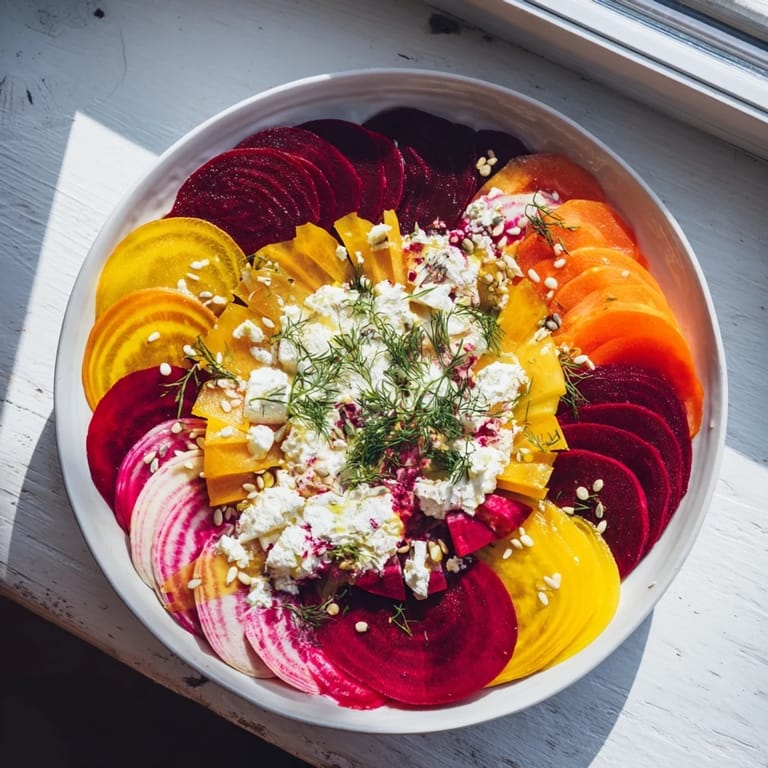
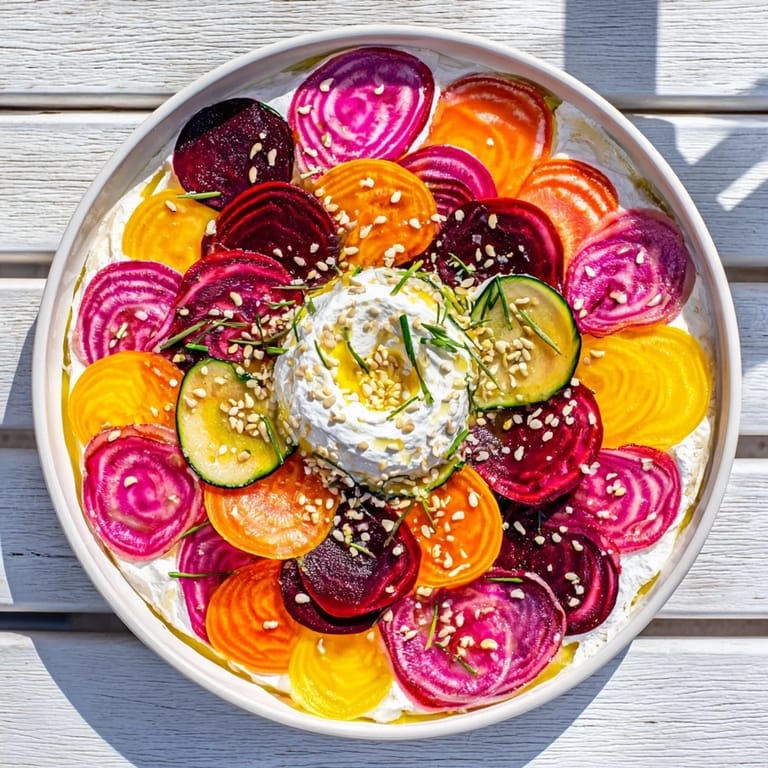
- Start with one color—I always begin with the golden beets. Take a slice, and lean it against the bowl at a slight angle, overlapping just a hair with the next slice. Go all the way around the center in a complete circle. This is meditative work. Feel the rhythm of it.
- Layer your colors:
- Once the golden beets form their ring, move to the next color. Alternate between warm and cool tones if you can—beets, then carrot, then zucchini, then watermelon radish. The overlapping creates depth and tells the story of the vegetable garden.
- Keep it symmetrical:
- The beauty is in the pattern, so make sure each ring mirrors the last. If you mess up a slice, it's not a disaster—just adjust the surrounding slices to balance it out. The sunburst is forgiving if you work with intention.
- Fill the center:
- Gently remove the bowl and fill the empty space with goat cheese mixed with crème fraîche. I like to use a small spoon to create a gentle mound that invites the eye to the heart of the composition.
- Make the dressing:
- Whisk the olive oil, lemon juice, honey, salt, and pepper together in a small bowl. Taste it—it should be bright and slightly sweet, never sharp. This is liquid gold, so use a light hand when drizzling.
- Drizzle and garnish:
- Use a spoon to create thin trails of dressing across the vegetables, following the lines of your sunburst. Scatter the chives and sesame seeds across the whole composition. If you have edible flowers, now is the moment to place them where they'll catch the light.
- Serve with confidence:
- This is best eaten within an hour, while the vegetables are still crisp. Bring it to the table before plating—let your guests see the whole composition before you slice into it.
 Save to Pinterest
 There was a moment during a particularly quiet dinner when someone didn't speak for a full minute after I brought this out. Then they said, "I don't want to eat it. Can we just look at it for a while?" That's when I understood that some foods feed more than your stomach. They feed your sense of wonder, your belief that beauty and nourishment can exist in the same place.
The Art of Arrangement
Before you even pick up a knife, picture the finished plate in your mind. Close your eyes and imagine the colors where they'll be. This mental rehearsal makes the physical work feel less like a chore and more like bringing something to life that was always meant to exist. I learned this from a florist friend who arranges wedding bouquets, and it's changed everything about how I cook. The vegetables aren't just ingredients anymore—they're collaborators in creating something beautiful.
Vegetable Selection and Substitution
The vegetables I've listed are my favorites, but this is your canvas. If you can't find a watermelon radish, use purple radish or even thinly sliced red cabbage. If your farmer's market has heirloom carrots in deep purple or white, grab them. The principle is always the same: look for vegetables that give you color contrast and slice them consistently. The sunburst works because of the repetition and the visual rhythm of alternating hues.
Serving and Storage Wisdom
This is a salad that demands to be eaten fresh, preferably within the hour of assembly. The moment you slice those vegetables, their clock starts ticking. They'll begin to soften and lose that crisp, fresh quality that makes this dish sing. If you're making it for a party, you can prep everything in advance—slice your vegetables, store them separately in cold water, and arrange the sunburst just before guests arrive. That said, if you have leftovers, they're still delicious the next day tossed gently with the dressing and eaten as a more casual salad.
- Store sliced vegetables in ice water in the refrigerator for up to 4 hours before arranging.
- The dressing can be made up to a day in advance—it actually improves as the flavors meld.
- The assembled sunburst is best within an hour, but it can sit for up to 3 hours if kept cool and covered loosely with plastic wrap.
 Save to Pinterest
 Every time I make this, I'm reminded that cooking is half technique and half permission to stop overthinking and just create something beautiful. This sunburst is your invitation to do exactly that.
Recipe Frequently Asked Questions
- → How should the vegetables be sliced for the best presentation?
Use a sharp knife or mandoline to slice the vegetables very thinly to achieve delicate layers that fan out smoothly and create the sunburst effect.
- → Can I substitute the goat cheese in this dish?
Yes, ricotta or feta work well as alternatives, offering different textures and flavor nuances while maintaining the creamy center.
- → What dressing ingredients complement the vibrant vegetables?
A simple mixture of extra-virgin olive oil, fresh lemon juice, honey, salt, and pepper provides a balanced, light drizzle that enhances the flavors without overpowering them.
- → Are there suggestions for garnishes besides chives and sesame seeds?
Fresh herbs like dill or parsley, toasted nuts, or edible flowers add both visual appeal and subtle aroma to the dish.
- → How can I make the sunburst arrangement more colorful?
Incorporate heirloom carrots or thinly sliced cucumber for additional hues, increasing visual contrast in the concentric pattern.