 Save to Pinterest
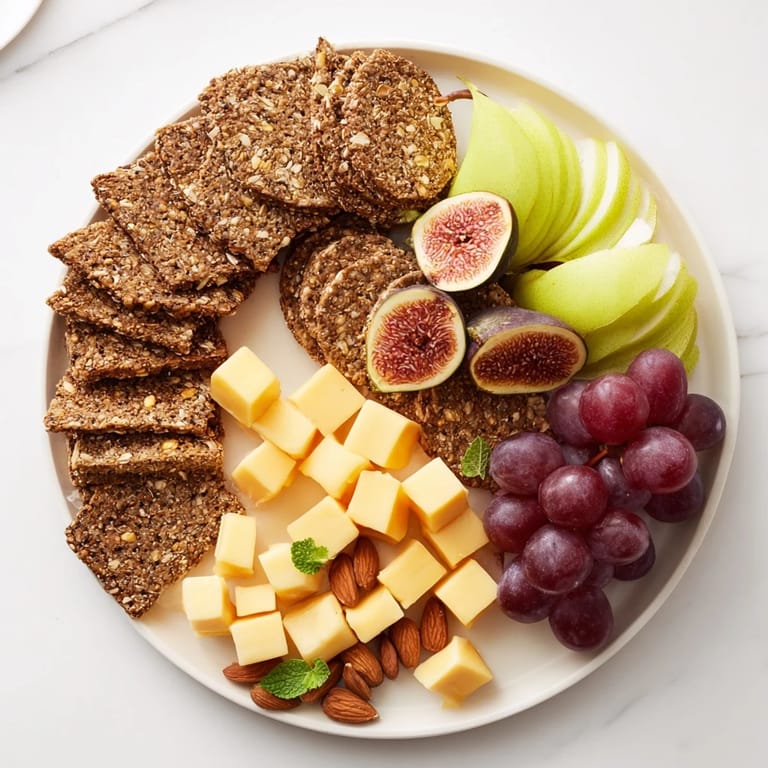
 The first time I assembled a proper harvest platter, I was genuinely nervous about ruining it. My hands kept second-guessing the placement of each fruit slice, each bread wedge, as if there were some secret formula I'd missed. Then my friend wandered into the kitchen, glanced at the chaos of golden breads and jeweled fruits scattered across the board, and said something that stuck with me: "It looks like you're painting a picture you actually want to eat." That's when it clicked. The Harvest Scythe isn't about perfection—it's about capturing a moment of abundance and arranging it with intention.
I remember making this for a September evening when the garden was still overflowing but you could feel autumn lurking. My mother-in-law arrived, and before she sat down, she walked straight to the platter and just stood there, studying it like it was art. She pointed at how the dried apricots echoed the warm tones of the aged cheddar, how the fresh figs nestled between the pear slices like they'd always belonged together. That's when I realized the magic wasn't in any fancy technique—it was in taking five minutes to actually see what you're arranging.
Ingredients
- Baguette, sliced: The foundation—choose one with a crispy crust and an open, airy crumb because it'll hold up better when people break off pieces rather than stay soft and tear.
- Multi-grain crackers: These add unexpected texture and a subtle nuttiness that bridges the gap between bread and cheese without competing with the fruit.
- Seeded rye bread, thinly sliced: Rye has an earthy, slightly tangy flavor that makes the sweeter fruits pop; the seeds catch light and add visual interest.
- Cooked farro or barley, cooled: These grains ground the platter thematically and add a chewy, substantial element that bread alone can't provide.
- Seedless red grapes: They're the jewels—choose ones that feel firm and have that subtle bloom on the skin, which means they're fresh.
- Pears, sliced: Slice these just before assembly so they don't brown, and choose ones that yield slightly to pressure but aren't mushy.
- Apples, sliced: A squeeze of lemon juice keeps them bright and prevents that sad brown oxidation that happens within minutes.
- Dried apricots: Their concentrated sweetness and chewy texture create contrast without needing refrigeration.
- Fresh figs: If you can find them, they're almost fussy in their delicate beauty; halving them shows off their interior, which people find mesmerizing.
- Brie cheese, sliced: The soft, creamy richness melts slightly in the warmth of a hand, becoming almost spreadable—perfect with grapes or rye bread.
- Aged cheddar, cubed: Its sharpness cuts through the fruit's sweetness and adds a savory anchor point to the platter.
- Honey or fig jam: A small bowl becomes an optional dipping station; people instinctively reach for it, drizzle it, and suddenly they're engaged with making their own bites.
- Fresh mint leaves: The brightness and aroma matter more than the flavor here—they signal freshness and life on the board.
- Roasted nuts, almonds or walnuts: Toast them yourself if you have time; store-bought roasted nuts work fine, but you'll taste the difference in the nuttiness.
Tired of Takeout? 🥡
Get 10 meals you can make faster than delivery arrives. Seriously.
One email. No spam. Unsubscribe anytime.
Instructions
- Choose your canvas:
- Find a large wooden board or platter with enough surface that things don't feel cramped—the breathing room is part of the appeal. Wood feels warmer and more rustic than ceramic or slate, which matters for this particular arrangement.
- Map the scythe curve:
- Lay your baguette slices and rye bread in a gentle, sweeping arc across the board, angling them slightly like you're tracing the blade of a scythe through an imaginary field. This isn't rigid—let it flow.
- Scatter the harvest grains:
- Along the inner curve of your bread arc, spread the cooled farro or barley in a thin, loose layer, leaving gaps so you can still see the board beneath. It'll look like a field of grain catching light.
- Weave in the fruit:
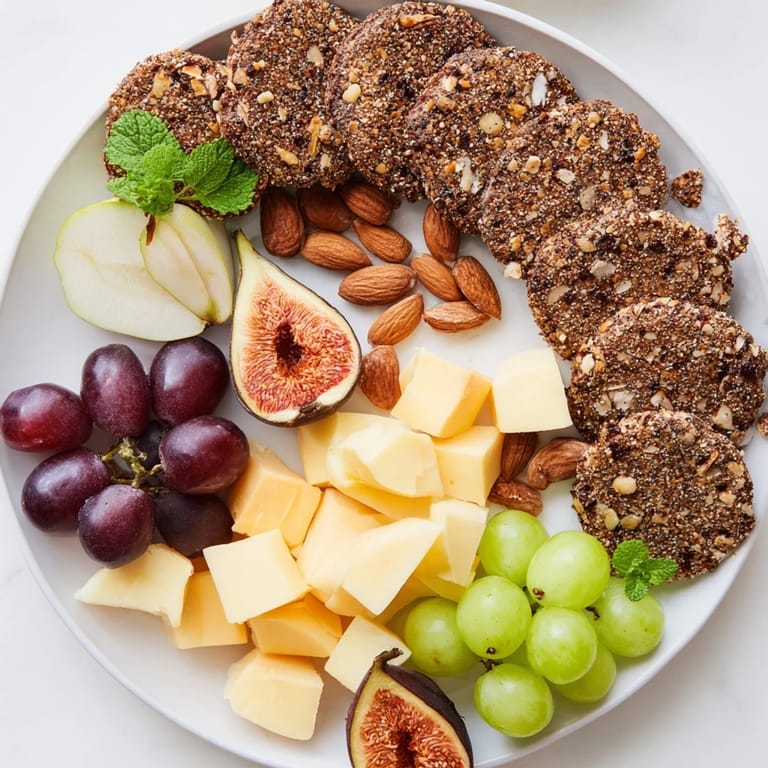
- Fan your apple and pear slices between and alongside the breads, placing grapes in clusters where there's empty space, distributing dried apricots and figs so no one color dominates. Let colors intermingle naturally—there's no "right" pattern.
- Position the cheese:
- Nestle small clusters of brie and cheddar cubes near bread sections so people immediately understand the pairing. Keep them grouped rather than scattered so they feel intentional.
- Add the liquid gold:
- Place small bowls of honey or jam at the edge of the platter where they're visible but not dominating—these become optional enhancements that people discover.
- Finish with garnish:
- Scatter fresh mint leaves and roasted nuts across the top, letting them land where they will rather than forcing them into gaps. This final touch says the platter is complete.
- Serve immediately:
- The moment it's assembled, bring it to the table—fruit oxidizes, bread begins to dry slightly, and you want people to experience it in its full freshness.
 Save to Pinterest
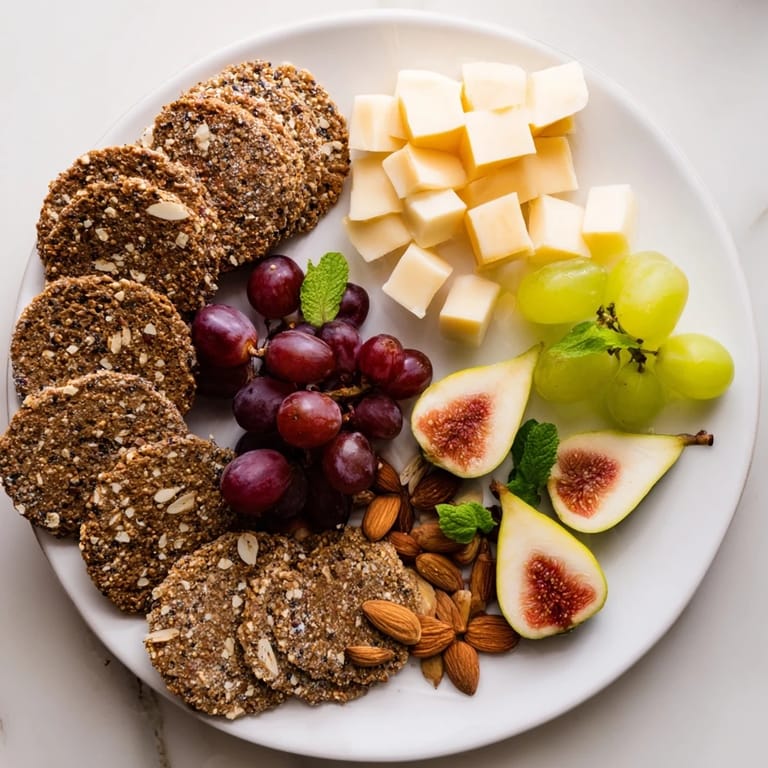
 The turning point for me came when someone's young daughter—maybe eight years old—asked if she could rearrange things. Instead of saying no, I handed her the remaining grapes. She moved pieces around for a solid five minutes, completely focused, treating the platter like a puzzle that mattered. When she stepped back, it was somehow even more beautiful than what I'd done, and everyone's appetite was already piqued before anyone took their first bite. That's when I understood: a shared platter invites people to participate, not just consume.
The Art of Balance
What I've learned through trial and error is that visual balance and flavor balance aren't the same thing. A platter can be symmetrical and boring, or asymmetrical and chaotic—the sweet spot is somewhere in between, where your eye moves naturally from one element to the next. The warmth of aged cheddar should be echoed by the warmth of dried apricots; the earthiness of rye bread should anchor the delicate sweetness of fresh figs. If you taste as you arrange, you'll develop an intuition for where something needs to go.
Timing and Preparation
This recipe is deceptively simple because there's no cooking, but preparation matters enormously. Slice your breads no more than an hour before serving—they'll begin to stale and lose their appeal if they sit longer. If you're making this for an event hours away, assemble just the breads and grains, then add fruit and nuts thirty minutes before guests arrive. The cheese can be sliced up to two hours ahead and kept lightly wrapped in the fridge, but bring it to room temperature before placing it on the board so it regains its texture and flavor.
Variations and Seasons
The beauty of this platter is that it changes with the season and your mood. In summer, swap in berries, stone fruits, and fresh cherries; in autumn, emphasize apples, pears, and nuts; in winter, lean into dried fruits and add pomegranate seeds for color and tartness. I've made this with roasted beets and walnuts when I wanted earthiness, with candied ginger when I wanted a hint of spice, and once with edible flowers scattered across the top just because I wanted to see if it would make people smile. It did.
- Stone fruits like peaches and nectarines work beautifully in summer if you slice them close to serving time to prevent browning.
- Pomegranate seeds add bright tartness and color—scatter them in the final moments so they don't leak juice onto everything.
- Don't be afraid to include unexpected elements like candied nuts, fresh herbs beyond mint, or even a drizzle of good aged balsamic in a tiny dish for those who want it.
 Save to Pinterest
 There's something quietly powerful about feeding people without fuss, about letting them reach and choose and create their own combinations. The Harvest Scythe does that—it's generous without being demanding, beautiful without being pretentious, and ready whenever you are.
Recipe Frequently Asked Questions
- → What breads work best for this platter?
Small baguette slices, multi-grain crackers, and seeded rye bread offer a good balance of textures and flavors ideal for pairing with fruits and cheeses.
- → Can I substitute the grains used?
Yes, farro can be swapped for barley or other similar cooked grains to maintain the nutty, chewy element in the arrangement.
- → How do I keep the fruits fresh and appealing?
Serve immediately after arrangement to preserve freshness; selecting ripe but firm fruits helps maintain shape and color.
- → Are cheeses necessary in this spread?
Cheeses are optional but add creamy contrast and depth. Brie and aged cheddar pair well with the fruits and breads featured.
- → What garnishes enhance flavor and texture?
Fresh mint leaves add brightness while roasted nuts like almonds or walnuts provide crunch and aroma.