 Save to Pinterest
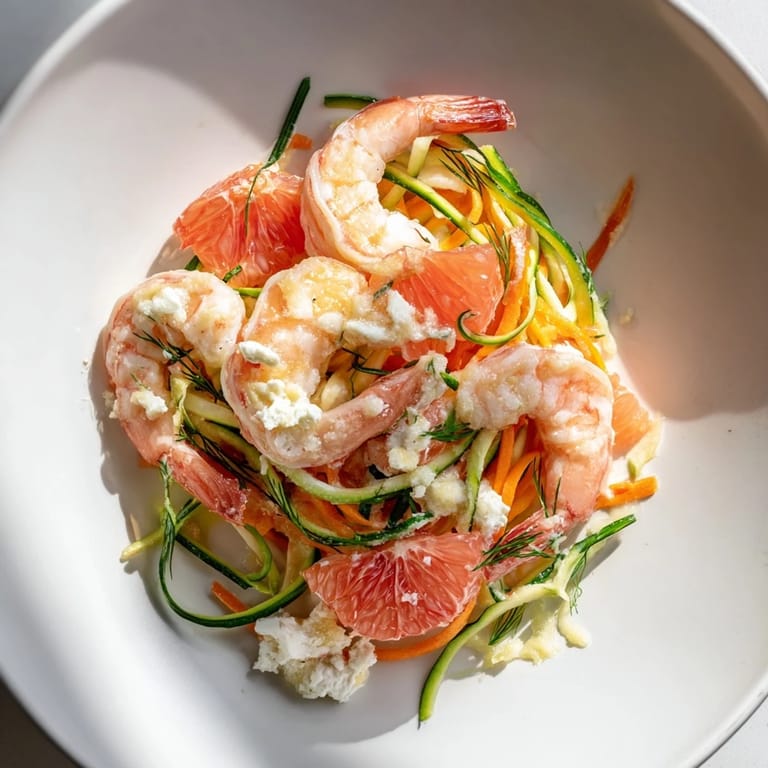
 I discovered this dish on a late afternoon when my friend called, excited about arranging a dinner that felt like vacation without leaving the city. She described wanting something that looked like an underwater garden, and I found myself wandering through the market, drawn to the bright coral-pink shrimp and the weight of citrus in my hands. There's something about cooking food that makes you feel like you're traveling, and this one did exactly that—the kitchen filled with the smell of lemon and butter, and suddenly we were both imagining warm ocean breezes instead of winter rain.
When I finally made it for that dinner, I was nervous about the broiler step because honestly, I've burned things under the broiler before. But watching it come out of the oven with the cheese just starting to bubble and turn golden, the whole platter glowing with color—my friend took a photo before we even sat down, which she never does. That's when I knew this recipe was something special, the kind of dish that turns a regular meal into a memory.
Ingredients
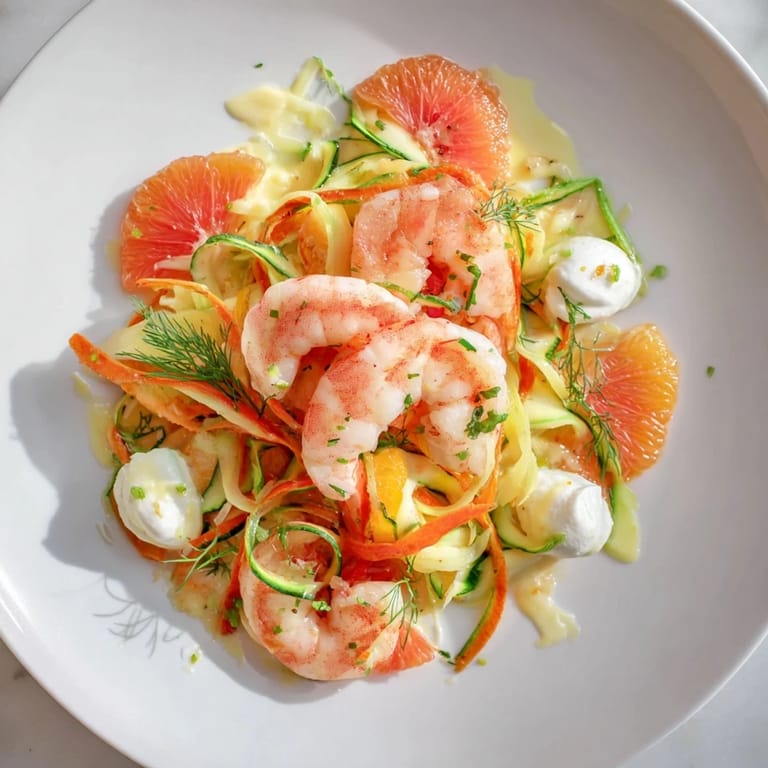
- Large pink shrimp, 500 g: The size matters here—larger shrimp won't overcook in those quick two minutes per side, and they hold their shape beautifully when you arrange them.
- Oranges and pink grapefruit: Segments, not juice; you want the texture and visual pop of whole fruit pieces nestled between the shrimp and vegetables.
- Lemon juice: Brightens everything without adding bulk, balancing the richness of the cheese.
- Gruyère cheese, grated: It melts smoothly and gets those gorgeous brown spots under the broiler, creating little pockets of intense flavor.
- Ricotta cheese: Dollops of it melt slightly and create creamy surprises throughout the platter.
- Zucchini and carrot ribbons: Slice them thin and steam them just barely—they should still have a gentle snap when you bite into them.
- Fresh chives and dill: These finish the dish with brightness and a hint of ocean-like minerality.
- Olive oil: Use a good one; you taste it in the final drizzle.
Tired of Takeout? 🥡
Get 10 meals you can make faster than delivery arrives. Seriously.
One email. No spam. Unsubscribe anytime.
Instructions
- Get Your Oven Ready:
- Turn on your broiler to high and make sure your oven rack is positioned so your serving platter will be about 6 inches from the heat source.
- Season and Sear the Shrimp:
- Toss your shrimp with olive oil, lemon juice, salt, and pepper—don't be shy with the seasoning. Heat your skillet until it's hot enough that a drop of water sizzles immediately, then add the shrimp and let them sit for two minutes without moving them around, just until they turn pink and curl slightly, then flip and cook the other side.
- Prepare the Citrus:
- Gently toss your orange and grapefruit segments with the zest and a tiny pinch of salt in a separate bowl; this will help the flavors meld together.
- Steam Your Vegetables:
- Whether you use a steamer basket or a microwave-safe bowl with a little water, steam the zucchini ribbons and carrot strips for just one to two minutes—you want them tender but still with a gentle resistance when you bite.
- Build Your Coral Reef:
- Arrange the steamed vegetables on your oven-safe platter in an organic, flowing pattern, like you're painting. Scatter the cooked shrimp and citrus segments throughout, nestling them between the vegetables so everything looks intentional but natural.
- Add the Cheese:
- Sprinkle the grated Gruyère evenly over the top, then dot small spoonfuls of ricotta in between—these little white pockets will melt slightly and create wonderful creamy moments. Slide the whole platter under the broiler for two to three minutes until the cheese bubbles and the edges turn golden brown.
- Finish and Serve:
- Pull it out carefully—the platter will be hot—and immediately sprinkle the fresh chives and torn dill over everything, then drizzle with that remaining half tablespoon of good olive oil. Serve right away while the cheese is still warm and the vegetables are at their best.
 Save to Pinterest
 There's a moment right before you garnish it when this dish is just geometric vegetables and melted cheese, and then you add that fresh dill and chives, and it transforms—it becomes alive somehow. That's the moment I realized this wasn't just about feeding people; it was about creating something they'd talk about later.
Why the Broiler Finish Matters
I used to skip the broiler step and just serve it at room temperature, which is fine, but it's missing something essential. The heat that browns the cheese creates a contrast—warm, melted, slightly crispy edges against the cool shrimp and bright cold citrus. That temperature contrast is where the magic happens, and it only takes a few minutes.
Scaling This for a Crowd
The beauty of building everything on a platter is that you can easily double or triple it. I've made this for eight people before by using two platters and staggering them under the broiler—the first one comes out done, rests for a minute while the second one finishes. It looks impressive and doesn't require you to spend the whole meal in the kitchen.
Variations That Work
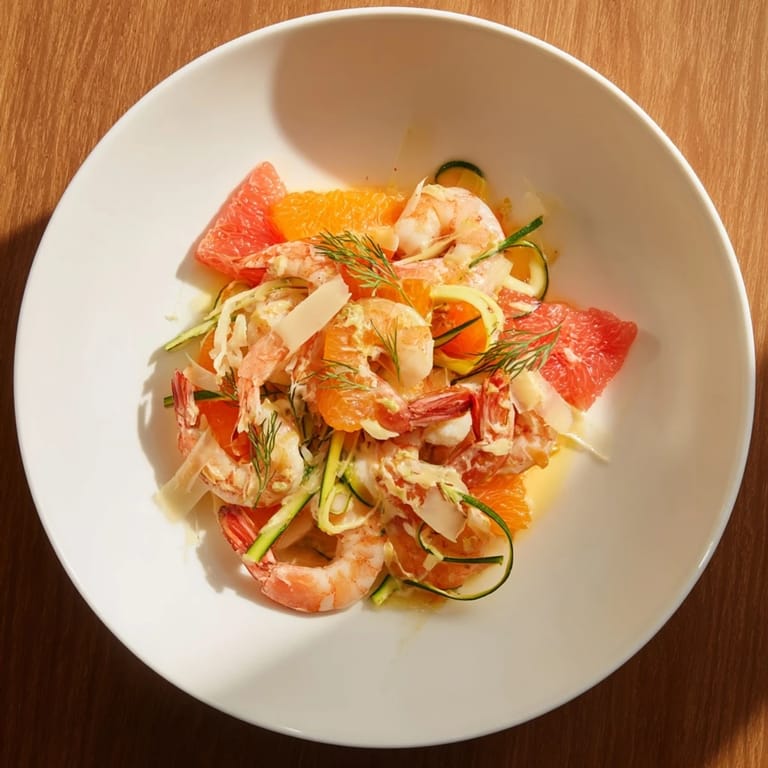
Once you understand the structure, you can improvise. I've added thin slices of watermelon radish for extra color, and pomegranate seeds work beautifully if you want a pop of tartness. If you can't find pink grapefruit, ruby red works fine, and honestly, blood orange creates an even more dramatic color. The Gruyère can be swapped for Emmental or even a fresh burrata if you want something creamier and less browned.
- Fresh herbs like tarragon or fennel fronds add unexpected elegance if you want to shift the flavor slightly.
- A crack of fleur de sel on top right before serving adds sophistication and texture.
- Pair this with a crisp Sauvignon Blanc or dry rosé, and everything suddenly feels like a special occasion.
 Save to Pinterest
 This dish taught me that sometimes the most impressive meals come from understanding a few core techniques and then having fun with color and arrangement. It's simple enough to make on a random Tuesday, but beautiful enough that it feels like celebration.
Recipe Frequently Asked Questions
- → How do I cook the shrimp for best texture?
Sauté shrimp over medium-high heat for 2 minutes per side until just cooked through to maintain tenderness and juiciness.
- → Can I substitute Gruyère cheese?
Yes, Emmental or bubbly mozzarella can be used for a similar melting texture and mild flavor.
- → What vegetables complement this dish?
Thin zucchini ribbons and julienned carrots steamed lightly create a tender base resembling coral, enhancing color and texture.
- → How can I enhance the citrus flavor?
Using segmented oranges, pink grapefruit, lemon juice, and adding zest brightens the dish with a fresh, tangy profile.
- → What wines pair well with this seafood preparation?
Crisp Sauvignon Blanc or a dry rosé complement the shrimp and citrus notes, balancing richness from the cheese.