 Save to Pinterest
 There was a weeknight last winter when I got home late and opened the fridge with no particular dinner plan in mind. A faint earthy sweetness from a tub of miso caught my attention and pulled me toward a salmon fillet I’d almost forgotten. Suddenly I could picture sticky caramelization and hear the sizzle of sesame. Cooking miso glazed salmon with bok choy became an impromptu experiment, but that first mouthful hooked me for good. It’s a dish that seems to bring out the best in even my most hectic evenings.
I made this salmon for my cousin when she visited from out of town; we cooked together with music on and took turns basting the salmon, both amazed at how much the kitchen smelled like toasted sesame and ginger. The memory of leaning over the stove together, stealing bites of crispy bok choy straight from the pan, always makes this dish feel a little celebratory. Moments like those are why I keep this recipe in my back pocket.
Ingredients
- Salmon fillets: Choose fresh, center-cut fillets; I've found that keeping the skin on helps the fish stay moist and easier to lift from the tray.
- White miso paste: Its mellow sweetness gives the glaze its signature savor; use fresh, well-refrigerated miso for the brightest taste.
- Soy sauce: Low-sodium keeps the glaze from getting too salty—taste as you mix to find your balance.
- Honey or maple syrup: Honey makes the glaze glossy and thick, but maple syrup works beautifully if you're out or cooking vegan.
- Rice vinegar: Just a splash; it wakes up all the other flavors.
- Fresh ginger: Grated ginger lifts the glaze and adds warmth; use a microplane to avoid any stringy bits.
- Garlic: A finely minced clove in the glaze and one sliced for the bok choy gives both depth and aroma.
- Sesame oil: Toasted sesame oil is key for both the glaze and the bok choy; its nutty aroma makes the whole kitchen smell amazing.
- Baby bok choy: Halved lengthwise so each leaf stays attached; choose baby bok choy for tenderness.
- Toasted sesame seeds: Sprinkling these over the bok choy at the end adds a delicate crunch.
- Spring onions: Thin slices scattered over cooked salmon make everything look and taste brighter.
- Lime wedges: A quick squeeze is optional, but sharp acidity is the perfect final touch on rich fish.
Tired of Takeout? 🥡
Get 10 meals you can make faster than delivery arrives. Seriously.
One email. No spam. Unsubscribe anytime.
Instructions
- Mix the miso marinade:
- Whisk miso, soy sauce, honey, rice vinegar, ginger, garlic, and sesame oil in a small bowl until it’s smooth, creamy, and just a little shiny.
- Marinate the salmon:
- Lay your salmon fillets in a shallow dish, pour the marinade over, and gently turn them to coat every side; cover and chill for at least 10 minutes to soak in the flavors.
- Preheat and prep:
- Crank up the oven broiler or preheat your oven to 220°C (425°F), and line a baking sheet with parchment so cleanup is easy.
- Arrange and reserve:
- Place the marinated fillets on the tray, saving any leftover marinade in the bowl for basting.
- Roast or broil the salmon:
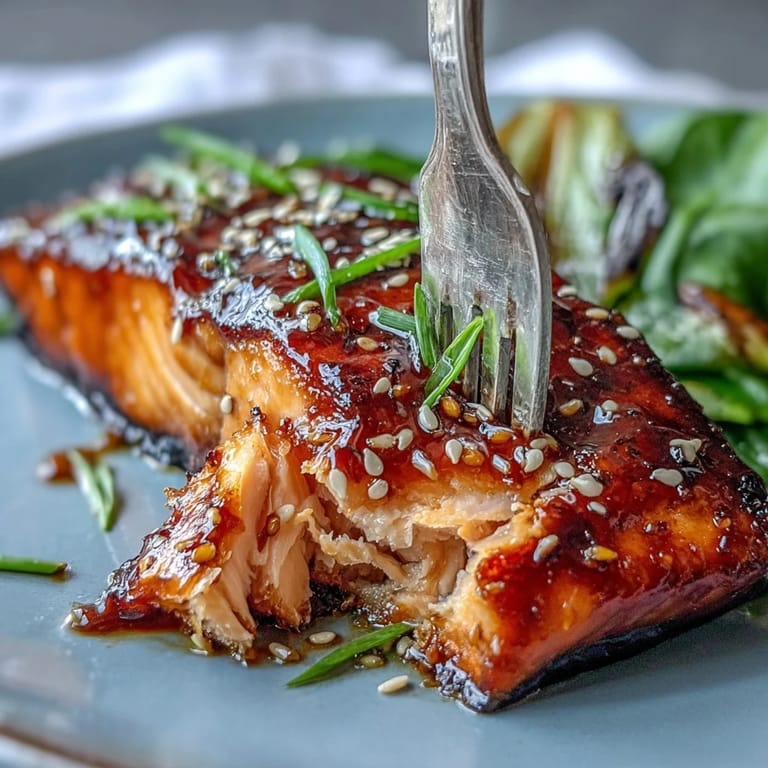
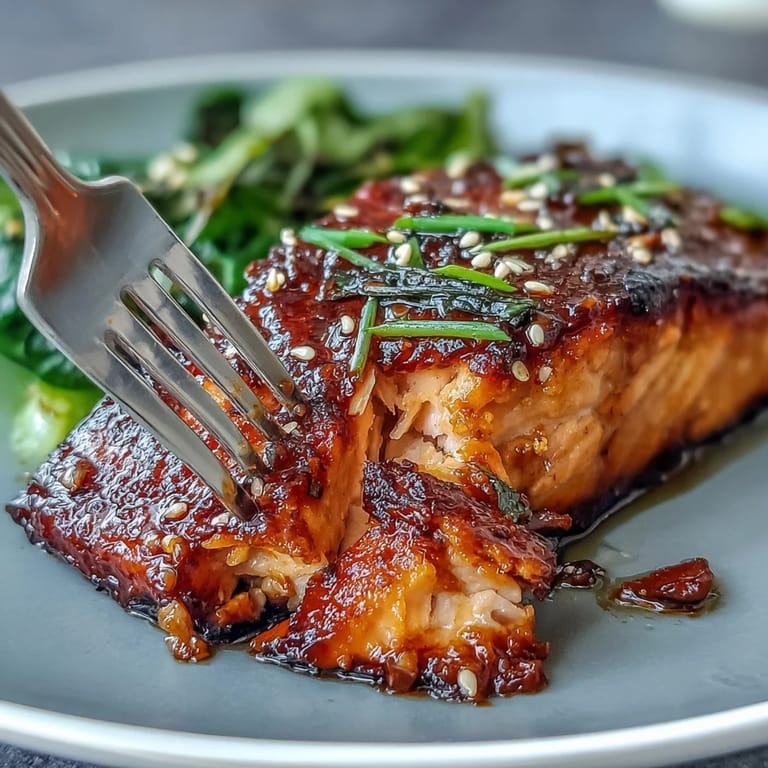
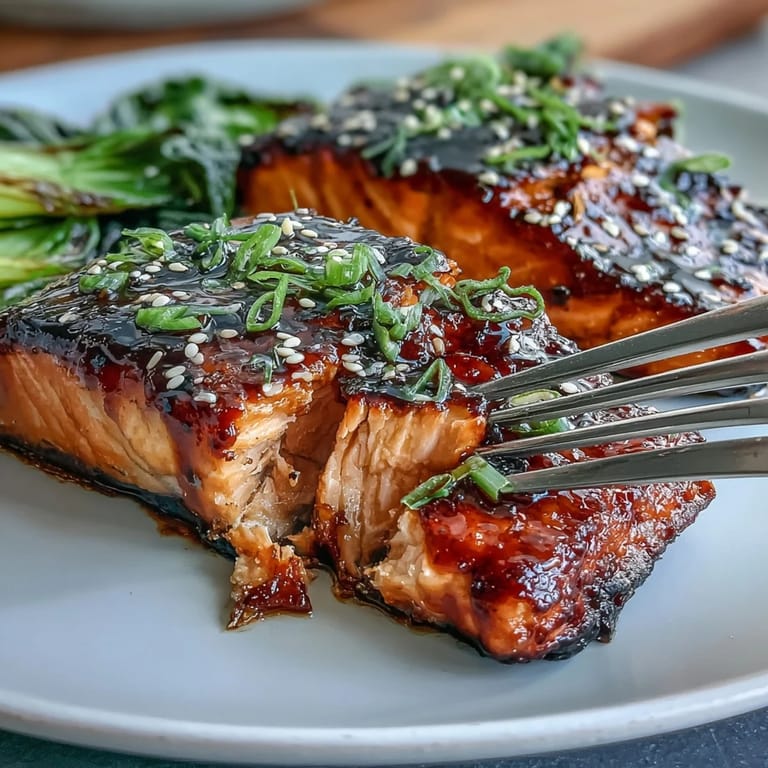
- Slide the tray in and cook for 8–10 minutes, brushing once with reserved marinade until the glaze is bubbling and the tops are caramel-colored.
- Stir-fry the bok choy:
- As the salmon cooks, heat sesame oil in your largest skillet until fragrant, sauté garlic briefly, then add bok choy and stir just until the stems are crisp-tender and the leaves wilted; finish with soy sauce and sesame seeds and toss well.
- Plate and garnish:
- Place each salmon fillet beside a pool of glossy bok choy, scatter with spring onions and sesame seeds, and offer lime wedges for extra zing.
 Save to Pinterest
 I’ll never forget a quiet Sunday when I made this dish for myself, turning on a favorite podcast and savoring the small luxury of plating a meal with just as much care as I would for guests. Sitting down with the rich, miso-glossed salmon and the crisp, sesame-laced greens, the ritual of eating became a little celebration all its own.
What I Learned About Cooking Bok Choy
Bok choy seems straightforward, but the magic comes from not crowding the pan—overlap the halves too much, and they’ll steam instead of sizzle. The quick sear on high heat keeps them vibrant and just a bit crackly at the leaf edges, a contrast I missed the first time I cooked them. Use tongs and move them around so every piece gets its flash in the hot spot.
Pair It With Rice, Or Not
Sometimes I’ll pile everything over steamed jasmine rice to soak up the extra sauce, but even a simple side of brown rice or soba noodles works. Other nights, when I want a lighter meal, I go without—and the salmon and bok choy stand beautifully on their own right. The glaze is strong enough that you won’t miss anything.
Small Touches That Make A Big Difference
Spring onions and an extra sprinkle of toasted sesame seeds aren’t just for show—they add crunch and brightness right at the end. A wedge of lime might seem optional, but the citrus wakes up all those deep flavors so I always add it when I have one handy. For guests, serving right off the baking tray with hot greens alongside makes everything relaxed but still special.
- If the salmon sticks, let it rest for a minute and it’ll lift off easily.
- Leftover bok choy is wonderful tossed into fried rice next day.
- Don’t skip the marinade chill time—it’s worth every extra minute.
 Save to Pinterest
 I hope you enjoy the deep umami warmth and the little sesame-scented surprises in every bite. Here’s to finding something delicious even on the busiest days—sometimes those become the meals you remember most fondly.
Recipe Frequently Asked Questions
- → How long should the salmon marinate?
A brief 10 minutes gives bright flavor; 30–60 minutes deepens the miso glaze. Avoid much longer for delicate fillets to prevent texture changes.
- → How can I tell when the salmon is done?
Look for opaque flesh that flakes easily with a fork and a glossy, caramelized top. For precision aim for about 52–54°C (125–130°F) for medium doneness.
- → Broil or roast—what's best for the glaze?
Broiling gives quick caramelization and a lacquered top; roasting at 220°C (425°F) works too if you prefer gentler, more even cooking. Either method yields a glossy finish if basted once.
- → How long to cook the bok choy?
Sauté halved baby bok choy 2–3 minutes over medium-high heat until tender-crisp. Keep cooking brief so stems remain crunchy and leaves just wilted.
- → Can I make this gluten-free or vegan?
Use tamari or a certified gluten-free soy sauce for gluten-free. For a plant-based option, swap salmon for firm tofu or eggplant and use maple syrup instead of honey.
- → Any tips for serving and pairing?
Serve with steamed jasmine or brown rice to soak up the glaze. A chilled Sauvignon Blanc or dry Riesling cuts through the glaze's richness and complements the sesame notes.