 Save to Pinterest
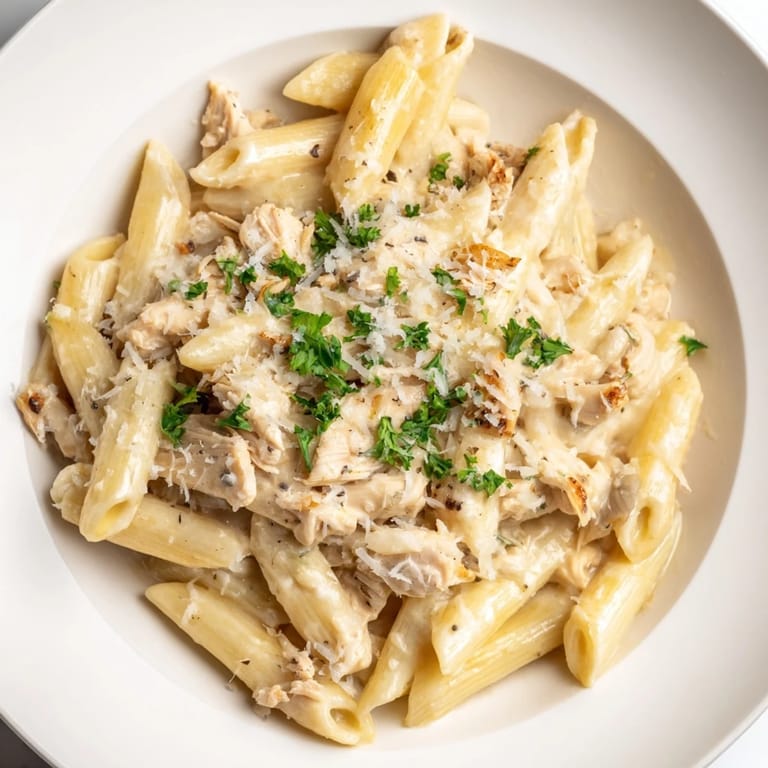
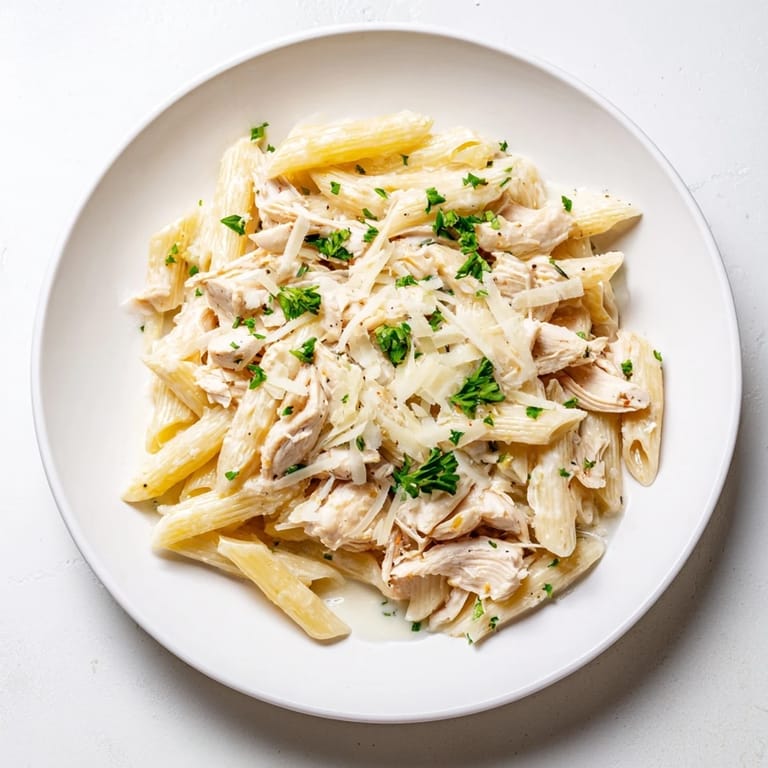
 There's something about a weeknight when the kitchen smells like garlic and cream that just feels like home. I discovered this creamy chicken pasta completely by accident—I had leftover rotisserie chicken, a craving for something indulgent, and about thirty minutes before dinner needed to happen. What started as improvisation became the dish I make whenever I want comfort without the fuss, or when friends drop by and I want them to feel genuinely welcomed at my table.
I made this for my sister on a rainy Tuesday, and she asked for the recipe before she'd even finished her plate. Now it's become our thing—whenever life gets hectic, one of us texts the other that it's a creamy pasta kind of night. That's when I knew this dish had moved beyond just being easy; it had become something that brings people together.
Ingredients
- Penne pasta (400 g): Don't skip the al dente step—you want it to still have a slight bite because it'll soften a touch more when it hits the cream sauce.
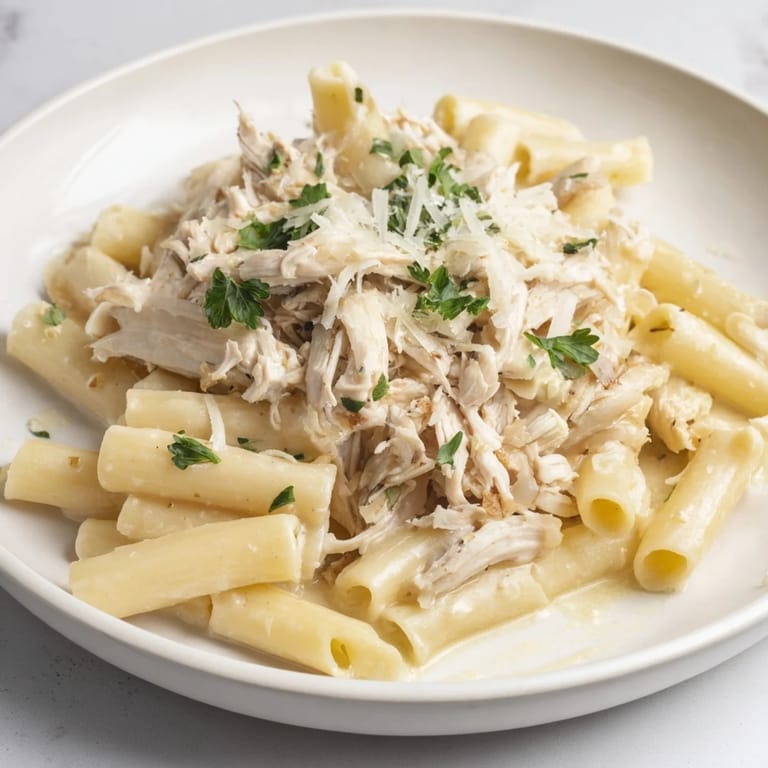
- Cooked shredded chicken (2 cups): Rotisserie chicken from the grocery store does the heavy lifting here; it's already seasoned and tender, saving you a step.
- Unsalted butter and olive oil (2 tbsp + 1 tbsp): The butter brings richness, the olive oil keeps it from browning too fast; together they're the foundation of everything that follows.
- Garlic and onion (3 cloves + 1 small onion): Mince them fine so they dissolve into the sauce and flavor every bite.
- Heavy cream and chicken broth (250 ml + 120 ml): The cream is what makes this silky, but the broth keeps it from tasting one-note and heavy.
- Parmesan and mozzarella (60 g each): Parmesan brings that sharp, salty bite; mozzarella melts smooth and adds body to the sauce.
- Dried Italian herbs (½ tsp): This is about restraint—a pinch of seasoning, not a flavor bomb, so the other ingredients can shine.
- Salt and black pepper: Taste as you go; you'd be surprised how much the Parmesan already adds.
- Fresh parsley and extra Parmesan (for garnish): These aren't just decoration—the fresh parsley cuts through the richness and reminds you there's brightness in every forkful.
Tired of Takeout? 🥡
Get 10 meals you can make faster than delivery arrives. Seriously.
One email. No spam. Unsubscribe anytime.
Instructions
- Get the pasta started:
- Bring a large pot of salted water to a rolling boil—it should taste like the sea. Add penne and cook until it's just barely tender, not soft. Reserve ½ cup of the starchy cooking water before you drain; that liquid is liquid gold for adjusting your sauce later.
- Build the base:
- Heat butter and olive oil in a large skillet over medium heat until the butter froths and smells nutty. Add your chopped onion and let it soften for a couple minutes, stirring occasionally, until it's almost translucent.
- Wake up the garlic:
- Add minced garlic and cook for about a minute—you want to smell it before it turns brown. If it browns, the whole sauce will taste bitter, so stay with it.
- Deglaze and simmer:
- Pour in chicken broth and use a wooden spoon to scrape up any flavorful bits stuck to the pan. Let it bubble gently for two minutes to marry those flavors together.
- Create the cream sauce:
- Lower the heat and stir in heavy cream slowly, letting it warm through without simmering hard. Add Parmesan and mozzarella cheese, stirring gently until they're melted and the sauce is smooth and glossy.
- Season and finish:
- Sprinkle in Italian herbs, salt, and pepper. Add the shredded chicken and cooked penne, tossing everything together until every strand of pasta is coated. If the sauce feels too thick, add a splash of that reserved pasta water and taste again.
- Plate and serve:
- Remove from heat right away so you don't accidentally overcook anything. Top with fresh parsley and a shower of Parmesan, then serve immediately while everything's still warm and creamy.
 Save to Pinterest
 The first time someone asked if I'd actually made this from scratch, I realized how much I'd been underestimating myself in the kitchen. There's real skill in knowing when to step back and let good ingredients speak for themselves.
Why This Pasta Works Every Time
The magic isn't in doing something complicated—it's in understanding why each step matters. The onion softens first to lose its sharp bite, the garlic comes after so it doesn't brown and turn bitter, and the cream comes in last because it's delicate. When you cook this way, even on a Tuesday night, you're not just following instructions; you're making something that tastes like it was made with intention.
Making It Your Own
This dish is forgiving enough to welcome your ideas. I've added a pinch of red pepper flakes and watched how the heat cuts through the creaminess in the best way. Some nights, I'll stir in a handful of fresh spinach at the end, and it wilts right into the sauce and adds a subtle earthiness. The recipe respects those changes without falling apart, which is the mark of a really solid foundation.
Serving and Pairing
This pasta is rich and satisfying on its own, but I've learned that it appreciates a little company. A crisp white wine like Pinot Grigio cuts through the cream and makes every bite feel lighter. A simple green salad with lemon dressing does the same thing, or crusty bread to wipe up the last of the sauce. These aren't requirements—they're just the moments that turn dinner into an experience.
- Add a splash of red pepper flakes with the garlic if you want heat without heaviness.
- Swap heavy cream for half-and-half if you're craving something a touch lighter.
- Sun-dried tomatoes stirred in at the end add a sweet, tangy note that surprises people in the best way.
 Save to Pinterest
 This is the kind of dish that reminds you that good food doesn't require hours or a fancy technique. It just requires you to show up, pay attention, and let yourself enjoy the smell of garlic and cream filling your kitchen.
Recipe Frequently Asked Questions
- → What pasta is best for this dish?
Penne works well as it holds the creamy sauce nicely thanks to its tube shape, ensuring every bite is flavorful.
- → Can I use leftover chicken?
Yes, shredded cooked chicken such as rotisserie or homemade leftovers integrates perfectly, adding convenience and flavor.
- → How do I adjust the sauce thickness?
If the sauce is too thick, gradually add reserved pasta water until the desired consistency is achieved for silky coating.
- → Which herbs complement the sauce?
Dried basil, oregano, and thyme add classic Italian herb aromas, enhancing the overall flavor profile subtly and naturally.
- → What variations can enhance this dish?
Adding spinach or sun-dried tomatoes can bring extra color and texture, while red pepper flakes introduce a subtle heat option.