 Save to Pinterest
 The first time I tasted muhammara, it was scooped onto warm pita at a small restaurant in Beirut, and I was immediately struck by how a handful of simple ingredients could create something so complex and alive. That smoky sweetness from the roasted peppers mingling with the earthiness of walnuts and the sharp brightness of pomegranate molasses felt like tasting a recipe that had been perfected over generations. Years later, I found myself standing in my own kitchen with charred red peppers cooling on a plate, determined to recreate that exact moment. What started as a craving became a ritual I've returned to countless times, always impressed by how quickly this dip transforms from basic components into something that tastes like it took hours to make.
I made this for a dinner party once without telling anyone what it was, just set the bowl out with warm pita and watched people's faces light up as they tasted it. Someone asked if I'd bought it from a specialty shop, and honestly, that moment of being suspected of cheating made the whole effort worthwhile. Now whenever I'm bringing something to share, muhammara is my quiet ace in the hole.
Ingredients
- Red bell peppers (3 large): The foundation of this dip—roasting them transforms their sweetness and adds a subtle char that's the whole point.
- Walnuts (1 cup, lightly toasted): Toast them yourself if you can; store-bought toasted ones lose their edge after sitting around.
- Garlic (2 cloves): Raw garlic keeps the dip bright and sharp without overwhelming the delicate pepper flavor.
- Breadcrumbs (2 tbsp): These aren't filler—they're the secret to the right texture, catching the oil and creating creaminess without any dairy.
- Pomegranate molasses (2 tbsp): This is where the magic lives; it's tangy, slightly sweet, and essential to the whole identity of the dish.
- Extra virgin olive oil (2 tbsp, plus more for drizzling): Use good oil here because you can taste every bit of it.
- Ground cumin (1 tsp): A whisper of warmth that anchors all the brighter flavors.
- Smoked paprika (1/2 tsp): Adds depth without trying too hard.
- Aleppo pepper (1/2 tsp) or red chili flakes: This brings gentle heat and a fruity undertone that's different from regular chili powder.
- Lemon juice (1–2 tbsp): Your balance wheel—add it gradually until the dip sings.
- Salt and black pepper: Don't skip seasoning at the end; it's the difference between good and memorable.
- Toasted sesame seeds (1 tbsp, optional): A final touch that adds nuttiness and visual appeal.
Tired of Takeout? 🥡
Get 10 meals you can make faster than delivery arrives. Seriously.
One email. No spam. Unsubscribe anytime.
Instructions
- Char the peppers until their skin blisters:
- Set your oven to 220°C (425°F), lay the whole peppers on a tray, and roast for 20–25 minutes, turning them halfway through so they char evenly all over. You're looking for dark blistered patches that smell almost burnt—that's where the flavor is hiding.
- Let them steam and slip off their skins:
- Transfer the hot peppers to a bowl, cover it loosely with plastic wrap or a plate, and wait 10 minutes while the steam does the work. The skins will practically fall away when you rub them gently with your fingers under running water.
- Build the base in your food processor:
- Combine the peeled peppers, toasted walnuts, garlic, breadcrumbs, cumin, smoked paprika, Aleppo pepper, salt, and black pepper. Pulse everything until it's coarse and chunky—this is not a smooth paste, not yet.
- Add the tangy and savory elements:
- Pour in the pomegranate molasses, olive oil, and lemon juice, then process until the mixture is creamy but still has texture and character. Taste as you go, adjusting the molasses or lemon to get the balance you want.
- Finish and serve with intention:
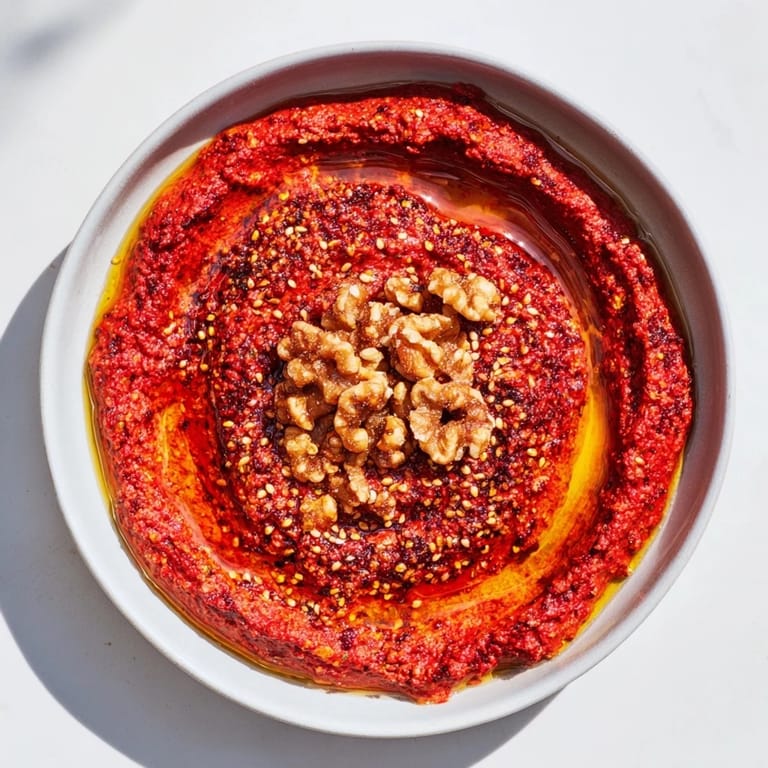
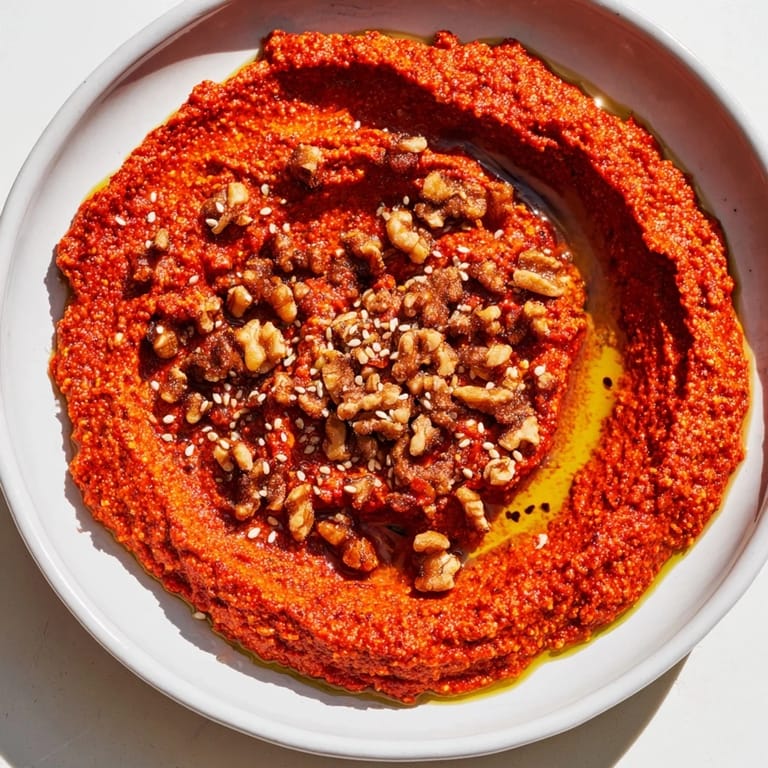
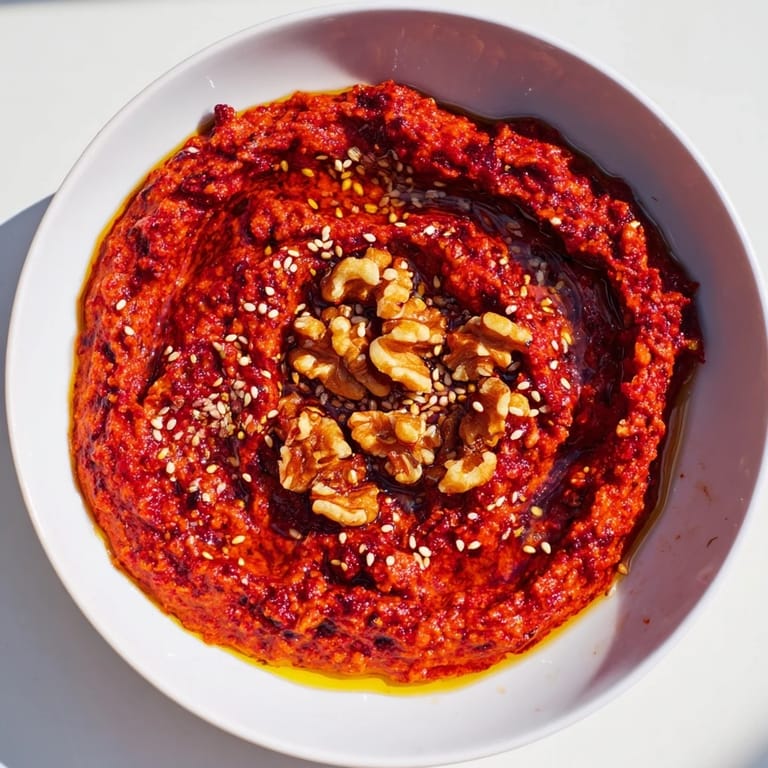
- Transfer the muhammara to a shallow bowl, drizzle generously with more olive oil (it should pool slightly on top), and scatter toasted sesame seeds across if you have them. Serve alongside warm pita, crackers, or crisp vegetable sticks.
 Save to Pinterest
 There's something about serving muhammara that changes how people gather around the table. It invites sharing in a way that more formal dishes don't, and I've noticed conversations naturally slow down and linger when there's a bowl of this in the middle. It's become the kind of dish that people ask for again, sometimes weeks later.
How to Roast Peppers Like You Mean It
The roasting step is where muhammara gets its personality, and it's worth getting right. I used to rush through it, thinking charred was charred, but I've learned that the darker the skin blisters, the sweeter and more complex the pepper becomes. Don't be afraid of dark spots—they're where caramelization happens. The smell will be intense and a little acrid near the end of roasting, and that's exactly when you know you've pushed far enough. If you have access to a gas stove, you can hold the peppers directly over the flame with tongs for an even smokier result, turning them regularly until the skin blackens all over.
Storage and Making Ahead
Muhammara keeps beautifully in the refrigerator for up to five days, and the flavors actually deepen as it sits. I often make a batch mid-week knowing I'll have it ready for unexpected guests or lazy snacking. The olive oil on top acts as a protective seal, so resist the urge to stir it back in—just spoon around it. If you're bringing it somewhere, transfer it to a container without the oil, then add a fresh drizzle when you arrive so it looks just-made and inviting.
Balancing the Layers of Flavor
This dip works because none of its flavors dominate; instead, they take turns revealing themselves. The roasted pepper sweetness comes first, then the nuttiness of walnuts arrives quietly in the background, and finally the pomegranate molasses and lemon juice create a tangy brightness that makes everything else pop. Getting this balance right means tasting as you go and trusting your instincts—if it feels too rich, add more lemon; if it's sharp, a touch more molasses rounds it out. Everyone's palate is different, so there's no shame in adjusting these elements to match your taste. I've made it countless times, and I still tweak it each time depending on the peppers I'm using and what I'm serving it with.
- Start with less pomegranate molasses than you think you need—you can always add more, but you can't take it back.
- Taste the pepper mixture before adding any liquid, and taste again after each addition so you're making decisions, not guessing.
- If you're serving it hours later, hold back a quarter of the olive oil and add it fresh just before people arrive for a shiny, just-made appearance.
 Save to Pinterest
 This recipe has become one of my most reliable ways to bring something meaningful to the table without spending all day in the kitchen. There's real joy in watching people taste something they've never had before and seeing their faces shift when they realize how delicious something so simple can be.
Recipe Frequently Asked Questions
- → What gives this dip its smoky flavor?
Roasting the red peppers until charred creates a smoky taste that forms the base of the dip's flavor profile.
- → Can I use another type of nut instead of walnuts?
Walnuts provide a rich texture and slightly bitter note, but pecans or almonds can be substituted for a different flavor experience.
- → How can I adjust the spiciness level?
Modify the amount of Aleppo pepper or red chili flakes according to your heat preference for a mild to medium spicy kick.
- → Is it necessary to peel the roasted peppers?
Yes, peeling removes the charred skin, ensuring a smooth texture and balanced bitterness in the final spread.
- → What’s the best way to serve this dip?
Serve it with fresh pita bread, crackers, or crisp vegetable sticks as part of a mezze platter or appetizer spread.