 Save to Pinterest
 There's something about the smell of roasting carrots that fills a kitchen with pure warmth. I discovered this soup on a gray October afternoon when my farmer's market haul sat on the counter looking almost apologetic—too many roots, not enough ideas. The maple syrup was an afterthought, something I remembered seeing in another recipe, but it transformed everything into something I now make whenever the days get shorter.
I made this for my sister the night before she moved away, and we sat at the kitchen counter with oversized bowls, barely talking, just eating. She told me later it was the meal she remembered most from that week—not fancy, just honest and warm. That's when I realized this soup does something special.
Ingredients
- Carrots: A full pound ensures that sweet, gentle flavor carries through; I learned to choose ones that feel heavy and smell earthy, not woody.
- Sweet potato: This adds body and natural sweetness that plays beautifully with the maple syrup without making the soup taste dessert-like.
- Parsnip: It brings an almost nutty whisper that deepens the flavor in ways carrots alone cannot achieve.
- Onion and garlic: The aromatic base that builds flavor while the vegetables roast, making the whole kitchen smell like something good is happening.
- Vegetable broth: Use one you actually like drinking, because it becomes the voice of your soup.
- Coconut milk or heavy cream: Either one transforms the texture into something silky; coconut adds subtle tropical notes while cream feels pure and luxurious.
- Pure maple syrup: Not the pancake kind—real maple syrup adds depth and doesn't make the soup taste like dessert.
- Olive oil, ginger, cinnamon: These three together create warmth without making it feel spiced or heavy.
Tired of Takeout? 🥡
Get 10 meals you can make faster than delivery arrives. Seriously.
One email. No spam. Unsubscribe anytime.
Instructions
- Heat your oven and prepare the vegetables:
- Preheat to 400°F and toss your carrots, sweet potato, and parsnip with a tablespoon of olive oil, salt, and pepper. The oil helps them caramelize into something almost sticky and deeply golden.
- Roast until the edges turn dark:
- Spread everything on a baking sheet and roast for 25 to 30 minutes until tender and lightly caramelized at the edges. You'll know it's ready when the kitchen smells irresistible and you can pierce the vegetables easily with a fork.
- Build the aromatic base:
- In a large pot, heat the remaining olive oil over medium heat and sauté your onion until it softens and turns translucent, about 5 minutes. Add minced garlic, ginger, and cinnamon, stirring constantly for just 1 minute until the spices bloom and fill the air with warmth.
- Combine and simmer:
- Add your roasted vegetables to the pot, pour in the vegetable broth, and bring everything to a gentle simmer. Let it cook for about 10 minutes so all the flavors start talking to each other.
- Blend until smooth:
- Remove from heat, stir in the maple syrup and coconut milk or cream, then use an immersion blender to puree until completely smooth and creamy. If using a regular blender, work in batches and let the hot soup cool slightly first.
- Taste and adjust:
- Season with salt and pepper until it tastes like home, whatever that means to you.
- Serve with celebration:
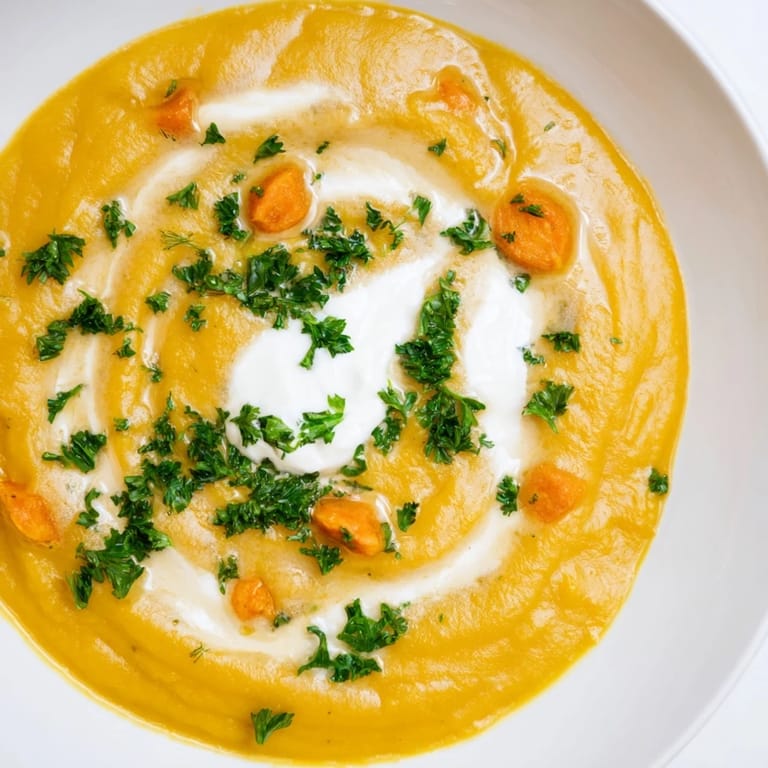
- Ladle into bowls and top with fresh parsley, a dollop of yogurt or crème fraîche, and a thin drizzle of maple syrup if you want richness in every spoonful.
 Save to Pinterest
 There was a moment when I first tasted this soup fully blended and warm, and I realized I had made something that felt both humble and special. It's the kind of dish that makes you understand why people gather around tables.
Why Roasting Changes Everything
The difference between boiling vegetables and roasting them is the difference between a recipe and a memory. When you roast carrots, sweet potatoes, and parsnips, their natural sugars caramelize and concentrate, creating layers of flavor that boiling simply cannot achieve. The oven does the work for you, transforming ordinary root vegetables into something almost sweet, almost nutty, deeply satisfying. This is why this soup tastes like it took hours when it actually took less than an hour total.
The Maple Syrup Truth
I used to think maple syrup in soup sounded too obvious, too autumn-aesthetic, until I tasted how it balances the earthiness of the roots and the warmth of the spices. It's not sweet in a cloying way—it's subtle, almost invisible, acting more like a flavor deepener than a sweetener. The soup would be good without it, but with it, something shifts. It becomes the kind of thing you crave on cold mornings.
Making It Your Own
This recipe is genuinely flexible, and I've learned that flexibility is a gift when you're cooking on a budget or working with what you have. You can substitute butternut squash for the sweet potato, use water with vegetable bouillon if you're out of broth, or skip the cream entirely and let the coconut milk be the richness. The roasting step is where the magic lives, so protect that, but everything else can bend.
- For a vegan version, use full-fat coconut milk and top with plant-based yogurt and a few toasted seeds for crunch.
- If you have heavy cream but not coconut milk, use that—the soup will feel more luxurious and less tropical in flavor.
- Save this soup for when you need comfort more than you need time, because that's exactly what it delivers.
 Save to Pinterest
 This soup reminds me that the simplest ingredients, treated with care and patience, can become something deeply nourishing. Make it for someone you love, or make it for yourself on a day when you need to feel held.
Recipe Frequently Asked Questions
- → What vegetables are used in this soup?
Carrots, sweet potato, parsnip, and onion form the base, roasted to deepen their natural sweetness.
- → How does maple syrup affect the flavor?
Maple syrup adds a gentle sweetness and a rich, warming note that enhances the roasted vegetables.
- → Can I substitute the dairy ingredients?
Yes, coconut milk works well as a creamy, dairy-free alternative, and plant-based yogurt can replace dairy garnish.
- → What spices complement this soup?
Ground ginger and cinnamon add warmth and subtle complexity without overpowering the natural vegetable flavors.
- → How should the soup be served?
Serve hot, garnished with fresh parsley and optionally a dollop of yogurt or extra maple syrup for added richness.
- → Is this soup suitable for gluten-free diets?
Yes, when using certified gluten-free broth and ingredients, this soup is safe for gluten-free diets.