 Save to Pinterest
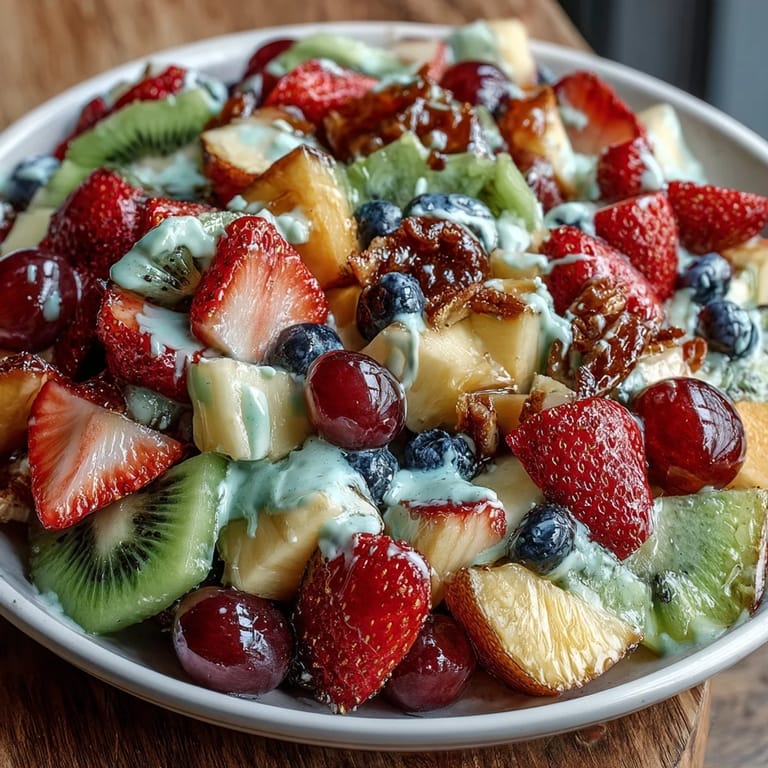
 There's something magical about spring that makes you want to gather people around a table laden with color. I learned this watching my neighbor arrange fruit on a platter one April morning—not in neat, rigid lines, but clustered like a painter's palette, each berry and slice catching the light differently. She drizzled this incredible honey-yogurt sauce into a bowl at the center, and suddenly it wasn't just fruit anymore; it was an invitation. That platter became the thing people actually stopped talking to eat, which felt like the highest compliment a dish could receive.
I made this for a spring baby shower last year, and what surprised me most wasn't how quickly the platter emptied—it was how people lingered. They'd come for the fruit, dip a strawberry in that yogurt sauce, and then just stand there for another conversation. The pastels of the fruit, the soft cream of the yogurt, the way the lemon brightened everything—it all felt celebratory without trying too hard.
Ingredients
- Strawberries: Look for ones that are fragrant and give slightly when squeezed—they should taste sweet, not bland.
- Blueberries: These stay firm and add both tartness and visual drama; buy them a day before if possible so they're at peak flavor.
- Pineapple: The tropical brightness is non-negotiable; cut away the core and those tough bits so each piece is pure sweetness.
- Kiwis: Their electric green cuts through the other colors and adds a slight tartness that keeps the platter from feeling one-note.
- Red grapes: Halving them lets the dipping sauce cling better and makes them feel more intentional on the platter.
- Mango: Choose one that yields slightly to pressure; the creamy texture contrasts beautifully with crisper fruits.
- Apple and pear: Slice these right before serving so they don't brown, or toss them lightly with lemon juice to buy yourself a few extra minutes.
- Orange: Segmenting it (removing all the white pith) makes it feel refined and easier to eat.
- Greek yogurt: The tanginess anchors the sweetness of the fruit; full-fat tastes noticeably creamier than non-fat.
- Honey: Raw honey adds complexity; drizzle it in slowly while whisking so it incorporates smoothly without lumps.
- Lemon zest and juice: These are the secret—they brighten the sauce and keep it from tasting one-dimensional.
- Vanilla extract: Optional, but it whispers elegance without announcing itself.
Tired of Takeout? 🥡
Get 10 meals you can make faster than delivery arrives. Seriously.
One email. No spam. Unsubscribe anytime.
Instructions
- Prepare your fruits with intention:
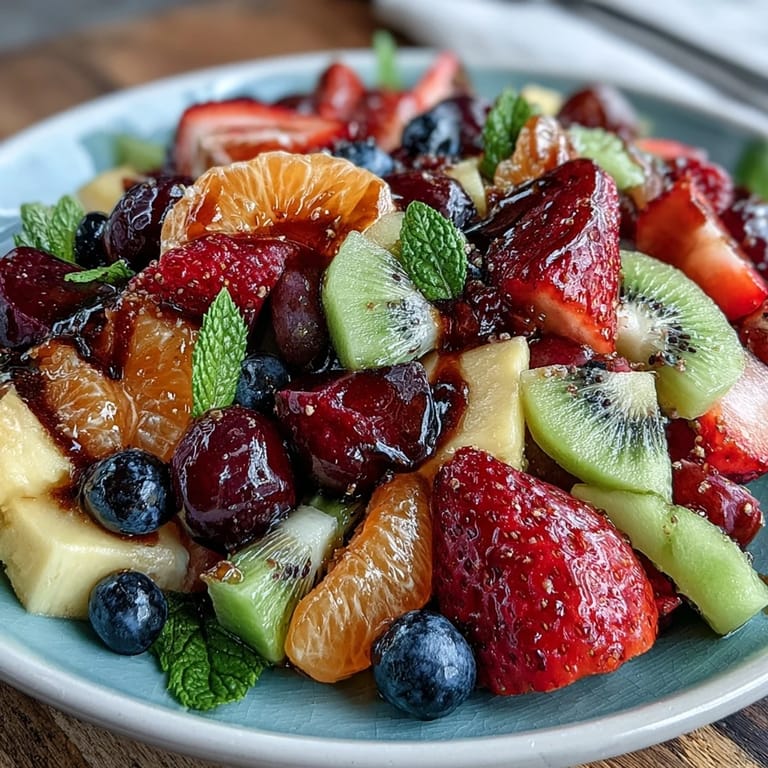
- Wash everything under cool water and pat completely dry—wet fruit slides around and won't arrange properly. As you slice each fruit, think about how the colors will balance on your platter; you want warm tones (strawberries, mango, orange) mixed with cool ones (blueberries, kiwis, grapes).
- Build your platter like a still life:
- Start with the firmest fruits as anchors—grapes in one cluster, apple slices fanned slightly—then fill gaps with softer fruits. The goal isn't perfection; it's visual variety. Odd numbers feel more natural than even ones, so group berries in threes or fives.
- Make the sauce while fruit rests:
- Whisk the Greek yogurt first until it loosens slightly, then add honey in a thin stream while whisking constantly so it stays smooth. The lemon zest and juice go in last, bright and fragrant, cutting through the richness.
- Set and chill strategically:
- If you're serving within an hour, skip the fridge; room temperature fruit tastes sweeter. If you've made it ahead, cover the platter loosely with plastic wrap so the fruit doesn't dry out.
 Save to Pinterest
 There's a moment that happens every single time I make this: someone takes a photo, then tastes it, then actually stops and says something like "This is so simple, but why does it taste so good?" It's because simplicity done with care—good fruit, intentional arrangement, a sauce that actually tastes like something—reads as generosity. You're saying, I paid attention to this, to you, and it matters.
Choosing Fruit by Season
Spring's beauty is that you have options. Early spring might mean stone fruits are still weeks away, so lean on citrus, apples stored since winter, and the first strawberries (which will be expensive but worth it). Mid-spring brings pineapples and kiwis into their season. Late spring opens the door to early berries, peaches if you're lucky, and fresh apricots. The platter should taste like a single moment in time, not a fruit salad from every season at once.
The Yogurt Sauce and Its Possibilities
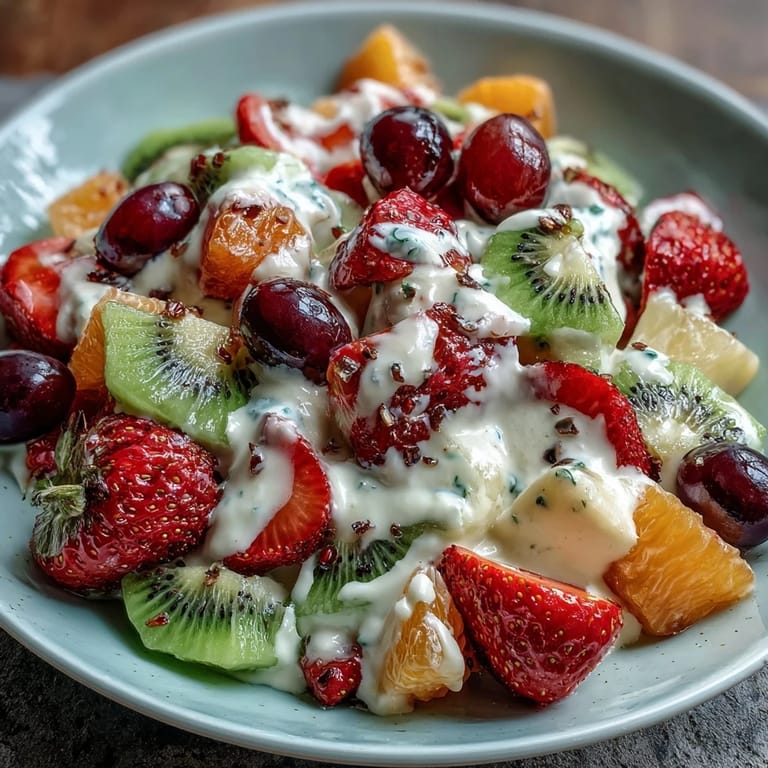
The dipping sauce is flexible but the lemon is non-negotiable. That brightness is what makes it taste intentional rather than like you just dumped honey into plain yogurt. Beyond that, you can drift toward vanilla when you want it subtle and sophisticated, or add a whisper of cardamom, ginger, or even a touch of rose water if you're feeling adventurous. Some people stir in a tiny bit of poppy seeds for texture, which sounds odd until you try it.
Making This Work for Dietary Needs
The platter itself is naturally vegan if you swap in coconut or almond yogurt for Greek yogurt and use maple syrup instead of honey—and honestly, the sauce is still delicious. If you're serving guests with allergies or restrictions, this is one of the easiest dishes to adapt because the fruit does all the heavy lifting. No hidden ingredients, no last-minute scrambling for substitutes.
- For a vegan version, coconut yogurt has the most neutral flavor; almond yogurt can taste slightly bitter to some people.
- Nuts and seeds sprinkled over the top add protein if you're serving this as more than just a snack.
- Make the sauce fresh each time rather than storing it, or the lemon juice will separate slightly.
 Save to Pinterest
 This platter proves that good entertaining doesn't require complexity, just intention and fresh ingredients arranged with care. Serve it whenever spring feels like a reason to gather people together.
Recipe Frequently Asked Questions
- → Can I use other fruits in the platter?
Absolutely. Seasonal fruits like blackberries, peaches, or melon can be added or substituted to suit preferences and availability.
- → How should I store the platter and sauce before serving?
Keep the arranged fruit covered and refrigerated for up to 2 hours. The dipping sauce should be stored separately in a covered bowl until ready to serve.
- → Is there a vegan alternative for the dipping sauce?
Yes, substitute Greek yogurt with coconut-based yogurt and replace honey with maple syrup for a vegan-friendly option.
- → What tools are needed to prepare this platter?
A large serving platter, a sharp knife, cutting board, whisk, and small mixing bowl are sufficient for easy preparation.
- → How can garnishes enhance the fruit platter?
Sprinkling fresh mint leaves adds brightness and aroma, while toasted coconut or chopped nuts provide crunchy texture and extra flavor depth.
- → Are there allergen considerations for this dish?
The yogurt contains milk and honey, so substitutes should be used for dairy allergies or for serving children under one year old.