 Save to Pinterest
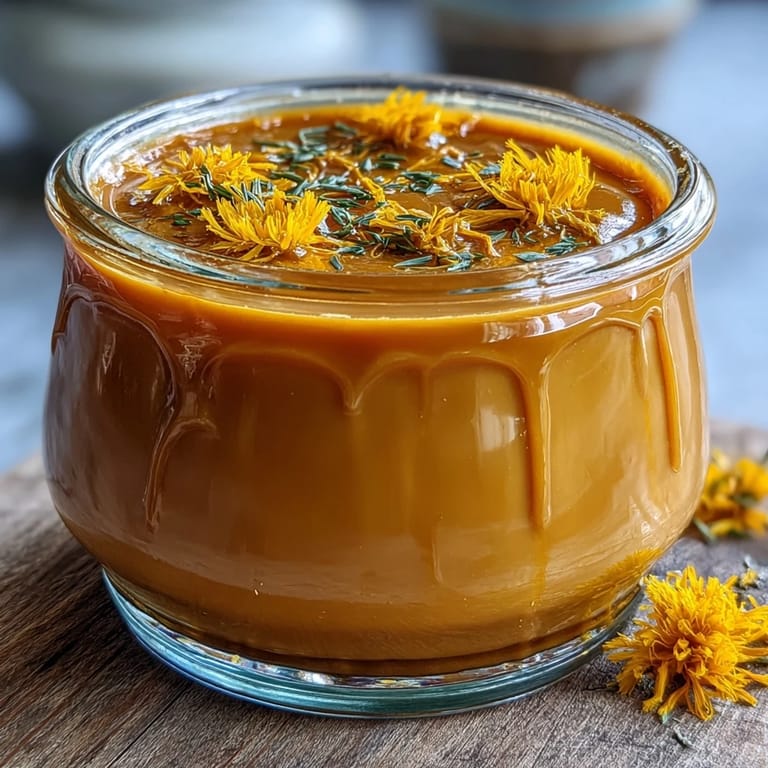
 There's something almost magical about turning those cheerful yellow dandelions—the ones most people curse in their lawns—into something genuinely delicious. My neighbor kept complaining about the dandelions taking over her garden one spring, and I mentioned that the flowers were actually edible, which made her laugh until I showed up with a jar of this jelly weeks later. The look on her face when she tasted it on warm toast was worth every minute of steeping and straining.
I made this for my book club one afternoon, and someone asked if I'd bought it at some fancy farmers market because they couldn't believe it came from dandelions. That moment taught me that people often underestimate what's growing right outside, and this jelly became my small way of sharing that discovery. Now I give jars away and watch people's assumptions shift completely once they taste it.
Ingredients
- Dandelion petals (2 cups, yellow parts only): These are the whole point—make sure they're from a clean area you trust, and remove every bit of green because those parts are genuinely bitter and will ruin the delicate flavor you're going for.
- Water (4 cups): This becomes your infusion base and pulls all that floral sweetness out of the petals during the long steep.
- Lemon juice (2 tablespoons, freshly squeezed): This isn't just for tang; it balances the floral notes and actually helps the jelly set properly.
- Powdered fruit pectin (1 package, 1.75 oz): This is your reliable friend that guarantees a proper set without overthinking chemistry.
- Granulated sugar (4 cups): Yes, it's a lot, but that's what makes this a jelly and not just sweetened flower water—it's also the preservative that keeps your jars safe.
Tired of Takeout? 🥡
Get 10 meals you can make faster than delivery arrives. Seriously.
One email. No spam. Unsubscribe anytime.
Instructions
- Pick and prep your petals:
- Gently pull off just the yellow parts, leaving all that green behind—it's tedious for about five minutes, then you get into a rhythm. Rinse them carefully in a colander, letting water run through to catch any tiny insects or bits of debris.
- Create your infusion:
- Combine the petals and water in a saucepan, bring everything to a boil, then turn it down to a gentle simmer for just 5 minutes. This short cook keeps the flowers from turning into mush while the heat opens them up to release their flavor.
- Let time do the work:
- Cover the pot and walk away for 4 hours (or overnight if you're patient)—the longer it sits, the more golden and floral your infusion becomes. You'll notice the liquid gradually turning a pale yellow, almost like bottled sunshine.
- Strain with care:
- Pour everything through a fine mesh sieve lined with cheesecloth, and here's where patience matters more than force—let gravity do most of the work, then give it a gentle squeeze to get those last precious drops. You want about 3½ to 4 cups of clear, golden liquid.
- Build your jelly base:
- In a large pot, combine your dandelion infusion, lemon juice, and pectin, stirring until the pectin dissolves completely and there are no lumps hiding at the bottom. Bring this mixture to a rolling boil—you need to see it really moving, not just simmering.
- Add sugar and reach setting point:
- Dump all the sugar in at once and stir constantly to help it dissolve, then let it boil hard for 1 to 2 minutes until a thermometer reads 220°F. If you don't have a thermometer, drop a tiny bit on a cold plate and push it with your finger—if it wrinkles, you're there.
- Finish and jar your jelly:
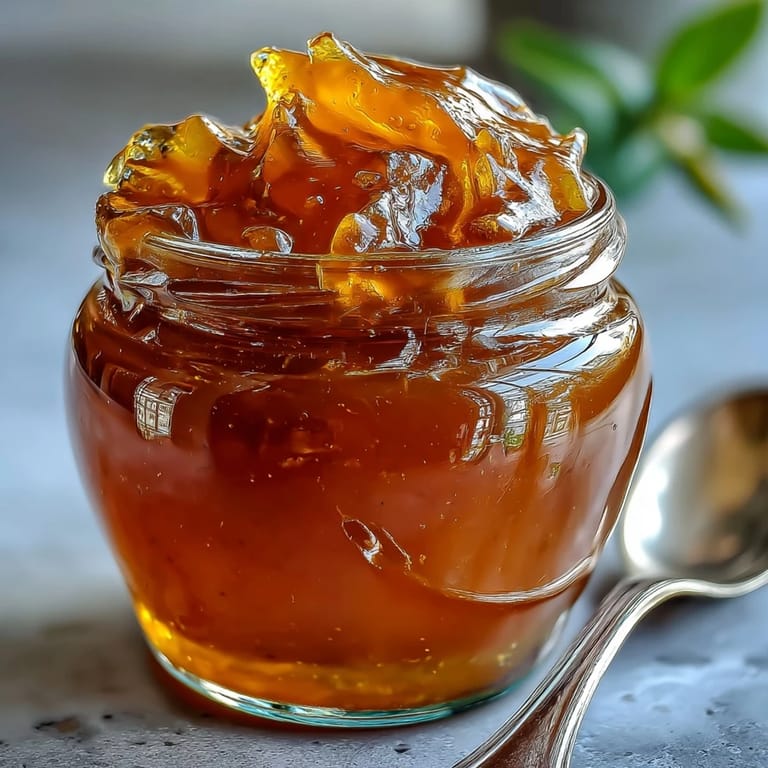
- Remove from heat and skim away any foam that's gathered on top (this makes your final jelly clearer and more elegant). Using a ladle, fill your sterilized jars, leaving ¼-inch of space at the top, then wipe the rims, add lids, and process in a boiling water bath for 10 minutes.
- Let it set undisturbed:
- This is the hardest part—leave those jars completely alone for at least 12 hours while they cool and the jelly sets up properly. Resist the urge to shake or move them around.
 Save to Pinterest
 My mother tasted this jelly and suddenly started telling me stories about her grandmother making dandelion wine, connecting me to something I didn't even know was part of my family history. Food has this quiet way of opening doors to people and memories, and this little jar managed to do exactly that.
Finding and Foraging Your Dandelions
The most important part of this recipe happens before you even get to your kitchen—choosing where your dandelions come from. You want them from somewhere you're absolutely certain hasn't been sprayed with pesticides or chemicals, which usually means your own yard (if you don't treat it), a trusted friend's property, or a community garden you know well. I scout locations in early spring when the flowers first appear, and I always ask permission before harvesting anywhere that isn't my own land. Dandelions picked from roadsides or chemically treated lawns will taste off and could actually make you sick, so this isn't a place to be casual or hopeful.
The Science of Setting Without Overthinking
Pectin is basically a natural thickener that exists in fruit, and when you heat it with sugar and acid (that's your lemon juice), it forms a gel structure that's firm enough to spread but still soft enough to be luxurious on your tongue. This recipe uses powdered pectin because it's reliable and takes the guesswork out of achieving that perfect consistency. Some people prefer making jelly without pectin by cooking fruit for hours until it naturally reaches setting point, but with delicate flowers, pectin lets you keep that subtle flavor intact instead of cooking it into something flat and dull.
Variations and Next Adventures
Once you've made this classic version, the door opens to gentle experiments that respect the delicate foundation. Orange zest stirred in with the lemon juice adds brightness without overpowering the floral notes, and some people infuse the water with a single vanilla bean for something almost nostalgic. You could also make this with rose petals, violet flowers, or even honeysuckle if you have them growing somewhere safe and clean.
- A tiny pinch of cardamom steeped with the petals brings unexpected warmth that makes people ask what the secret ingredient is.
- If you prefer less sweetness, use low-sugar pectin and reduce the sugar to 3 cups, understanding that it might not set quite as firmly.
- Keep notes on the jars about when you made them and where the flowers came from—it becomes part of the story you share with whoever gets that jar.
 Save to Pinterest
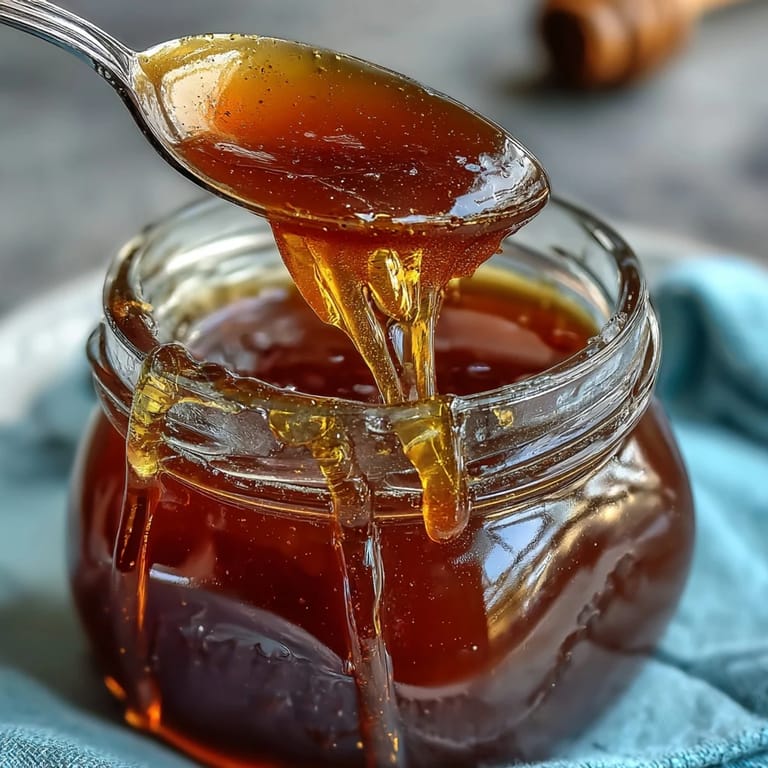
 There's something deeply satisfying about opening a jar of this jelly months later and tasting spring all over again, especially on a cold winter morning. It's a small, golden way of holding onto a season and sharing it with people you care about.
Recipe Frequently Asked Questions
- → How are the dandelion petals prepared before cooking?
Only the yellow parts of the petals are used after removing green parts like sepals and stems to avoid bitterness. Petals are rinsed gently to remove debris before infusion.
- → What is the purpose of steeping the dandelion petals?
Steeping extracts the delicate floral flavors and color from the petals, enhancing the spread’s aromatic profile.
- → How is the setting of the spread achieved?
Powdered fruit pectin is added and boiled with sugar and lemon juice until reaching setting temperature, creating a smooth, gelled texture.
- → Can the flavor be modified?
Adding orange zest during cooking provides a citrusy twist that brightens the floral notes.
- → What are ideal serving suggestions?
This floral spread is perfect for enhancing toast, scones, or as a glaze to complement cheese dishes.