 Save to Pinterest
 I stumbled into modernist cooking quite by accident, actually—during a phase when I was obsessed with plating as much as flavor. One evening, while staring at my cutting board surrounded by jewel-toned vegetables, it hit me: what if I stopped trying to fill a plate with everything and instead committed completely to one thing? The Modernist Stripe was born from that single moment of restraint, and it's become the dish I reach for whenever I want to impress without overwhelming.
I made this for the first time at a dinner party where I'd promised something "different," and honestly, I was nervous—modernist food can feel risky. But watching my friends lean in, their eyes following the stripe of color before they even tasted it, taught me something: sometimes the boldest move is giving yourself permission to do less and do it better.
Ingredients
- Medium beets: Two fresh ones, peeled and diced—their natural sweetness is the foundation of everything here, so choose beets that feel heavy for their size.
- Olive oil: Just one tablespoon for the beets, enough to help them caramelize without overwhelming the earthy flavor.
- Sea salt: A quarter teaspoon initially, with more flaky salt reserved for the finish—there's a real difference between fine salt and flaky.
- Lemon juice: One teaspoon to cut through the beet's earthiness and bring brightness to the purée.
- Large carrots: Three peeled and sliced, their natural sugar concentrates as they cook into something almost buttery.
- Fresh ginger: One teaspoon grated—a small amount that announces itself without dominating the plate.
- Unsalted butter: One tablespoon (or olive oil if you're vegan), which makes the carrot purée taste like comfort while keeping it light.
- Ripe avocado: One that yields gently to pressure, the key to achieving that silky cream without overworking it.
- Greek yogurt: Two tablespoons to lighten the avocado and add a subtle tang that prevents the green from feeling one-dimensional.
- Lime juice: Just one teaspoon, because citrus and avocado are meant to be together.
- Microgreens and edible flowers: These aren't garnish—they're color notes, texture accents, and the final proof that this is something made with intention.
- Crushed pistachios: The crunch that stops this from being all silk and smoothness, adding a savory note that ties everything together.
Tired of Takeout? 🥡
Get 10 meals you can make faster than delivery arrives. Seriously.
One email. No spam. Unsubscribe anytime.
Instructions
- Roast the foundation:
- Preheat your oven to 400°F and toss your diced beets with olive oil and sea salt. Spread them on a tray in a single layer and roast for 30 to 35 minutes—you'll know they're ready when a fork slides through without resistance and the edges start to caramelize slightly.
- Cook the carrots gently:
- While the beets are roasting, steam or boil your carrot slices in a pot of salted water until they're completely soft, about 15 to 20 minutes. Drain them well and let them cool for a few minutes so they're cool enough to blend but still warm enough to purée smoothly.
- Create the beet purée:
- Transfer your roasted beets and lemon juice to a blender or food processor and blend until the mixture is completely smooth and silky. Add a splash of water only if the purée seems too thick—you want it to spread, not pour.
- Build the carrot purée:
- Blend your cooled carrots with the grated ginger, butter, and salt until the mixture is entirely smooth and has a slightly lighter color than the beets. This purée should feel luxurious on the spoon.
- Compose the avocado cream:
- In a small bowl, mash your ripe avocado with the Greek yogurt, lime juice, and a pinch of salt until the mixture is silky and completely lump-free. Transfer it to a piping bag or squeeze bottle so you can apply it with precision later.
- Create your canvas:
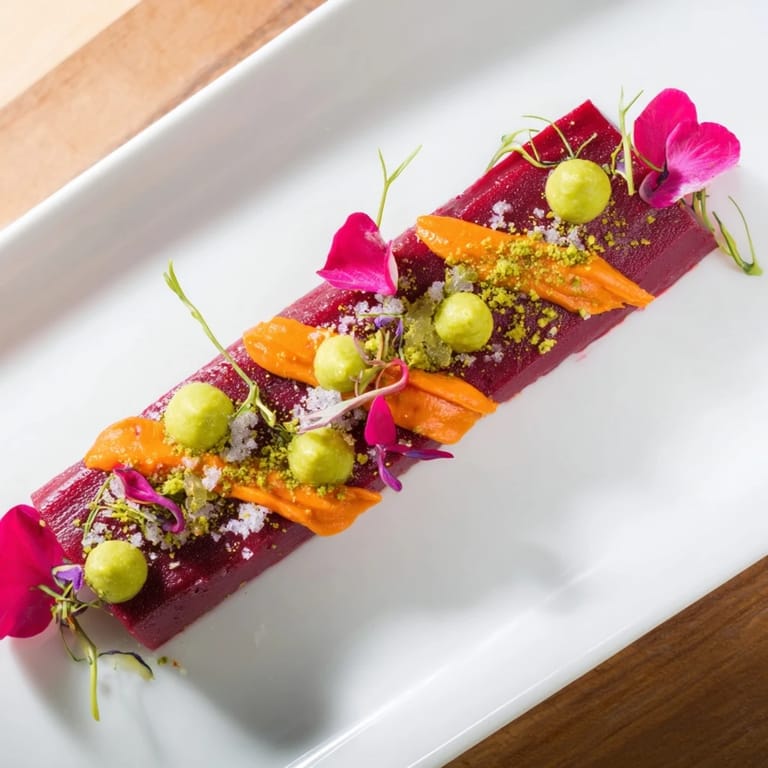
- On a clean, empty serving board, use a wide offset spatula or the back of a large spoon to spread your beet purée in a thick, perfectly straight 3-inch-wide stripe down the center. This is your foundation, and taking your time here matters.
- Layer with intention:
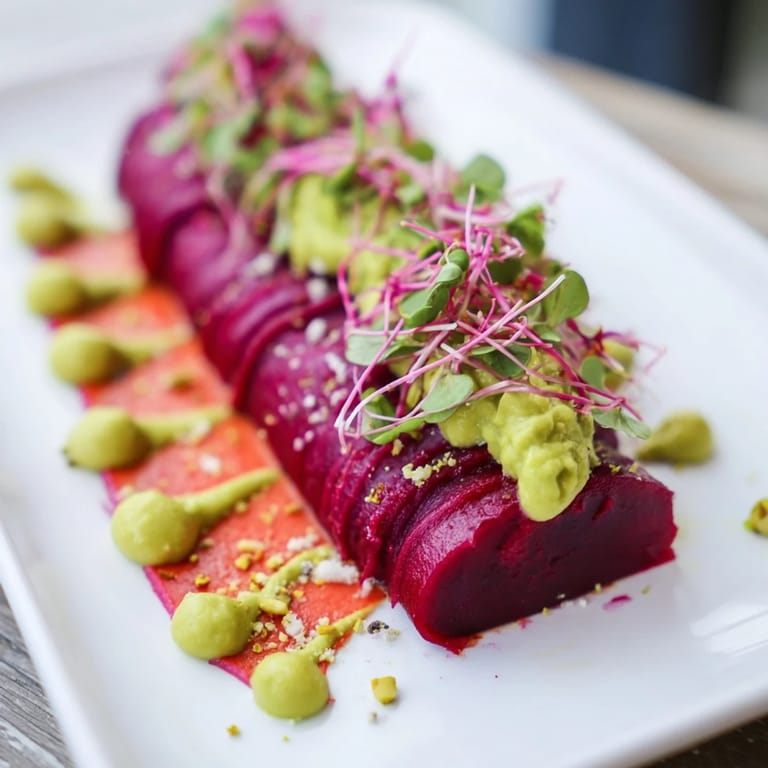
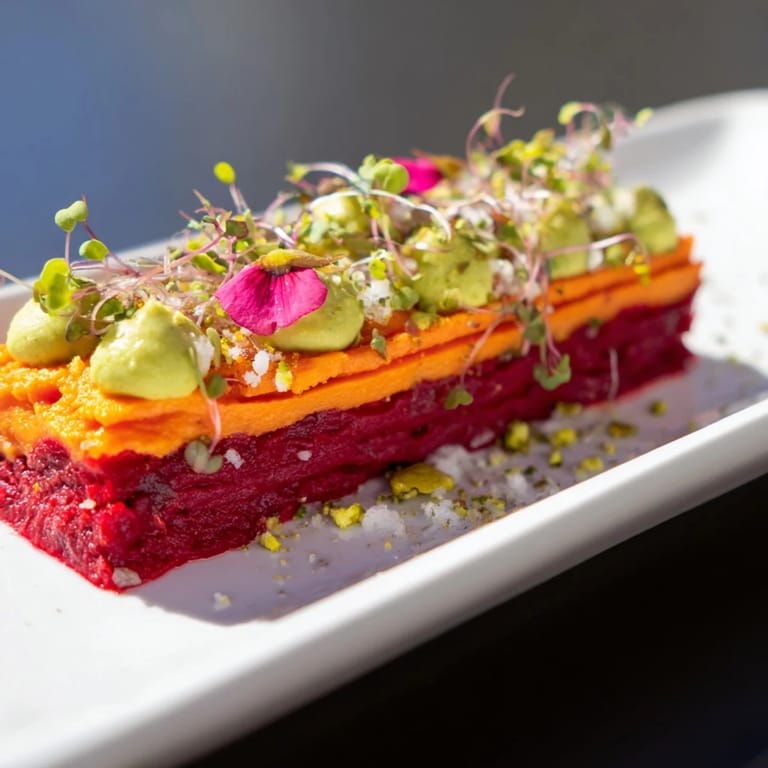
- Now pipe or spread your carrot purée and avocado cream along the top of the beet stripe in whatever pattern calls to you—artistic strokes, careful dots, or confident swooshes all work if they feel considered.
- Finish with drama:
- Crown your stripe with microgreens, edible flowers, crushed pistachios, and a final sprinkle of flaky sea salt. This is where the dish goes from beautiful to unforgettable.
- Serve immediately:
- Place the board in front of your guests and encourage them to scoop directly from the stripe with their hands or a spoon—this is food meant to be experienced, not just observed.
 Save to Pinterest
 The moment that made this dish click for me came when a guest said, "I wasn't expecting something this thoughtful from something so simple." That's the whole philosophy right there—modernist cooking isn't about complexity, it's about respect for each ingredient and the space around it.
The Power of Restraint
There's something liberating about committing to a single stripe instead of filling every inch of a plate. It forces you to choose your ingredients carefully, to make sure every element earns its place, and to trust that less really can be more. I've learned that this approach actually makes cooking easier—there's nowhere to hide, so everything has to be intentional.
Playing With Color
The beauty of this concept is that you're not locked into beet, carrot, and avocado. Sweet potato purée glows orange, pea purée brings a vibrant spring green, and roasted squash adds a golden warmth. I've experimented with building two or even three stripes in different combinations, and the visual impact grows exponentially. The technique is what matters—once you understand how to layer purées with confidence, the world of colors opens up.
Texture and Temperature
What elevates this from pretty to memorable is the contrast between the smooth purées and the scatter of crisp elements. The pistachios crunch, the microgreens snap, the edible flowers add an unexpected delicate quality, and the flaky salt brings everything into focus. Temperature matters too—if your board is cold and your purées are fresh from the blender, everything holds its shape and vibrancy longer.
- Prep all your garnishes before you plate so you can work quickly once the purées hit the board.
- If you're making this ahead, keep the purées in separate covered containers in the fridge and plate only when guests are seated.
- Experiment with different nuts or seeds in place of pistachios based on what you have on hand or any allergies at your table.
 Save to Pinterest
 This dish taught me that confidence in the kitchen often comes from doing one thing perfectly rather than many things adequately. Serve it and watch how a single, purposeful stripe can command a room.
Recipe Frequently Asked Questions
- → How do I achieve smooth vegetable purées?
Roast or steam the vegetables until very tender, then blend with small amounts of liquid until silky. Strain if needed for extra smoothness.
- → What are good garnishes to complement layered purées?
Fresh microgreens, edible flowers, crushed nuts like pistachios, and a sprinkle of flaky sea salt add texture and visual contrast.
- → Can I prepare the purées in advance?
Yes, purées can be made ahead and refrigerated in airtight containers. Bring to room temperature before plating.
- → How is the stripe effect created during plating?
Use an offset spatula or the back of a large spoon to spread a thick strip of purée down the center of a clean board, then layer other purées atop in patterns.
- → What alternatives can substitute for dairy ingredients?
Plant-based yogurt and olive oil can replace dairy components like Greek yogurt and butter for vegan or dairy-free versions.
- → How can I add more texture to this dish?
Incorporate roasted chickpeas or pickled onions as garnishes to introduce crunchy and tangy elements.