 Save to Pinterest
 The aroma of sizzling kimchi still transports me to that tiny apartment in Seoul where my study abroad roommate first taught me this dish. We were both homesick college students with limited cooking skills, but she insisted proper kimchi fried rice could cure any bad day. Standing over her dented wok, she explained that the key was using day-old rice and letting the kimchi properly caramelize. That simple late-night cooking lesson became the foundation for what is now my most reliable comfort food.
Last winter during that terrible snowstorm, we lost power for nearly two days. I was rummaging through the pantry by flashlight, trying to figure out what to feed my increasingly cranky family, when I remembered I had a jar of kimchi that didnt need refrigeration. Using our camping stove, I made this kimchi fried rice, and we huddled around it with spoons, giggling as steam rose from the pot into the frigid air of our kitchen. Something about the spicy warmth made the power outage feel more like an adventure than a disaster.
Ingredients
- Day-old short-grain rice: Fresh rice turns mushy in fried rice, but day-old rice from the refrigerator has the perfect texture that separates into individual grains.
- Napa cabbage kimchi: Look for kimchi thats properly fermented with a bit of tang its what gives this dish its soul and complexity.
- Gochujang: This fermented Korean chili paste adds a deep, complex heat thats different from hot sauce its slightly sweet and incredibly savory.
- Toasted sesame oil: I learned the hard way that regular sesame oil doesnt have the same nutty intensity always go for the toasted kind for that authentic finish.
Tired of Takeout? 🥡
Get 10 meals you can make faster than delivery arrives. Seriously.
One email. No spam. Unsubscribe anytime.
Instructions
- Build the flavor base:
- Heat that vegetable oil until it shimmers, then add your chopped onion, carrot, and white parts of the green onion. You want them to soften and start releasing their sweetness, but not brown.
- Get the kimchi sizzling:
- When you add the chopped kimchi, listen for that glorious sizzle and watch for the edges to start caramelizing. This step transforms the kimchi from merely tangy to deeply complex.
- Sauce it up:
- The moment when gochujang, soy sauce, and kimchi juice meet the hot pan fills your kitchen with the most mouthwatering aroma. Let everything cook together for that full minute to marry the flavors.
- Rice integration:
- Add your rice with purpose, breaking up clumps as you go. Keep everything moving in the pan so each grain gets properly coated with that beautiful red sauce.
- The finishing touches:
- That drizzle of sesame oil at the end isnt optional its the crowning glory that pulls everything together. Add those green onion tops right at the end so they stay bright and fresh.
- Egg artistry:
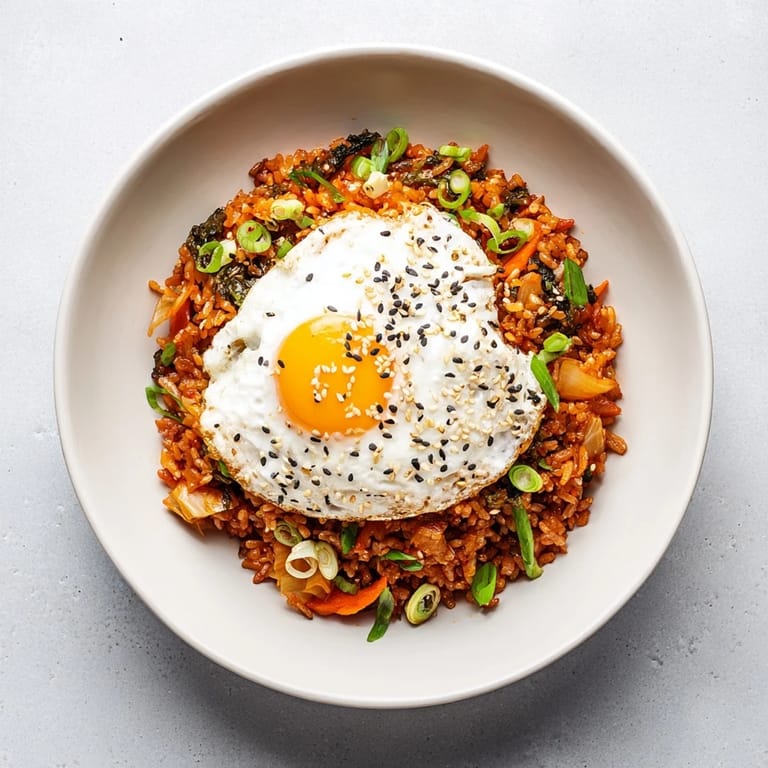
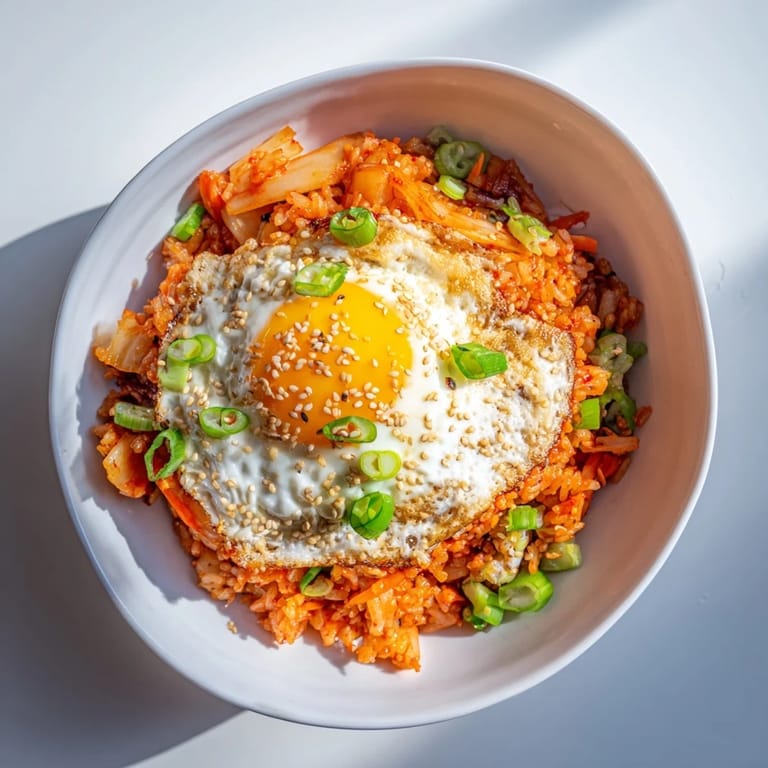
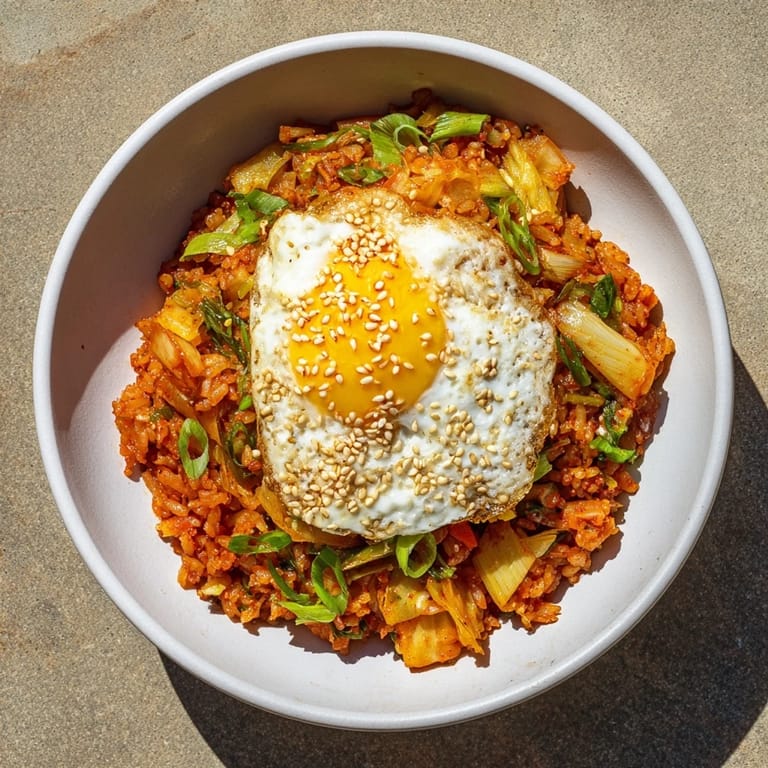
- If youre doing the egg topping, aim for crispy edges with a runny yolk. When you break into it, that golden richness mixing with the spicy rice creates pure magic in your mouth.
 Save to Pinterest
 My daughter was going through that impossibly picky phase where everything was automatically suspect, especially anything remotely spicy. One evening, at my wits end, I made this kimchi fried rice without telling her what was in it, just calling it special rice. She not only cleaned her plate but asked for seconds. Now every time she has friends over, she proudly requests her special rice, completely unaware of her former prejudice against the ingredients.
Finding Your Perfect Spice Level
The beauty of kimchi fried rice lies in its adaptability to your personal heat tolerance. During my early attempts, I went overboard with the gochujang and created something nearly inedible. Now I start with less and add more after tasting. Remember that kimchi itself varies wildly in spiciness depending on how long its been fermenting and the brand you choose. Older kimchi tends to be more sour than spicy, while fresher kimchi brings more heat.
Making It a Complete Meal
While perfectly satisfying on its own, kimchi fried rice welcomes protein additions that transform it from side dish to main event. My personal favorite is adding cubes of firm tofu that have been briefly pan-fried until crisp on the outside. For meat eaters, leftover rotisserie chicken or quickly sautéed shrimp fold in beautifully. Whatever protein you choose, add it just before the rice to ensure it maintains its own texture while still absorbing some of those wonderful kimchi flavors.
Serving and Storing Your Kimchi Fried Rice
Kimchi fried rice actually improves after sitting for about five minutes before serving, allowing the flavors to settle and meld. Ive found that serving it in a preheated bowl helps maintain the perfect temperature throughout the meal.
- For storage, cool completely before refrigerating to maintain texture and prevent condensation from making things soggy.
- To reheat, a quick stir-fry with a touch of oil brings it back to life better than the microwave ever could.
- If youre making it ahead for lunches, pack the sesame seeds and any fresh garnishes separately to add just before eating.
 Save to Pinterest
 This humble dish has carried me through late study nights, homesick evenings, and countless impromptu dinner gatherings. Its the perfect reminder that truly satisfying food doesnt require fancy techniques or expensive ingredients just a few well-chosen flavors and a little bit of love.
Recipe Frequently Asked Questions
- → Can I use fresh rice instead of day-old rice?
Day-old rice works best because it's drier and prevents clumping. If using fresh rice, spread it on a plate to cool and dry for 30 minutes before stir-frying.
- → How do I adjust the spice level?
Control heat by adjusting gochujang and kimchi juice amounts. Start with less gochujang and add more to taste. For milder versions, reduce both by half or use less kimchi.
- → What's a good protein addition?
Diced tofu, cooked shrimp, or bite-sized chicken pieces work wonderfully. Cook protein separately, then add during the final toss. A fried egg on top is traditional and delicious.
- → How do I prevent the rice from sticking together?
Break up rice clumps with your spatula as you add it to the wok. Keep heat at medium-high and continuously stir to ensure even coating with the sauce and oil.
- → Is this vegetarian-friendly?
Yes, this dish is naturally vegetarian. For vegan, omit the fried egg or substitute with plant-based alternatives. Verify gochujang and kimchi labels for any animal-derived ingredients.
- → What pairs well as a side dish?
Serve alongside crisp lager, cold barley tea, or a light cucumber salad. Pickled radish or steamed edamame complement the bold flavors nicely.