 Save to Pinterest
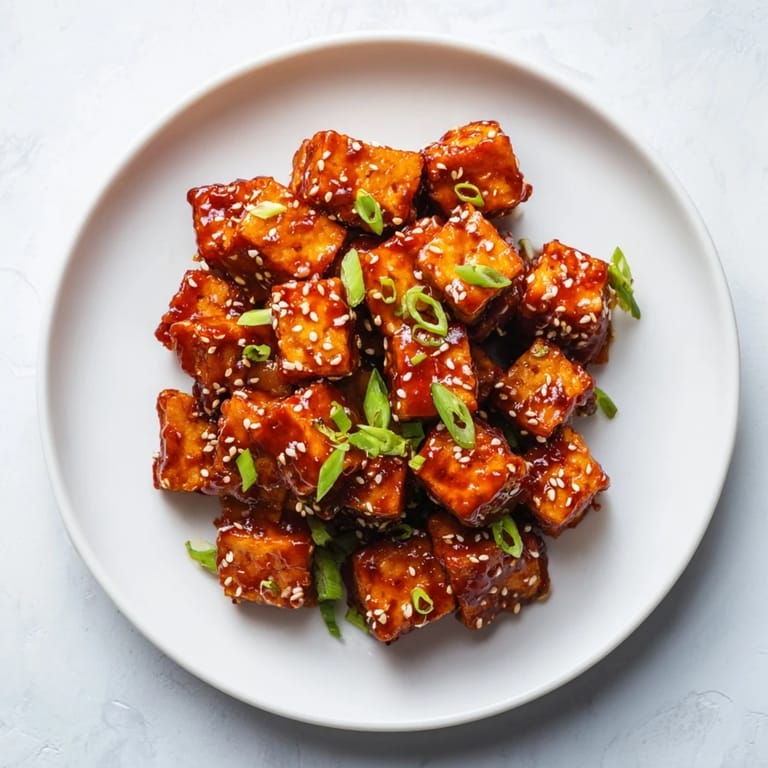
 I discovered this dish on a weeknight when I had nothing but tofu and a jar of gochujang staring at me from the pantry. That first batch was pure accident—I pressed the tofu a bit too long, cranked the heat higher than usual, and somehow ended up with these golden, crispy cubes that tasted nothing like the soft, forgettable tofu I'd made before. The way that honey and spicy paste came together in the pan was revelatory, and suddenly I understood why my Korean friend had been so excited about this flavor combination.
I made this for my roommate on a Tuesday after she complained about eating the same sad salads every day, and watching her face light up when she tasted it was one of those small kitchen victories that stay with you. She went back for thirds and asked if I could make it again next week—which honestly felt like the highest compliment I could get.
Ingredients
- Firm tofu, pressed and cubed: Pressing is non-negotiable here; skip it and your tofu will steam instead of crisp, and trust me, you want the crispy.
- Cornstarch: This is your secret weapon for achieving that golden, crispy exterior that makes people do a double-take.
- Gochujang: The spicy-sweet heart of everything; start with 2 tablespoons and adjust upward if you like heat.
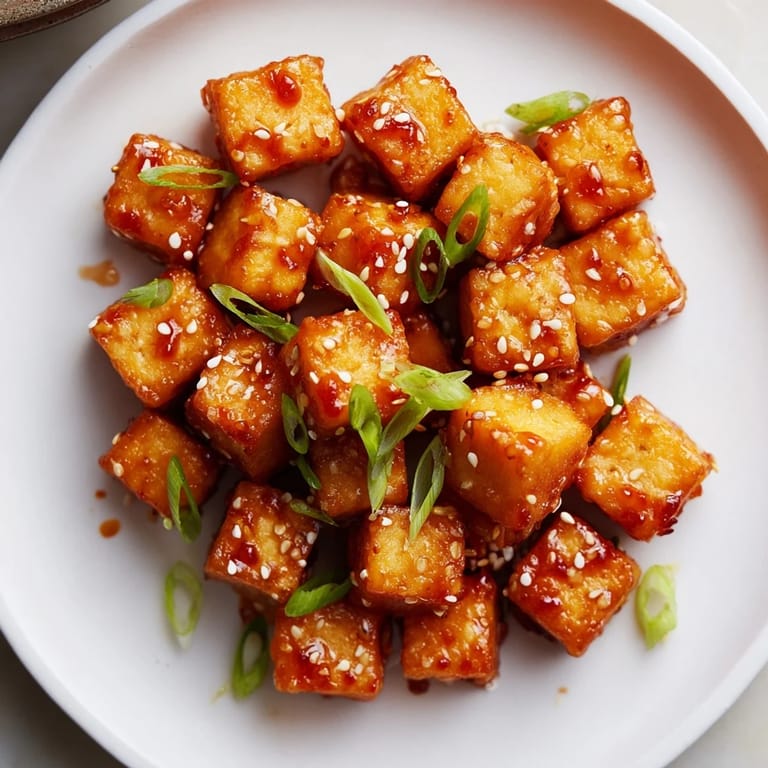
- Honey: Balances the heat and creates that irresistible sticky glaze that clings to every cube.
- Soy sauce: Adds umami depth so the sauce tastes complex, not one-dimensional.
- Rice vinegar: A splash of brightness that keeps the sauce from being cloying.
- Sesame oil: Just a tablespoon makes everything taste more intentional and aromatic.
- Garlic and ginger: Fresh is worth it; minced together they perfume the entire kitchen.
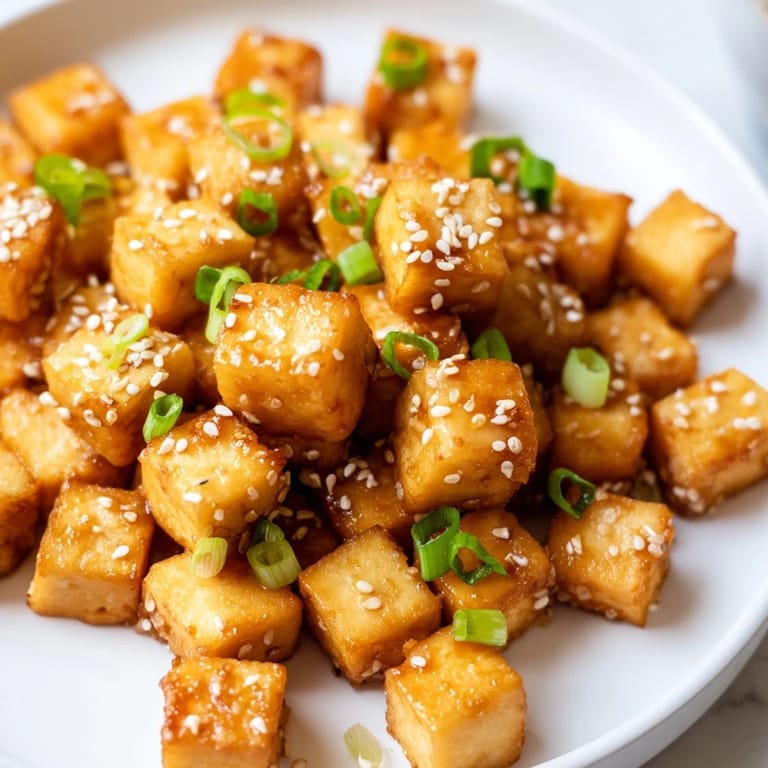
- Toasted sesame seeds and green onions: The garnish that transforms this from homemade to restaurant-worthy.
Tired of Takeout? 🥡
Get 10 meals you can make faster than delivery arrives. Seriously.
One email. No spam. Unsubscribe anytime.
Instructions
- Press the tofu dry:
- Wrap your block of tofu in a clean kitchen towel and let it sit under something heavy for at least 10 minutes. You're removing the water that would otherwise steam your cubes instead of crisping them.
- Coat with cornstarch:
- Toss your cubed tofu with cornstarch and salt until every piece is dusty and pale. This is what creates that satisfying crunch.
- Get them golden:
- Heat oil in a skillet over medium-high heat and add the tofu pieces without crowding the pan. Let them sit for a minute or two before stirring so they actually get golden, then turn them occasionally until all sides are crispy and tan. This takes about 8 to 10 minutes and is worth the patience.
- Make the sauce:
- Whisk gochujang, honey, soy sauce, rice vinegar, sesame oil, garlic, ginger, and water together in a bowl until smooth. The sauce should smell complex and slightly spicy.
- Simmer the sauce:
- Pour everything into your skillet and let it bubble gently for 2 to 3 minutes, stirring occasionally, until it thickens just slightly. You want it to coat a spoon but still flow.
- Coat the tofu:
- Return the crispy tofu to the skillet and toss it gently but thoroughly so every piece gets glossy with sauce. Cook for another minute or two until everything looks sticky and appealing.
- Finish and serve:
- Transfer to a plate, sprinkle with sesame seeds and green onions while it's still warm, and serve immediately. If you're serving it over rice, do that now while the sauce is still clinging to the tofu.
 Save to Pinterest
 I made this once for a potluck at work where everyone was supposed to bring something vegetarian-friendly, and it was gone before anything else. One coworker pulled me aside afterward and asked if I'd share the recipe, which made me realize that people genuinely respond to food that has texture and flavor and personality.
Why Crispy Tofu Changes Everything
Tofu gets a bad reputation because so many people make it wrong—they treat it like it's supposed to be soft and neutral and apologetic. But when you press it properly and give it heat, it becomes something almost entirely different: crispy on the outside, tender inside, ready to absorb whatever sauce you're excited about. That transformation is what makes this dish work so well.
The Sauce Ratio That Matters
Getting the balance right between gochujang and honey is what separates a good version from one that people actually crave. Too much gochujang and it's all heat with no complexity; too much honey and it becomes dessert disguised as dinner. The 1:1 ratio lets both shine, and the rice vinegar keeps everything from tasting too rich or one-note. Once you nail this ratio, you can play with it however you want.
Serving Ideas and Variations
I've served this three different ways now and they all work beautifully. Over steamed rice is the most straightforward; in lettuce wraps turns it into something lighter and fresher; and as an appetizer on its own means people can grab cubes as they come hot from the skillet. Add broccoli or bell peppers if you want more substance, or keep it simple and let the tofu be the star.
- Make it vegan by swapping honey for maple syrup or agave without changing anything else.
- Amp up the heat by adding extra gochujang or a pinch of cayenne, but do it gradually so you don't overshoot.
- Let people customize their spice level by serving extra gochujang on the side at the table.
 Save to Pinterest
 This is the kind of recipe that sneaks into your regular rotation without you planning for it, the one you make when you're tired and want something that tastes like you tried harder than you did. That's when you know it's a keeper.
Recipe Frequently Asked Questions
- → How do I achieve crispy tofu cubes?
Press tofu to remove moisture, then coat cubes lightly in cornstarch and salt before frying in hot oil until golden on all sides.
- → Can I adjust the spiciness level?
Yes, modify the quantity of gochujang according to your preferred heat level.
- → What are good substitutes for honey?
Maple syrup or agave nectar provide a vegan-friendly sweetness alternative.
- → What sides pair well with this dish?
Steamed rice, quinoa, or fresh lettuce wraps complement the flavors nicely.
- → How to incorporate more vegetables?
Add steamed broccoli or sautéed bell peppers alongside the tofu for added nutrition and color.