 Save to Pinterest
 My uncle called it "the dish that saved dinner," and I understood why the first time I made it on a Tuesday night when everything felt rushed. The aroma alone—cardamom, cinnamon, and toasted spices mingling with tender chicken—filled the kitchen so completely that my skeptical teenage self suddenly believed this one pot could actually deliver something restaurant-worthy. That was years ago, and I've made it dozens of times since, each version getting easier because the method is genuinely forgiving.
I remember bringing this to a potluck where someone had already planned three rice dishes, and I almost didn't serve it. But the moment people tasted it, the whole dynamic shifted—suddenly everyone wanted the recipe, wanted to know the spice combinations, wanted to know if they could make it at home without feeling lost. That's when I realized this wasn't just easy; it was the kind of meal that makes people feel genuinely cared for.
Ingredients
- Boneless, skinless chicken thighs (500 g): Thighs stay tender and forgiving even if you're not perfectly timing the cooking, unlike chicken breast which can dry out faster—this is the difference between "I nailed this" and "oops, it's a bit tough."
- Plain yogurt (2 tbsp): Acts as both a tenderizer and a gentle binder for the spices, creating a light coating that keeps the chicken juicy.
- Ground spices—turmeric, cumin, coriander (1 tsp each): These three together create the base warmth; don't skip any of them because each one contributes something different to the final flavor.
- Basmati rice (300 g): The longer grains stay distinct instead of clumping, which is exactly what you want in biryani—rinsing beforehand removes the starch and gives you that separated, fluffy texture.
- Water (600 ml): This ratio is critical; too much and you'll have mushy rice, too little and you'll have crunchy bits—measure it properly the first time and you'll understand why this works.
- Vegetable oil or ghee (2 tbsp): Ghee will give you a richer, more traditional flavor, but oil works just fine and is less fussy to keep on hand.
- Large onion (1, finely sliced): You're cooking these until golden-brown, which takes patience but creates the aromatic foundation everything else builds on.
- Garlic and ginger (2 cloves and 1 tbsp, minced): Fresh is non-negotiable here because they perfume the entire pot and their flavor should feel bright, not stale.
- Whole spices—bay leaf, cloves, cardamom pods, cinnamon stick: These steep into the rice and create those moments when you bite down on a cardamom pod and suddenly taste something unexpected and wonderful.
- Fresh cilantro and lemon wedges: Cilantro adds a final lift of freshness that cuts through all the warmth; lemon gives you a bright squeeze that ties everything together.
Tired of Takeout? 🥡
Get 10 meals you can make faster than delivery arrives. Seriously.
One email. No spam. Unsubscribe anytime.
Instructions
- Marinate the chicken:
- Toss your chicken pieces with yogurt, turmeric, cumin, coriander, chili powder, and salt in a bowl, stirring until every piece gets coated in that golden spice mixture. Even 10 minutes makes a difference, but if you have time, let it sit for 30 minutes so the yogurt can really work its tenderizing magic.
- Get the onions golden:
- Heat oil or ghee in your large pot over medium heat and add the sliced onions, stirring occasionally until they turn a deep golden brown—this takes about 6 to 8 minutes and you'll know you're done when the kitchen smells completely irresistible. Don't rush this step because these onions are building the flavor foundation.
- Wake up the garlic and ginger:
- Add your minced garlic and ginger, stirring constantly for about a minute until the raw edge softens and the aroma completely changes. You'll smell the shift the moment it happens.
- Soften the tomato:
- Stir in the diced tomato and let it cook for 2 to 3 minutes until it starts breaking down and releasing its juice. This adds both acidity and body to the pot.
- Toast the whole spices:
- Add the bay leaf, cloves, cardamom pods, and cinnamon stick, stirring for about a minute to release their aromatic oils—this is when the kitchen reaches peak fragrance. You'll notice the smell shift and deepen.
- Cook the chicken until starting to brown:
- Add the marinated chicken to the pot and cook for 5 to 7 minutes, stirring occasionally, until it starts turning light golden on the outside and feels partially cooked through. It doesn't need to be fully cooked yet because it'll finish in the rice.
- Combine rice and water:
- Gently stir in the rinsed basmati rice, being careful to mix everything together so the rice gets coated in the spiced oil and distributed evenly. Pour in the water carefully and bring everything to a gentle boil.
- Let it steam low and slow:
- Once boiling, reduce the heat to low and cover the pot tightly with its lid—this is crucial because the steam does the actual cooking. Set a timer for 18 to 20 minutes and resist the urge to peek.
- Rest and fluff:
- Remove the pot from heat and let it sit covered for 5 minutes before fluffing everything with a fork. This resting period lets the rice settle and any remaining moisture get absorbed.
- Finish with green:
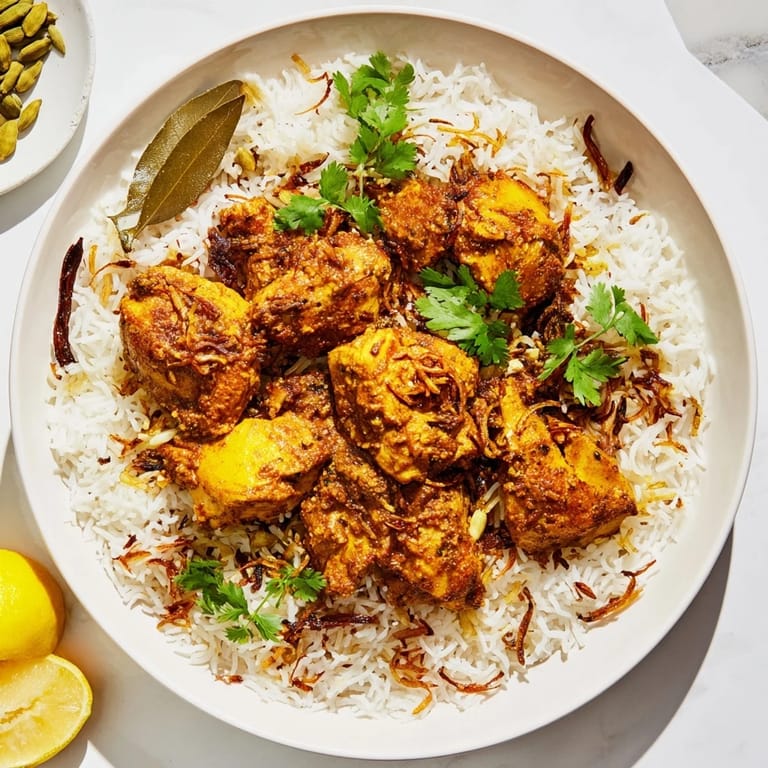
- Scatter fresh cilantro and fried onions over the top and serve with lemon wedges for squeezing—this final step adds brightness and texture that makes the whole dish feel complete.
 Save to Pinterest
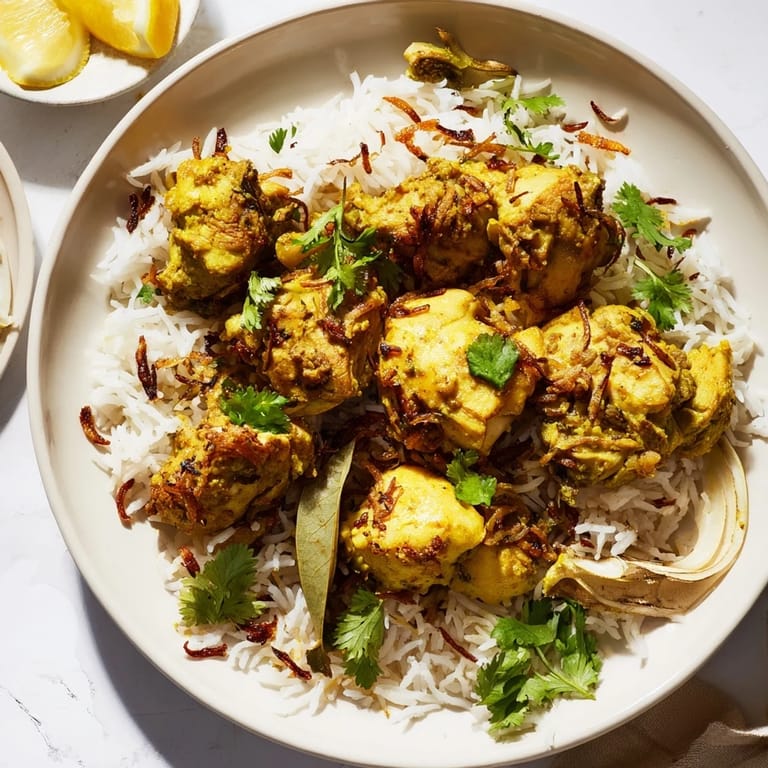
 There's a moment when the lid comes off and the steam clears and you can finally see what you've made—that's when it stops feeling like "just rice" and starts feeling like something you could be proud of. The first time someone at your table realizes this came from your kitchen in under an hour is the moment this recipe becomes part of your regular rotation.
Why This Works as a Weeknight Dinner
The entire appeal here is that you're not managing three separate components—no rice simmering in one pot while chicken cooks elsewhere and you're panicking about timing. Everything happens in one heavy-bottomed pot, which means fewer dishes, less mental load, and honestly, better flavor because everything steeps together from the start. I've made this on nights when I had 45 minutes and everything still came together.
Playing with Heat and Spice
The chili powder is optional for a reason—start without it if you're not sure about heat levels, then taste a spoonful and decide. I've made versions for friends who love spice by adding a quarter teaspoon extra, and versions for my niece by leaving it out completely, and both tasted genuinely good. The turmeric, cumin, and coriander are doing the real flavor work anyway, so the heat level is completely flexible.
Little Upgrades That Change Everything
The basic version is already good, but if you want to feel like you're doing something special, saffron steeped in warm milk and drizzled over the rice just before you cover the pot adds a floral elegance that tastes like you've been cooking Indian food for years. Fried onions scattered on top at the end add a texture that people always comment on—they stay slightly crisp even after sitting in the pot. A dollop of raita or a simple cucumber salad on the side cuts through the richness and makes the whole meal feel balanced and intentional.
- If you don't have ghee, regular vegetable oil works perfectly fine—don't stress about sourcing something special just for this.
- Make sure your pot has a tight-fitting lid because loose steam means uneven cooking and potentially crunchy rice on the bottom.
- Leftovers reheat beautifully in a covered pot with a splash of water over low heat, tasting almost as good the next day.
 Save to Pinterest
 This is the kind of meal that quietly became a favorite without you planning for it to, the one you make when someone's coming over and you want to feed them something that tastes like care. Once you've made it once, you'll know exactly what you're doing the second time, and that confidence is worth everything.
Recipe Frequently Asked Questions
- → What type of rice is best for this dish?
Basmati rice is ideal due to its long grains and fragrant aroma, which complement the spices perfectly.
- → Can I use chicken breast instead of thighs?
Yes, chicken breast can be used but it requires careful cooking to avoid drying out.
- → How can I enhance the flavor further?
Adding saffron soaked in warm milk before cooking adds a subtle, rich aroma and depth.
- → Is it necessary to soak or rinse the rice beforehand?
Rinsing the basmati rice thoroughly removes excess starch for fluffier, separated grains.
- → What sides complement this dish well?
Refreshing sides like cucumber salad or raita balance the warm spices and add a cooling element.
- → Can the dish be made dairy-free?
Substitute yogurt with a dairy-free alternative and use oil instead of ghee to accommodate dairy-free diets.