 Save to Pinterest
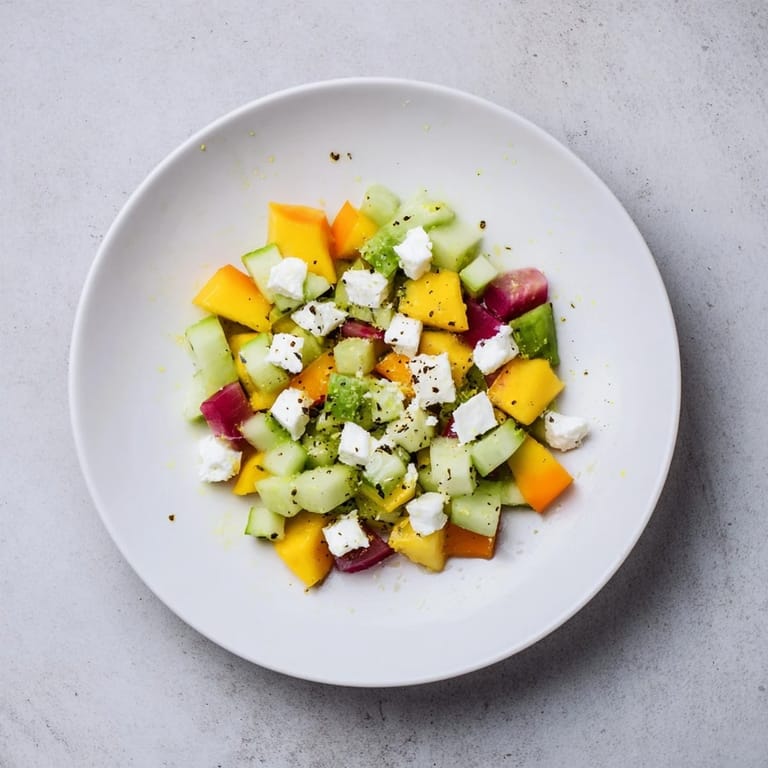
 I discovered this salad on a sun-drenched afternoon at a modern art gallery's café, where the chef was arranging vegetables with the precision of a painter composing a canvas. The geometric grid of perfect cubes fascinated me so much that I asked for the recipe, and ever since, this dish has become my favorite way to celebrate the natural colors of fresh produce. There's something almost meditative about cutting each ingredient into uniform pieces and watching a edible mosaic come together on the plate.
I'll never forget serving this to my sister's book club, where one guest initially thought it was too pretty to eat. Within minutes, everyone was picking through the grid, discovering their favorite flavor combinations, and asking for seconds. That's when I realized this salad does something special: it transforms eating into play.
Ingredients
- Cucumber: Choose one that's firm and not overly watery; peeling it first removes bitterness and ensures your cubes stay crisp throughout the meal
- Ripe mango: Look for mangoes that yield slightly to pressure; they provide natural sweetness and that silky texture that balances the crunch of other vegetables
- Ripe avocado: Cut this last, just before assembling, as it browns quickly; its buttery quality adds richness and prevents the salad from feeling too light
- Cooked beet: If you cook your own, they hold their deep color better than store-bought; this vibrant cube anchors the visual composition
- Yellow bell pepper: The sweetness here is a secret weapon that ties all the flavors together without overwhelming the palate
- Watermelon: It adds refreshing crunch and a subtle sweetness that surprises people; use it sparingly so it doesn't overpower more delicate flavors
- Feta cheese: The saltiness and slight tang are essential for cutting through the fruit sweetness; let it sit at room temperature before serving for the best flavor
- Extra-virgin olive oil: Use one you genuinely love drinking; it becomes the backbone of your dressing and should taste buttery and complex
- Lemon juice: Fresh is non-negotiable here; bottled lemon juice won't give you that bright, clean finish the salad deserves
- Sea salt and black pepper: Freshly ground pepper makes a real difference; it brings warmth that complements the cool, fresh ingredients
- Honey: This is optional but recommended; just a hint rounds out the acidity and adds a touch of elegance to the dressing
Tired of Takeout? 🥡
Get 10 meals you can make faster than delivery arrives. Seriously.
One email. No spam. Unsubscribe anytime.
Instructions
- Get your mise en place ready:
- Before you cut a single vegetable, have your cutting board, sharp knife, and a small ruler nearby. The secret to making this look effortless is preparing everything first. You'll feel calm and focused as you work, knowing exactly what comes next.
- Cut each ingredient with intention:
- Start with the cucumber since it's the most forgiving. Use a sharp knife to cut uniform 1 cm cubes, placing the ruler beside your board as a guide. Listen for that satisfying clean slice through each vegetable. Work through each ingredient separately, tasting as you go to appreciate how different each component tastes on its own.
- Prepare the beet carefully:
- If cooking your own beet, boil it until a knife slides through easily, then cool before peeling. Your hands might get stained crimson, but that's part of the charm. The earthy flavor it brings is worth the minor mess.
- Make your dressing with care:
- In a small bowl, whisk together the olive oil, lemon juice, salt, pepper, and honey. Taste it on a piece of the cubed feta and adjust to your preference. You want it bright but not sharp, balanced but not bland.
- Arrange your edible grid:
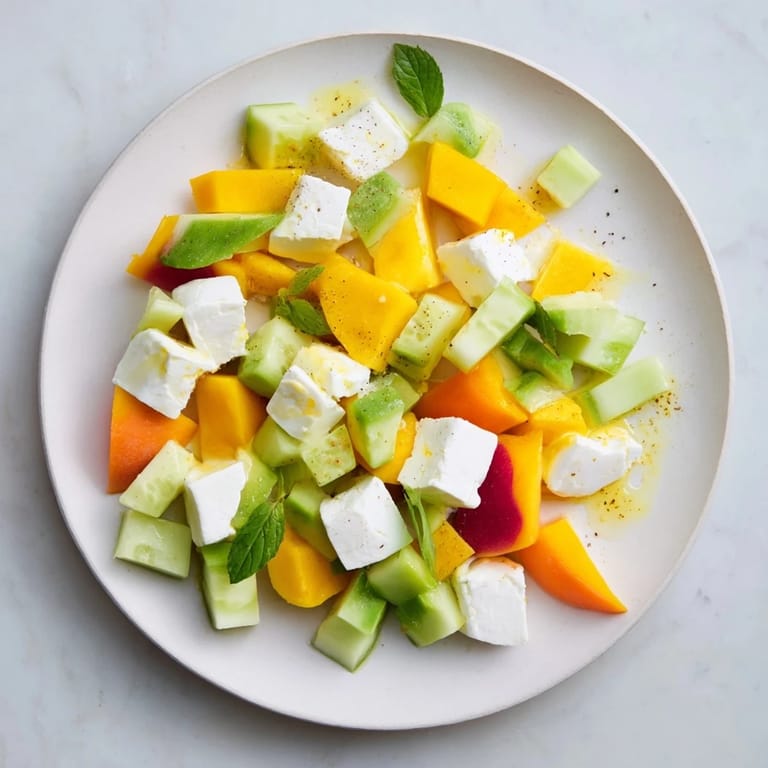
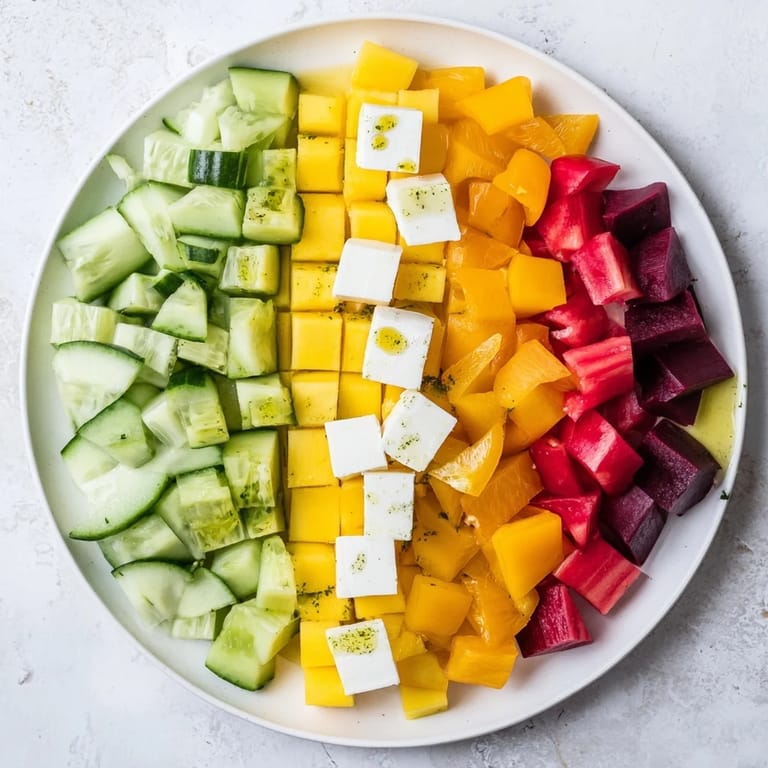
- Use a large, flat platter or wooden board. Start laying out your cubes in a neat grid pattern, alternating colors as you go. You're creating visual rhythm here, so don't overthink it. Step back and look at it from different angles. This is the part where your salad becomes art.
- Finish with the dressing:
- Just before serving, drizzle the dressing lightly over the arranged cubes. Don't drown them; you want each cube to retain its distinct character while enjoying the subtle coating of bright, flavorful oil and lemon.
- Serve and watch:
- Bring it to the table immediately while everything is at its crispest. The anticipation builds when people see this geometric masterpiece, and their faces light up when they taste it.
 Save to Pinterest
 My daughter once told me that this salad made her feel like she was eating a rainbow that someone had carefully organized just for her. That simple observation changed how I think about cooking—it's not just about nourishment or taste, it's about creating moments where people feel cared for through thoughtful presentation.
The Art of the Cube
There's something almost meditative about the precision required here. The repetitive motion of cutting uniform pieces becomes a form of kitchen meditation, where your mind settles into the rhythm of the knife. I've found that the best time to make this salad is when you want to slow down, when you have 35 minutes to yourself and want to move with intention. The cube geometry isn't just about looks; it's about giving every ingredient equal weight and importance, honoring each flavor you've chosen.
Playing with Colors and Flavors
Once you understand the basic concept, this salad becomes endlessly adaptable. I've made versions with papaya instead of mango on nights when I wanted something more tropical, and watermelon-free versions in winter when it feels wrong to serve cold fruit. The beauty of the grid is that it accommodates substitution gracefully. Your only job is to ensure that whatever you choose is ripe, fresh, and cut to the same size as everything else. The structure holds, even as the ingredients change.
Making It Your Own
For a vegan twist, firm tofu cubes replace the feta beautifully, taking on the dressing's flavors while adding protein and a subtle earthiness. I've also served this with microgreens scattered over the top and edible flowers tucked between cubes for dinner parties where presentation truly matters. Sometimes I add a handful of toasted nuts for crunch, though purists might say that breaks the geometric purity. Trust your instincts here because this is your kitchen, your table, and your version of the recipe.
- Cut avocado last and store separately until the final moment to prevent browning
- Keep all ingredients chilled until assembly for maximum crispness and the most refreshing eating experience
- The dressing is light and clean, so don't over-dress; you want to taste each ingredient distinctly
 Save to Pinterest
 This salad reminds me that sometimes the simplest ingredients become extraordinary through thoughtfulness and care. When you serve it, you're sharing more than just a beautiful plate of vegetables—you're offering an invitation to slow down and appreciate the natural colors and flavors of fresh food.
Recipe Frequently Asked Questions
- → What vegetables work best for uniform cubes?
Firm vegetables like cucumber, beet, and bell pepper hold their shape well when cut into cubes, ensuring a clean appearance.
- → How can I ensure precise cube cuts?
Use a sharp chef's knife and a ruler to measure 1 cm increments, maintaining uniform size across all ingredients.
- → Can I substitute the cheese in this dish?
Yes, firm tofu cubes work well as a dairy-free alternative, maintaining texture and shape.
- → What dressing complements fresh cubes without overpowering?
A simple blend of extra-virgin olive oil, lemon juice, sea salt, black pepper, and optional honey lightly enhances flavors without masking them.
- → How should the salad be served for best presentation?
Arrange the cubes in an ordered grid on a large flat surface and drizzle dressing just before serving to keep the crispness intact.
- → Are there flavor variations recommended?
Swapping mango for papaya or pineapple adds different tropical notes, while incorporating microgreens or edible flowers adds visual flair.