 Save to Pinterest
 I'll never forget the first time I arranged food in concentric rings on a platter—it was for a dinner party where I wanted something that looked like edible art. My guests walked into the kitchen and gasped before I'd even finished arranging the final piece. That moment taught me that food isn't just about taste; it's about creating a memory, a conversation starter, something people photograph before they eat. This dish became my signature move, the one that transforms a regular gathering into something people still talk about months later.
I made this for my sister's birthday brunch, and watching her face light up when I carried it to the table—that was worth every minute of careful slicing and arranging. Her friends asked for the recipe immediately, and I realized I'd created something that bridges the gap between restaurant-quality presentation and home kitchen simplicity. It's become the dish I make whenever I want to feel proud of what I'm serving.
Ingredients
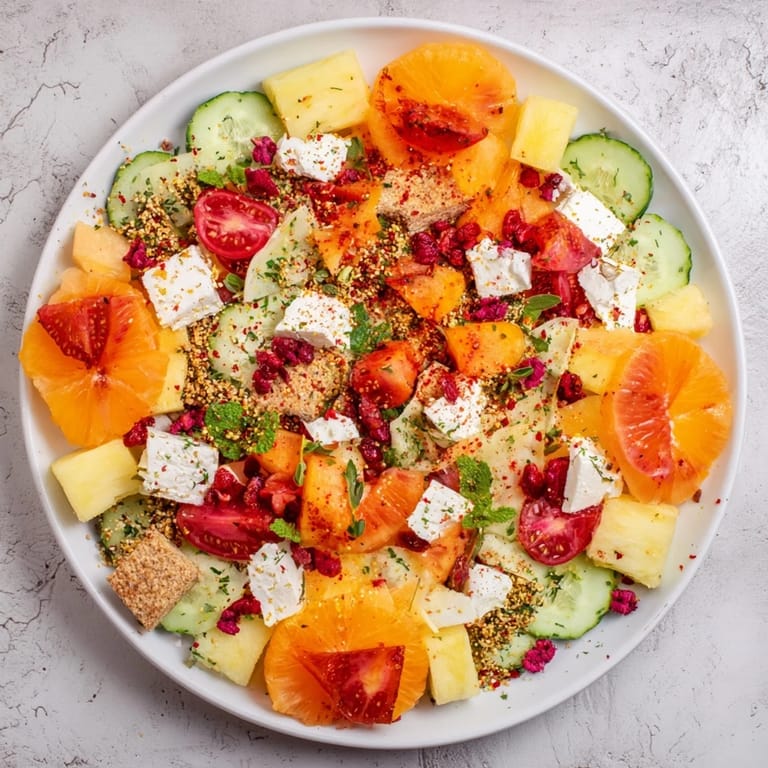
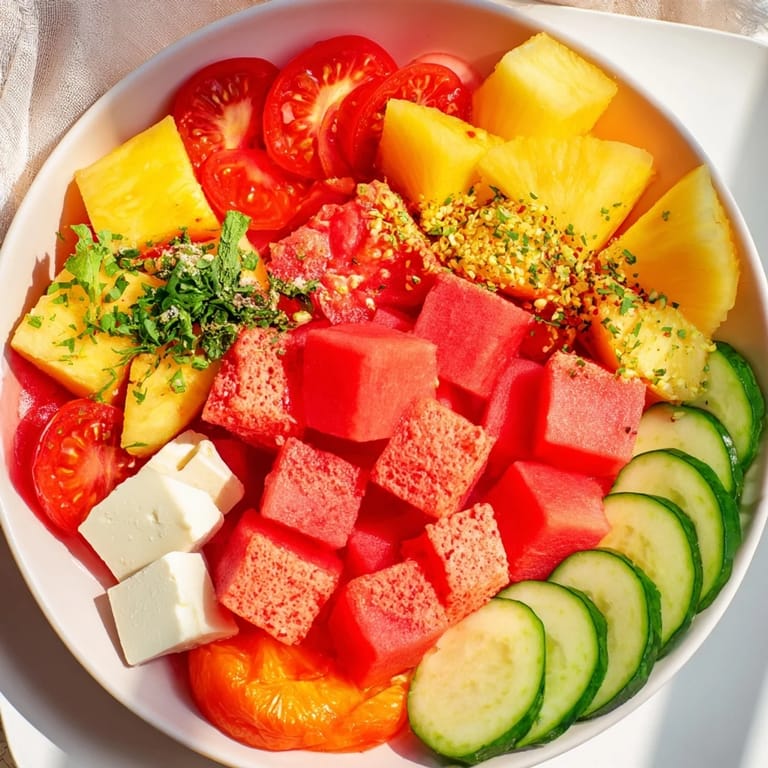
- Fresh pineapple, diced (1 cup): The sweetness needs to be bright and tropical—this is your candy course. I learned to buy pineapples that smell fragrant at the base; that's how you know they're at peak sweetness.
- Seedless watermelon, diced (1 cup): Choose one that feels heavy for its size and has a pale yellow spot where it rested on the ground. That's the ripeness indicator that changes everything.
- Honey (1 tablespoon): Just enough to deepen the fruit's natural sweetness without making it cloying. Raw honey adds a subtle complexity if you have it.
- Lime zest (1 teaspoon): This tiny amount of brightness prevents the sweet ring from feeling one-dimensional. Zest right before serving if possible.
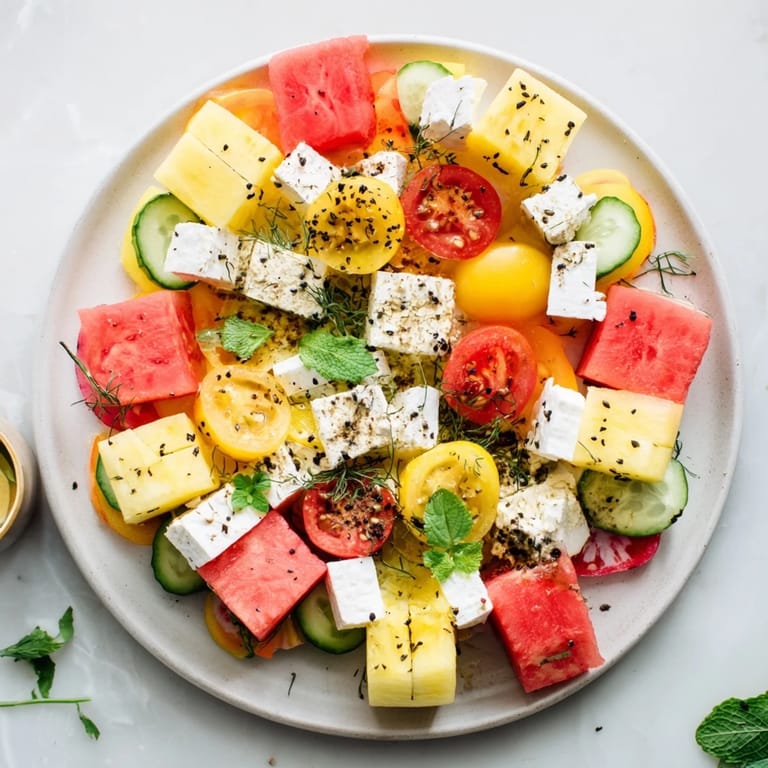
- Cucumber, thinly sliced (1 cup): The cooling, crisp anchor of the savory ring. I use English cucumbers because they have fewer seeds and stay crispy longer.
- Cherry tomatoes, halved (½ cup): Choose tomatoes that are slightly firm; they hold their shape better than soft ones and add visual pop.
- Feta cheese, crumbled (½ cup): The salty, tangy element that makes people say 'what is that?' The creaminess matters, so don't use the super-dry crumbles if you can help it.
- Extra virgin olive oil (2 tablespoons for savory): This is where quality matters—a peppery, grassy oil elevates everything it touches.
- Fresh mint, chopped (1 tablespoon): Picked fresh makes all the difference. That cooling sensation on your palate is what makes the savory ring memorable.
- Salt and black pepper: Season by hand, tasting as you go. The feta is already salty, so start conservatively.
- Cooked chickpeas, drained and patted dry (1 cup): Patting them dry is non-negotiable—it's the secret to crispiness. Canned works perfectly; just drain and pat thoroughly.
- Smoked paprika (1 teaspoon): The smokiness transforms ordinary chickpeas into something guests will ask about. Don't skip this for regular paprika.
- Cayenne pepper (½ teaspoon): This is a starting point. Adjust based on who you're serving; some heat is the goal, not fire.
- Olive oil (2 tablespoons for spicy): Regular olive oil works fine here since you're cooking it. Reserve your fancy oil for garnish.
- Red chili, thinly sliced (1 small, optional): The thin slices look beautiful and add a fresh heat that complements the cooked spice.
- Fresh cilantro, chopped (1 tablespoon): The herbaceous finish that ties the spicy ring together. If you're cilantro-averse, parsley works in a pinch.
- Lemon juice (½ lemon): Freshly squeezed, tossed in just before serving so it doesn't turn the cilantro brown.
Tired of Takeout? 🥡
Get 10 meals you can make faster than delivery arrives. Seriously.
One email. No spam. Unsubscribe anytime.
Instructions
- Crisp up those chickpeas:
- Heat your olive oil in the skillet until it shimmers—that's when you know it's hot enough. Add the chickpeas and let them sit undisturbed for a minute before stirring. That's how they get golden and crispy instead of just warm. Add the smoked paprika and cayenne, stirring constantly so the spices coat everything evenly and bloom into fragrance. You'll know they're ready when they're golden and making little popping sounds. This takes about five to seven minutes, and it's the foundation of your spicy ring's texture. Let them cool slightly on a plate.
- Build your sweet ring:
- Combine the pineapple and watermelon in a bowl. Drizzle the honey over them gently, add the lime zest, and fold everything together with a light hand. You want the fruits to stay distinct, not become mushy or compressed. This should feel delicate, like you're being gentle with something precious.
- Prepare the savory ring:
- In another bowl, layer the cucumber slices, halved tomatoes, and crumbled feta. Pour the olive oil over everything and sprinkle with fresh mint. Add a pinch of salt and freshly ground pepper. Taste a piece of cucumber; it should make you happy. Adjust your seasonings based on that single taste. This is how you learn to season by intuition instead of guessing.
- Arrange your masterpiece:
- Find your largest, most beautiful round platter. This is where the magic happens. Start with the spicy chickpeas on the outside edge, arranging them in a thick, even circle. Leave about an inch of space, then create your second ring with the savory mixture, spreading the cucumbers, tomatoes, and feta evenly. Finally, fill the very center with the sweet fruit mixture. Step back. Seriously, step back and look at what you've created. That moment of completion is its own reward.
- Finish and serve:
- Toss the cooled chickpeas with cilantro and fresh lemon juice just before serving. Scatter the red chili slices (if using) over the spicy ring for visual contrast. Bring it to the table immediately and let people admire it before anyone takes a bite. That's where the memory gets made.
 Save to Pinterest
 I served this at a potluck where someone's young daughter—probably seven years old—stood in front of the platter for the longest time, just staring. Her mom asked if she wanted some, and she said, 'I don't want to ruin it.' That's when I knew I'd made something special. A dish that's beautiful enough to hesitate before eating is a dish that creates moments, not just meals.
Three Flavor Journeys in One Bite
The genius of this dish is that you experience three completely different flavor arcs in a single gathering. When you build your own bite—grabbing a piece from each ring—your palate travels from the crispy, smoky heat of the chickpeas to the cool, herbaceous freshness of the cucumber and feta, then finishes with the bright sweetness of pineapple and watermelon. It's like a journey around the world in one plate, and everyone interprets it differently. I've watched people start with the spicy ring, others head straight for the fruit, and some build the perfect balanced bite from the beginning. There's no wrong way to eat this, which is part of its charm.
Making It Your Own
The beauty of concentric rings is that you can swap elements based on what you love or what's in season. I've made the sweet ring with fresh mango when pineapple felt heavy, and with strawberries in summer when they're at their peak. Someone once suggested adding grilled shrimp to the savory ring, and it absolutely transformed the dish into something more substantial. The framework is flexible; the presentation is what makes it memorable. This is a template for you to become the artist, not a rigid rule book.
Serving Suggestions and Moments
I serve this as a centerpiece for wine and cheese evenings, or as the opening act for a larger meal. It works beautifully with flatbread or crispy tortilla chips on the side—people love having something to scoop with. The truth is, the moment you set this on the table, you've already won. Photographs happen, conversations pause, and you get to be the person who made everyone's evening a little more beautiful. That's the real recipe here.
- Pair with a crisp white wine or sparkling rosé that echoes the fruit's brightness
- Add flatbread or tortilla chips for texture contrast and a vessel for gathering the flavors
- Make it vegan by swapping feta for crispy chickpea-based crumbles or simply omitting it entirely
 Save to Pinterest
 This dish taught me that cooking is partly technique, but mostly about the feeling you create when you serve something you've made with intention. Every time someone says yes to this recipe, you're not just feeding them—you're giving them permission to feel like artists in their own kitchens.