 Save to Pinterest
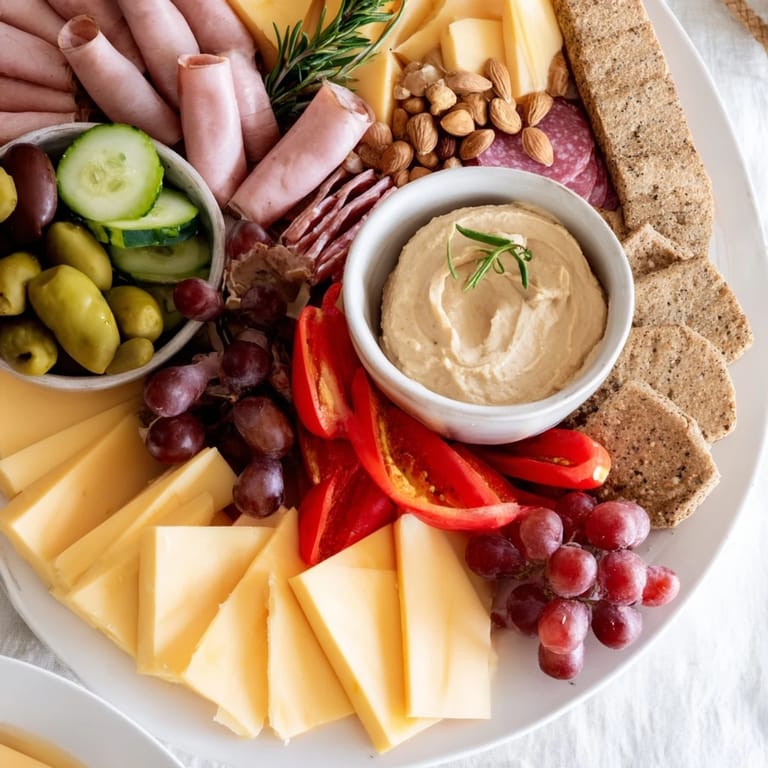
 I discovered the magic of directional boards at a dinner party where a friend arranged everything to point toward a single bowl of hummus, and suddenly the appetizer became the conversation piece. That moment taught me that food isn't just about taste—it's about how you present it, how it makes people feel when they gather around. Now, whenever I need to impress, I create an arrowhead board that feels like it's pulling everyone in.
I'll never forget making this for my daughter's book club gathering. Someone arrived early and watched me arrange the last few items, and she said, 'This looks like it's dancing toward the dip.' That's when I realized this board doesn't just feed people—it creates a moment they remember.
Ingredients
- Aged cheddar, cut into triangles (100 g): The sharpness cuts through the richness of the dip, and triangular shapes naturally point like arrows
- Brie, sliced into wedges (100 g): The soft, buttery texture melts beautifully with crackers and provides an elegant look
- Gouda, cut into strips (100 g): Its subtle sweetness and smooth texture make it crowd-pleasing, and strips align perfectly with your directional theme
- Prosciutto, folded (100 g): Paper-thin and delicate, it catches light and adds sophisticated texture when folded into loose bundles
- Salami, sliced and folded (100 g): Keep these thin and fold them gently for visual interest while maintaining your directional flow
- Seedless grapes in small clusters (1 cup): Their natural sweetness and round shape create visual variety and pop against the board
- Cherry tomatoes, halved (1 cup): These add brightness and must be halved right before serving to prevent weeping onto your board
- Cucumber, sliced diagonally (1 small): Diagonal cuts already follow your arrow theme and stay crisp longer when sliced fresh
- Red bell pepper, sliced into strips (1 small): The color is essential for visual drama, and strips naturally create directional lines
- Artisan crackers (1 cup): Choose ones with varied shapes and textures to reinforce movement across the board
- Baguette, sliced on the bias (1 small): The angled cuts echo your arrow theme and provide sturdy bases for toppings
- Marcona almonds (½ cup): These buttery, roasted nuts add richness and fill gaps while looking intentional
- Dried apricots (¼ cup): They provide sweetness and warm color that contrasts beautifully with the savory elements
- Olives (¼ cup): Choose ones with visual pop, and keep them in a small bowl to prevent oil seeping into your arrangement
- Herbed hummus or whipped feta dip (about 100 ml): This is your focal point, so choose one you genuinely love and make it generous
Tired of Takeout? 🥡
Get 10 meals you can make faster than delivery arrives. Seriously.
One email. No spam. Unsubscribe anytime.
Instructions
- Establish your focal point:
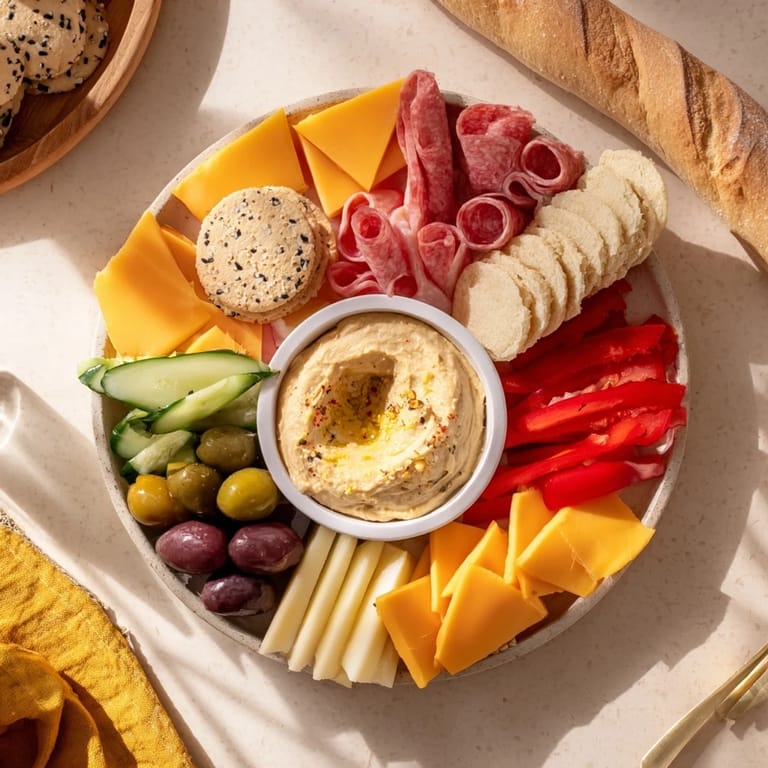
- Place your dip bowl at one end or corner of the board—this is your arrow's point. Picture this as the destination everything else is traveling toward. If you're using a wooden board, I like positioning it slightly off-center to create drama.
- Point your cheeses home:
- Arrange those beautiful cheese triangles and wedges so their points all face toward the dip. Start at the opposite side of the board and fan them outward like they're making a pilgrimage. The aged cheddar triangles work especially well for this because their natural points are already built in.
- Create meat flow:
- If you're using prosciutto and salami, fold them gently and position them in loose lines that all gesture toward your center dip. Think of these as the smooth curves in your arrow's design—they should feel organic, not rigid.
- Angle your vegetables and fruit:
- This is where sensory richness happens. Lay your cucumber slices, bell pepper strips, and tomato halves on the diagonal, all angling inward. The grape clusters should sit in the spaces where they feel like they're nodding toward the dip. This isn't rigid—it's more like a gentle current pulling everything one direction.
- Radiate your crackers and bread:
- Position baguette slices and crackers in radiating lines, just as they all point toward your center bowl. The bias-cut baguette slices are your secret weapon here—they already follow the diagonal theme perfectly.
- Scatter and fill:
- Now scatter those almonds, dried apricots, and olives along the pathways between your main components. They're not just filling gaps—they're reinforcing the directional pattern, like little guides leading guests toward the dip.
- Step back and adjust:
- Take a moment to look at your board from above. Does everything feel like it's flowing in one direction? Shift items slightly until the movement feels natural. Fill any awkward gaps with extra nuts or a few more grapes. This is where intuition takes over from rules.
 Save to Pinterest
 The real magic happens when the first guest arrives, sees this arranged board, and their eyes actually follow the direction of all those angled pieces right to the dip bowl. It's subtle, but it works. That's when you know you've created something that's more than just food.
The Psychology of Your Arrangement
There's something about movement in food presentation that makes people engage differently. When everything points toward one spot, you're not just serving appetizers—you're creating a visual conversation. The directional design naturally draws people together and makes them gather around the focal dip rather than spreading out across the board. I've learned that the most elegant entertaining isn't complicated; it's about understanding how people experience what you've made, and guiding that experience with intention.
Customizing for Your Crowd
The beautiful truth about this board is that it's infinitely customizable while maintaining its directional magic. If you're serving vegetarians, simply remove the meats and double up on cheeses or add roasted vegetables like zucchini or eggplant slices. For a Mediterranean twist, add marinated artichoke hearts or sun-dried tomatoes. The structure remains the same—you're just swapping ingredients while keeping that arrow pointing home.
Pairing and Serving Suggestions
I've found that this board sings with wine—a crisp Sauvignon Blanc brings out the brightness of fresh vegetables, while a light Pinot Noir complements the cured meats beautifully. If you're serving non-alcoholic drinks, sparkling water with fresh lemon feels just as elegant. The key is serving everything at room temperature, which is when both cheeses and cured meats taste their absolute best.
- Try pairing the herbed hummus with crusty bread and aged cheddar for the most satisfying bite combination
- If guests seem to be overlooking certain elements, take a casual seat at the board and start eating—people follow what they see you enjoying
- Always have small plates nearby and extra napkins; a well-loved charcuterie board should look a bit lived-in, not pristine
 Save to Pinterest
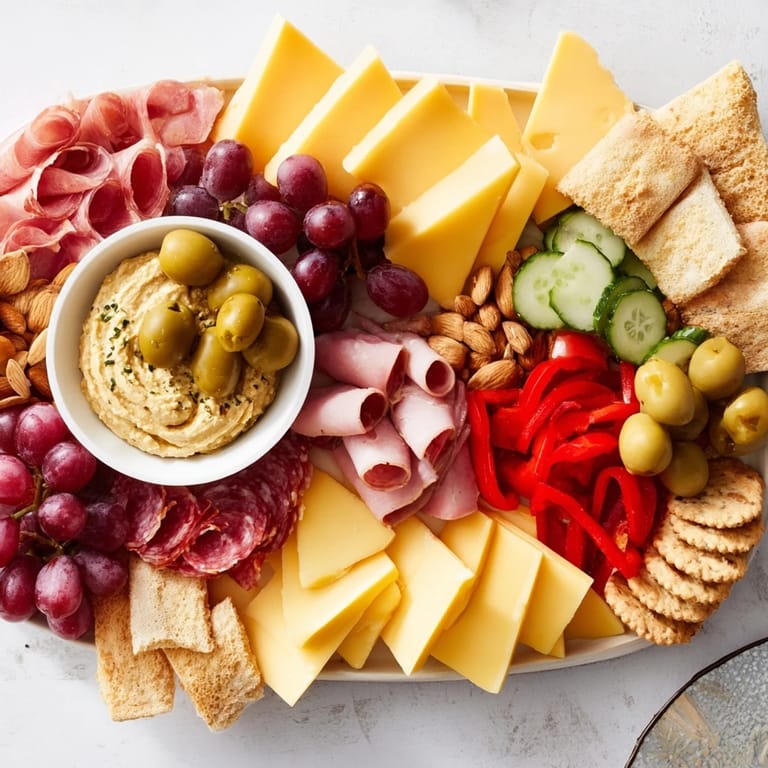
 This board has become my secret weapon for entertaining because it looks impressive while requiring nothing but fresh ingredients and a little thoughtful arrangement. Every time I make it, I remember that friend who said it looked like it was dancing toward the dip, and I smile.
Recipe Frequently Asked Questions
- → How do I create the directional effect on the board?
Place the dip bowl at a corner or edge and arrange cheese, meats, and vegetables so their shapes and angles all point toward it, creating a visual flow.
- → Can this board be made vegetarian?
Yes, simply omit the meats and increase the variety or amount of cheeses and fresh produce to maintain balance and appeal.
- → What types of dips work best for this presentation?
Herbed hummus, whipped feta, beet hummus, tzatziki, or whipped ricotta all complement the flavors and visually anchor the board.
- → What tools are recommended for assembling the board?
A large wooden or slate board is ideal, along with a paring knife for slicing and small bowls for dip and olives.
- → How can I add visual interest to the board?
Use contrasting colors and textures such as bright cherry tomatoes, varied cheese shapes, and nuts scattered along directional lines.
- → Are there suggested beverage pairings?
Crisp Sauvignon Blanc or a light Pinot Noir pair nicely with the range of flavors on the board.