 Save to Pinterest
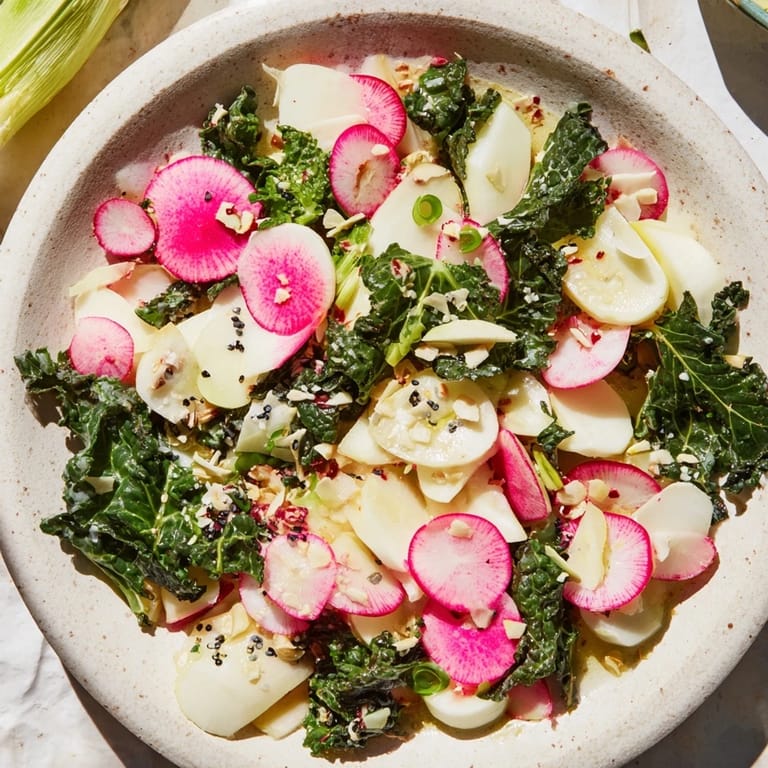
 I discovered this dish quite by accident on a grey afternoon, standing in front of my open refrigerator staring at a collection of pale, forgotten vegetables. There's something about winter produce that whispers minimalism—the quiet beauty of a daikon's translucent slices, the delicate geometry of sliced kohlrabi catching the light. I started arranging them on a chilled stone plate I'd pulled from storage, and suddenly the scattered geometry reminded me of photographs I'd seen of arctic tundra, windswept and spare. What began as salvaging vegetables became an exercise in visual poetry, and I realized this wasn't just about using what I had—it was about celebrating the elegance of simplicity itself.
I served this to a friend who'd been dreading dinner because she'd just adopted a strict plant-based diet and felt like she was losing her favorite restaurant experiences. When I set the plate down in front of her, there was this moment of quiet appreciation—she actually slowed down, looked at the arrangement, and smiled before tasting anything. That's when I understood: this dish works because it treats vegetables not as substitutes for something else, but as worthy subjects in their own right.
Ingredients
- Daikon radish, thinly sliced: Choose a small, firm one with no soft spots—the thinness matters because you want those translucent, crispy rounds that catch light like little windows.
- Kohlrabi, thinly sliced: Peel away the fibrous exterior and you'll find sweet, delicate flesh that stays firm and mildly sweet without any bitterness if you don't overcook it (and there's no cooking here, so you're safe).
- Belgian endive leaves: Separate them gently and arrange them raw for their natural bitterness and elegant elongated shape.
- Cauliflower florets, finely chopped: Use only the tender inner florets, chopped small so they scatter like snow rather than dominate.
- Unsweetened coconut flakes: These add unexpected tropical lightness and textural contrast that keeps your palate interested.
- White and black sesame seeds, lightly toasted: Toast them just until fragrant—this awakens their nutty quality and gives them a subtle warmth that lingers.
- Microgreens (pea shoots or radish sprouts): Add these at the very last second for peppery freshness and visual delicacy.
- Flaky sea salt: Don't use regular salt here—flaky sea salt has crystals that catch your tongue differently and remind you of the finishing touch.
- Extra-virgin olive oil: This is your binding element, so use something you actually like the taste of, not just what's on sale.
- Fresh lemon juice: Freshly squeezed makes a noticeable difference; bottled has a slightly metallic edge that dulls the delicate flavors.
- White wine vinegar: Just a whisper of it—you're not pickling, you're balancing.
- White pepper: It's milder and less aggressive than black pepper, which allows the subtle vegetable flavors to come forward.
Tired of Takeout? 🥡
Get 10 meals you can make faster than delivery arrives. Seriously.
One email. No spam. Unsubscribe anytime.
Instructions
- Chill your canvas:
- Pop your stone or marble platter into the freezer for 15 minutes—this isn't just for temperature, it's psychological. A cold plate signals something intentional and special to your guests before they even taste anything.
- Mix your dressing:
- Whisk together the olive oil, lemon juice, vinegar, and white pepper in a small bowl until they're emulsified and the white pepper flecks are evenly distributed. Taste it straight from the whisk; the flavors should be bright and balanced, not aggressively sour.
- Begin your arrangement:
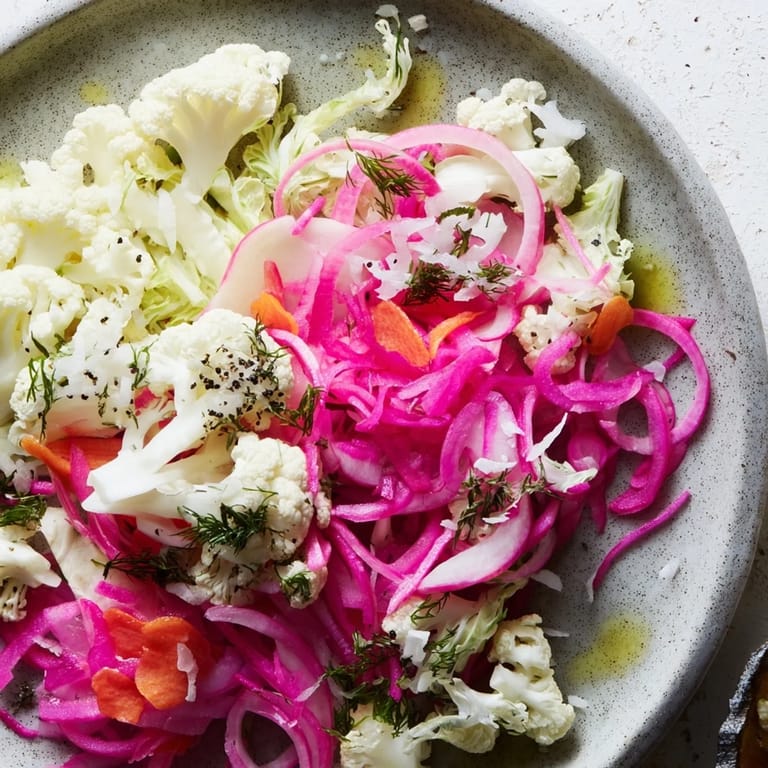
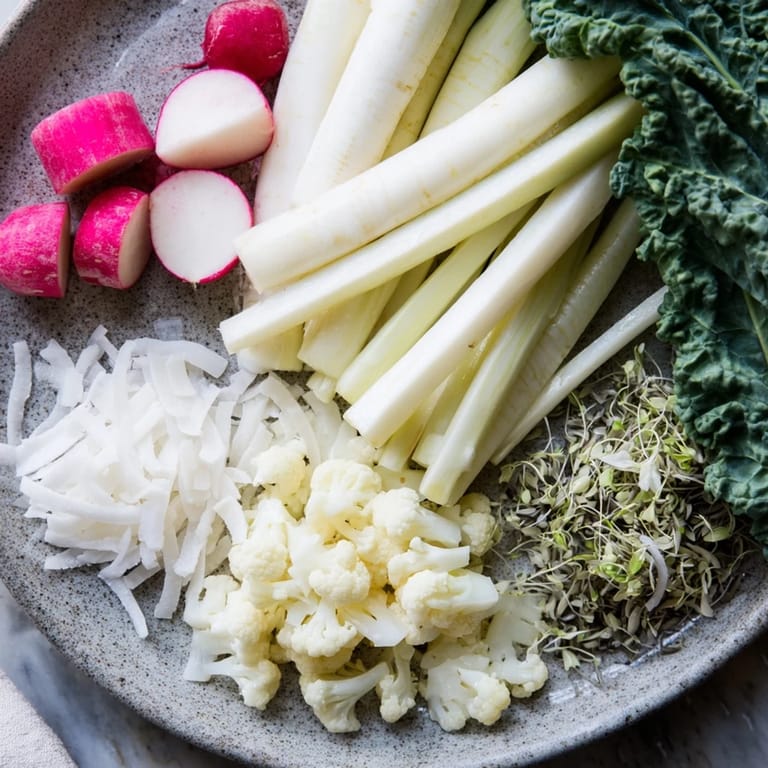
- Remove the plate from the freezer and start arranging your daikon, kohlrabi, and endive leaves sparsely across it, as if the wind has scattered them. Don't overthink the placement—random asymmetry is the whole point.
- Add texture and depth:
- Sprinkle the chopped cauliflower, coconut flakes, and both sesame seeds across the plate in a windswept pattern. Let some cluster together and other bits stand alone.
- Dress with intention:
- Drizzle your dressing lightly across everything, using just enough so that flavors mingle but vegetables still have texture and the plate doesn't look wet.
- Finish and serve:
- Add the microgreens as your final flourish and crack a small pinch of flaky sea salt over top. Serve immediately while everything is cold and crisp.
 Save to Pinterest
 There's a quiet confidence that comes from plating something this visually striking, knowing that no complicated techniques made it possible. My dining room got very still while people were eating, and I realized they weren't just tasting food—they were having a moment with it, the kind where beauty and flavor become inseparable.
The Art of Minimalism on a Plate
Minimalist plating can feel intimidating until you realize it's actually the opposite of complicated—it's about trusting that beautiful ingredients don't need much help. The Tundra Trek works because every element earns its place, and there's nowhere for mediocre ingredients to hide. Choose the crispest vegetables you can find, taste your dressing before it hits the plate, and remember that negative space is as important as what you arrange.
Flavor Building Through Contrast
The magic of this dish lives in its contrasts: the sharp peppery punch of radish against the mild sweetness of kohlrabi, the bittersweet endive played against creamy coconut, sesame seeds providing nutty warmth against cool, raw vegetables. Each textural and flavor difference makes your palate more awake and curious as you move through the plate. It's the culinary equivalent of a landscape where every element serves to make the others more vivid.
Customization Without Losing Your Way
While this recipe captures something beautiful as written, it also welcomes improvisation if you approach it thoughtfully. The framework is what matters—pale vegetables, subtle dressing, careful arrangement, and a moment of final garnish. Think in terms of texture, flavor intensity, and visual color: keep most elements in the pale and white range, ensure you have at least one peppery element, include something creamy or rich in the garnish, and always finish with something green and vital. Here's what I've discovered works well as swaps and additions:
- Swap the kohlrabi for thinly sliced celeriac or turnip if you want something earthier.
- Use a combination of citrus—lemon and lime together, or try yuzu for something more exotic and floral.
- Add a scatter of pomegranate seeds at the last second for a jewel-like pop if you want color and tartness.
 Save to Pinterest
 This dish taught me that sometimes the most memorable meals are the ones that make people pause, look, and feel seen through the care taken with their food. Serve it to someone you want to impress, or make it for yourself on a day when you need a reminder that simplicity, when done with intention, is never boring.
Recipe Frequently Asked Questions
- → What vegetables are used in this dish?
The dish features daikon radish, kohlrabi, Belgian endive, and finely chopped cauliflower florets for crispness and texture.
- → How is the dish served to enhance its presentation?
The vegetables are artfully scattered on a chilled stone or marble platter, mimicking the sparse, windswept tundra landscape.
- → What dressing complements the ingredients?
A light dressing made with extra-virgin olive oil, fresh lemon juice, white wine vinegar, and white pepper adds subtle acidity and spice.
- → Are there any garnishes to add texture or flavor?
Toasted white and black sesame seeds, unsweetened coconut flakes, microgreens, and flaky sea salt provide layers of texture and delicate accents.
- → Can this dish accommodate dietary preferences?
Yes, it is vegetarian, gluten-free, and focuses on fresh vegetables and simple seasoning for broad dietary appeal.