 Save to Pinterest
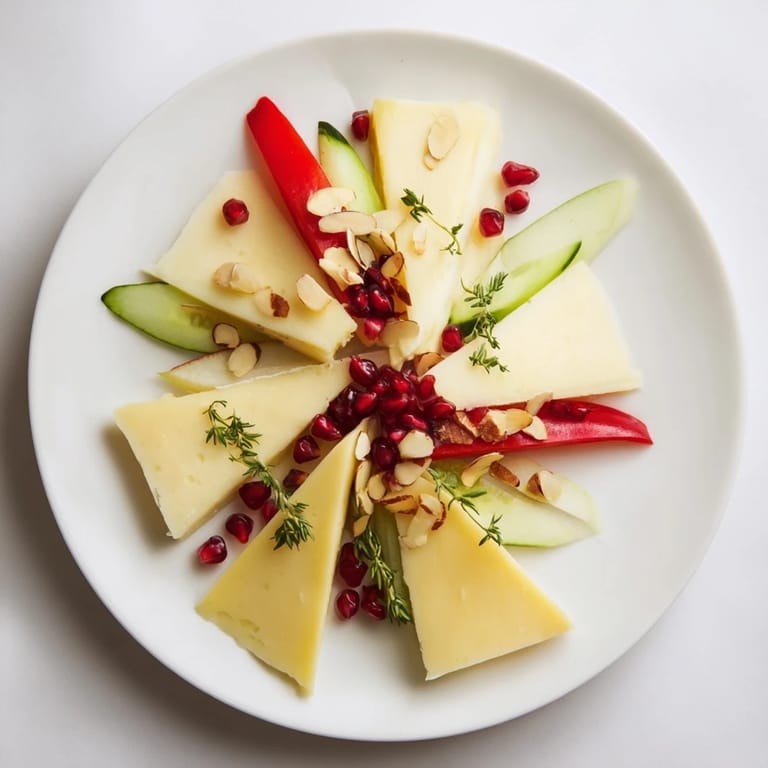
 I'll never forget the moment I realized that food doesn't have to be complicated to be stunning. It was a Saturday afternoon when a friend challenged me to create something visually breathtaking for a dinner party, and I stood in my kitchen staring at a cutting board, suddenly imagining all those vibrant ingredients transformed into perfect triangles. That's when The Tessellation Triangle was born—a board that looks like edible geometry, but feels like pure hospitality. The beauty of it is that you're not spending hours cooking; you're spending time creating art that happens to taste incredible.
I made this for a gallery opening once, and watching people's faces light up when they saw it—before they even tasted anything—reminded me that feeding people is really about creating moments. Someone said it was almost too pretty to eat. Almost.
Ingredients
- Aged Cheddar, 100 g: Slice it thick enough to hold its shape but thin enough to cut cleanly into triangles. The sharpness plays beautifully against the sweetness of pears.
- Manchego, 100 g: This Spanish cheese has a subtle nutty flavor that feels elegant without being pretentious. It holds its form perfectly for geometric cutting.
- Goat Cheese, 100 g: Keep it chilled until the last moment so it's firm enough to slice cleanly. It's your creamy contrast to all the crispness.
- Cucumber, 1 medium: Peel it first for visual appeal, then slice thin and cut into triangles. These stay crisp and cool, grounding the board.
- Red Bell Pepper, 1 large: Remove the seeds and cut into uniform triangles—the brightness of red is non-negotiable for visual impact.
- Beet, 1 small: Cook it beforehand (roast or boil), then slice paper-thin. The deep color creates stunning contrast and its earthiness anchors the board.
- Pear, 1 large: Core it and slice immediately, then cut into triangles. The sweetness surprises people in the best way. A light brush of lemon juice keeps it from browning.
- Watermelon, 1/2 cup: Cut into small triangles and drain on paper towels so excess moisture doesn't weep onto other ingredients.
- Whole Grain Crackers, 100 g: Cut into triangles if they're not already. They're your textural anchor and the only thing that needs any real planning.
- Roasted Almonds, 1/4 cup: These are your gap-fillers and your secret texture weapon—scatter them in spaces between larger pieces.
- Pomegranate Seeds, 1/4 cup: Save these for last. They're rubies for your edible mosaic and add a tart brightness.
- Honey, 2 tbsp (optional): A light drizzle over the goat cheese right before serving adds elegance and a subtle sweetness.
- Fresh Herbs, thyme or mint: Fresh is everything here. These aren't just garnish—they're flavor surprises tucked between pieces.
Tired of Takeout? 🥡
Get 10 meals you can make faster than delivery arrives. Seriously.
One email. No spam. Unsubscribe anytime.
Instructions
- Set Your Stage:
- Choose your largest, most beautiful board or platter—this is going to be a centerpiece. Make sure it's completely clean and dry. If you're feeling fancy, you can lightly rub it with a barely damp cloth and let it air dry. This is your canvas.
- Cut with Purpose:
- This is where precision matters. Get your sharpest knife out, or better yet, use a mandoline if you have one. Every triangle should be roughly the same size—aim for triangles about 2 to 3 inches on each side. The uniformity is what makes the tessellation work. Take your time here; there's something meditative about the repetition.
- Begin Your Pattern:
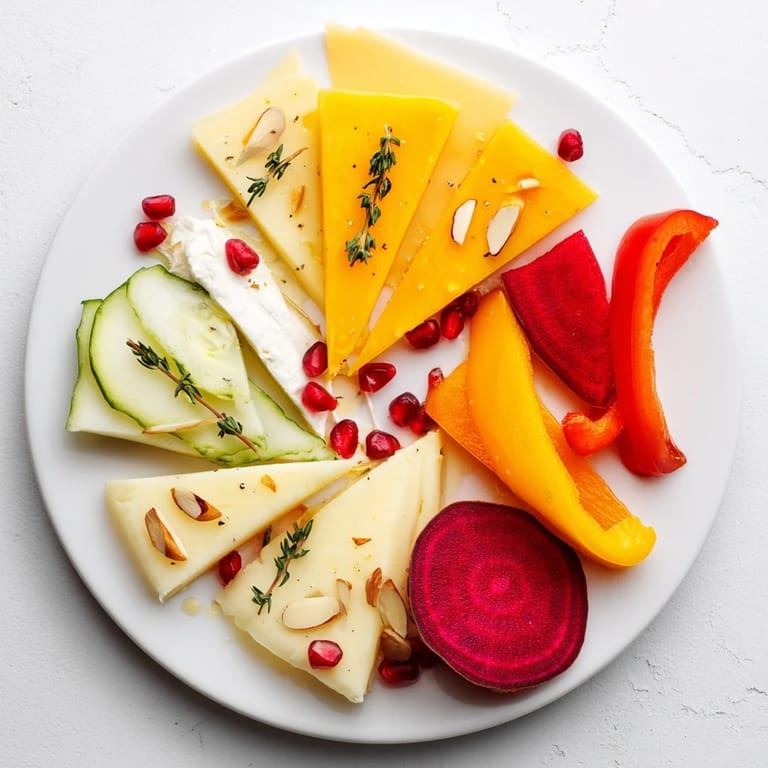
- Start from one corner of the board and lay down your first row of triangles. Think of it like you're solving a puzzle. Alternate colors and textures as you go—cheese, then vegetable, then fruit, then cracker. Fit each piece snugly against its neighbors. You're aiming for minimal gaps; the tessellation should feel seamless, like each piece was always meant to sit beside the next.
- Build the Geometry:
- Continue row by row, working your way across the board. The beauty emerges as you go. Step back occasionally and look at the overall composition. If something feels unbalanced, adjust. Shift a red pepper triangle here, rotate a cheese triangle there. This is where your artistic eye takes over.
- Fill the Spaces:
- Now comes the fun part. Those tiny gaps between triangles? Scatter pomegranate seeds and roasted almonds into them. They should nestle in naturally, adding color, crunch, and flavor to every corner.
- The Final Touches:
- If you're using honey, drizzle it lightly over the goat cheese triangles just before serving. Scatter fresh herbs across the board with abandon—let a sprig of thyme peek out here, a mint leaf there. This is your signature.
- Serve with Confidence:
- Bring it straight to the table. The conversation will pause for a moment. Let people admire it before they dive in. That moment of appreciation? That's the whole point.
 Save to Pinterest
 The real magic happened when my niece asked if she could photograph it before eating. She spent five minutes getting the lighting just right, and I realized this board had become something more than appetizers—it had become art worth preserving. That's when I knew I'd created something special.
Choosing Your Ingredients Thoughtfully
The Tessellation Triangle thrives on contrast—not just visually, but in flavor and texture. When you're selecting your cheeses, think about what you love. If you prefer sharper flavors, lean into aged cheddars and firm goat cheeses. If you like something creamier, softer cheeses work too, though they'll be slightly trickier to cut. The vegetables are where you can have fun with the seasons. In summer, add heirloom tomatoes cut thin. In fall, try thinly shaved fennel or apple. The point isn't to follow a recipe perfectly; it's to build a board that reflects what moves you in the moment.
The Geometry of Great Entertaining
There's something about creating a structured, beautiful presentation that changes how people experience food. It slows them down. Instead of reaching for a handful of crackers and cheese, they pause to appreciate the care in the arrangement. They talk about what they're eating rather than just eating it. And somehow, when you've invested that time in making something beautiful, people feel that investment. They know they matter to you. That's the real tessellation—not the triangles interlocking on the board, but the connections being made around it.
Variations That Keep It Fresh
Once you've mastered the basic Tessellation Triangle, you can play with it endlessly. Make a fall version with roasted beets, apple slices, and aged white cheddar. Create a spring board with peas, asparagus ribbons, and fresh ricotta. For a non-vegetarian version, cut prosciutto or smoked salmon into triangles and weave them throughout. You could even make smaller versions in individual triangular shapes for place settings at a formal dinner. The frame stays the same; you just change what you put inside it. It becomes a board that evolves with the season and your mood.
- Keep unused ingredients refrigerated until the last possible moment so everything stays crisp and fresh
- If you're making this ahead for an event, cut everything and keep it on damp paper towels in sealed containers, then assemble just before guests arrive
- Remember that the most beautiful board is the one you actually make, not the one you imagine in your head—start with what you have and it will be perfect
 Save to Pinterest
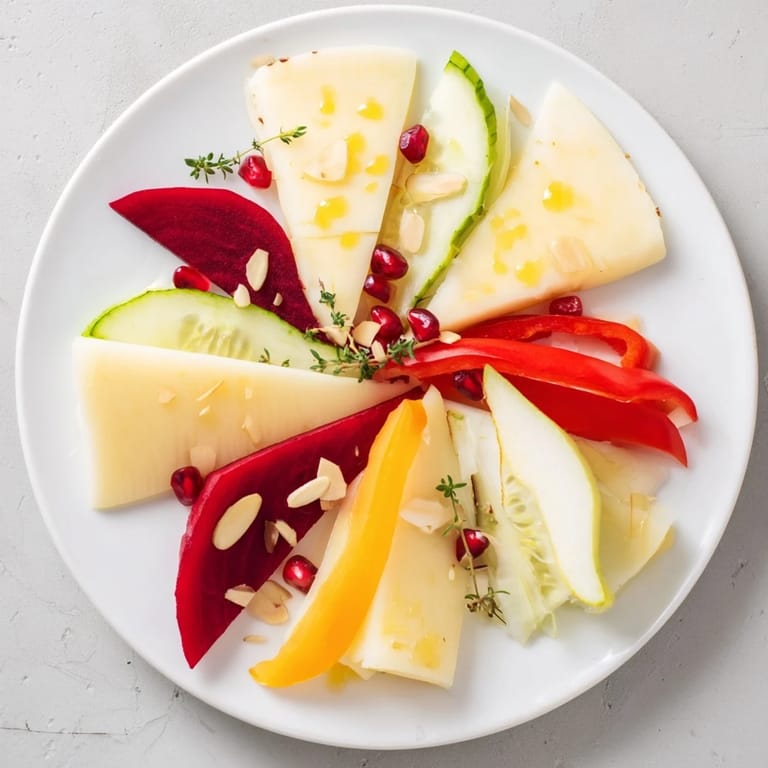
 At the end of the day, this board is about telling your guests they're worth the effort. It's about proving that beautiful food doesn't require complicated cooking—just intention, a sharp knife, and the willingness to spend a Saturday afternoon creating something that makes people smile the moment they walk in.
Recipe Frequently Asked Questions
- → What knives work best for uniform triangle cuts?
A sharp chef's knife or a mandoline slicer helps achieve consistent, thin triangular slices for an even tessellation.
- → Can I replace any ingredients for dietary preferences?
Yes, plant-based cheeses can substitute dairy options for a vegan variation, and cured meats can be added for non-vegetarian adaptations.
- → How do I arrange the triangles effectively on the board?
Start from one corner, placing triangles tightly side by side while alternating colors and textures to create a seamless geometric pattern.
- → What garnishes enhance both look and taste?
Roasted almonds, pomegranate seeds, fresh herbs, and a light drizzle of honey add flavor, texture, and visual contrast.
- → What drinks pair well with this board?
A crisp Sauvignon Blanc or sparkling water with citrus perfectly complements the bold and fresh flavors of the board.