 Save to Pinterest
 The first time I made hand rolls at home, I was terrified of messing up the rice. I'd watched sushi chefs handle it with such precision, their movements quick but deliberate. Standing in my kitchen with a bag of short-grain rice and determination, I took a deep breath and decided perfect or not, homemade hand rolls would be worth the effort. The smell of vinegared rice filled my apartment as I worked, bringing back memories of tiny sushi spots in Japan where I'd watched diners happily crafting their own hand rolls.
Last summer during a heatwave, I invited friends over and set up a hand roll station on my kitchen counter. We all crowded around, reaching for nori sheets and laughing as rice stuck to our fingers instead of the seaweed. Even my friend who claimed to hate seafood ended up making three rolls, substituting extra avocado for the crab. That night reminded me how food becomes more than a meal when you share the making of it.
Ingredients
- Sushi Rice: The foundation of good hand rolls is properly seasoned rice - I've learned that taking the time to rinse it thoroughly removes excess starch and prevents gummy results.
- Nori Sheets: Store these in an airtight container to maintain crispness, and toast them briefly over an open flame if they feel slightly stale.
- Crab Meat: While real crab is divine, quality imitation crab (surimi) works beautifully and is what many sushi restaurants actually use.
- Avocado: Choose ones that yield slightly to gentle pressure - too firm and they'll lack creaminess, too soft and they'll turn to mush in your roll.
- Rice Vinegar: This isn't just any vinegar - the mild, slightly sweet profile is essential for authentic sushi rice flavor.
Tired of Takeout? 🥡
Get 10 meals you can make faster than delivery arrives. Seriously.
One email. No spam. Unsubscribe anytime.
Instructions
- Perfect Your Rice:
- Rinse the rice until the water runs clear, swirling with your fingers to release the starch. After cooking, the seasoned vinegar mixture should be folded in gently while fanning the rice to create a glossy finish without mashing the grains.
- Prep Your Station:
- Arrange all fillings within arm's reach before you start rolling. Keep a small bowl of water nearby to dip fingers in when handling the sticky rice.
- Master the Cone:
- Place your half-sheet of nori shiny-side down on your palm, then add rice diagonally across one corner. The key is not overloading - about two tablespoons is plenty.
- Layer With Purpose:
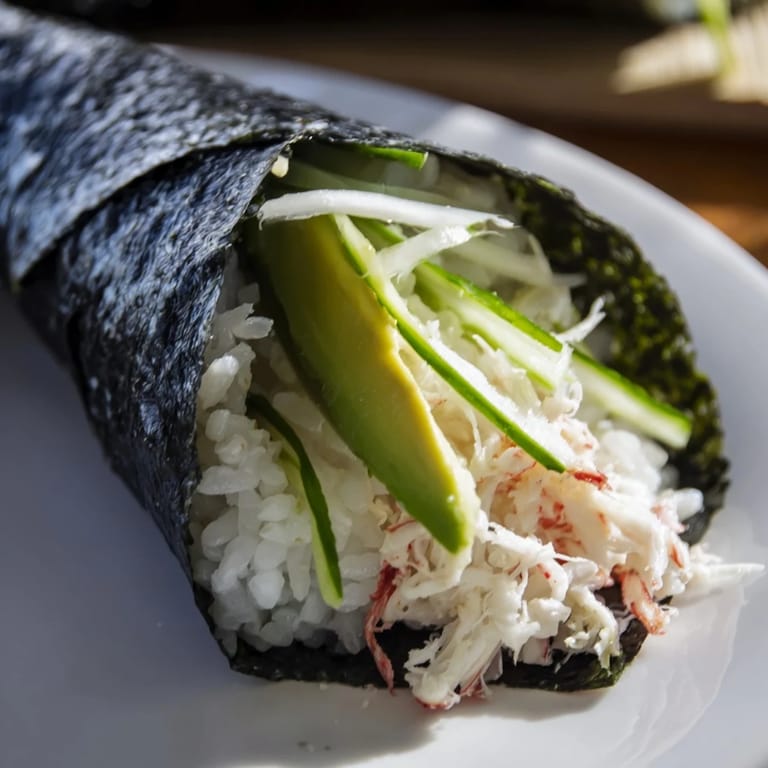
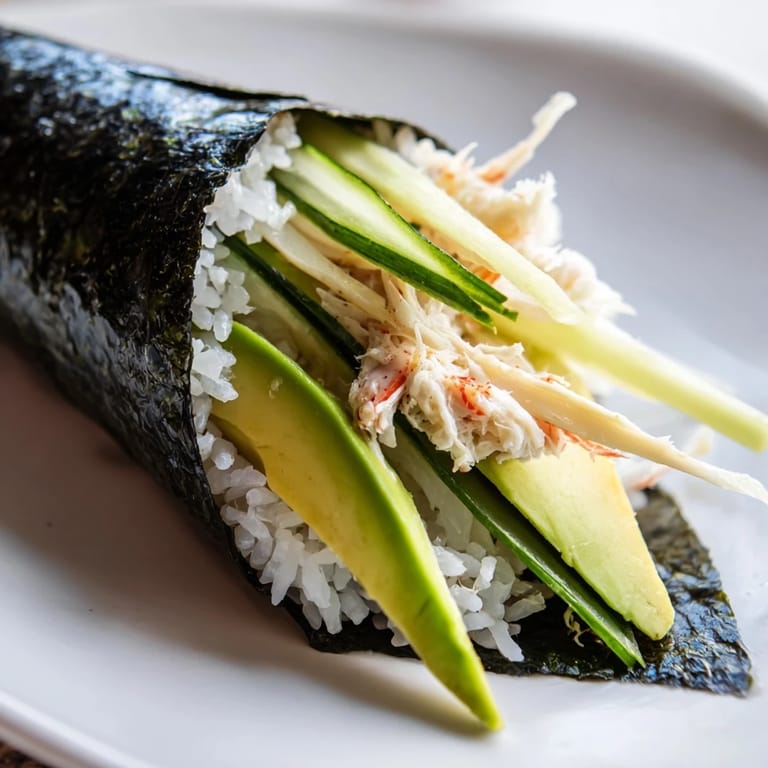
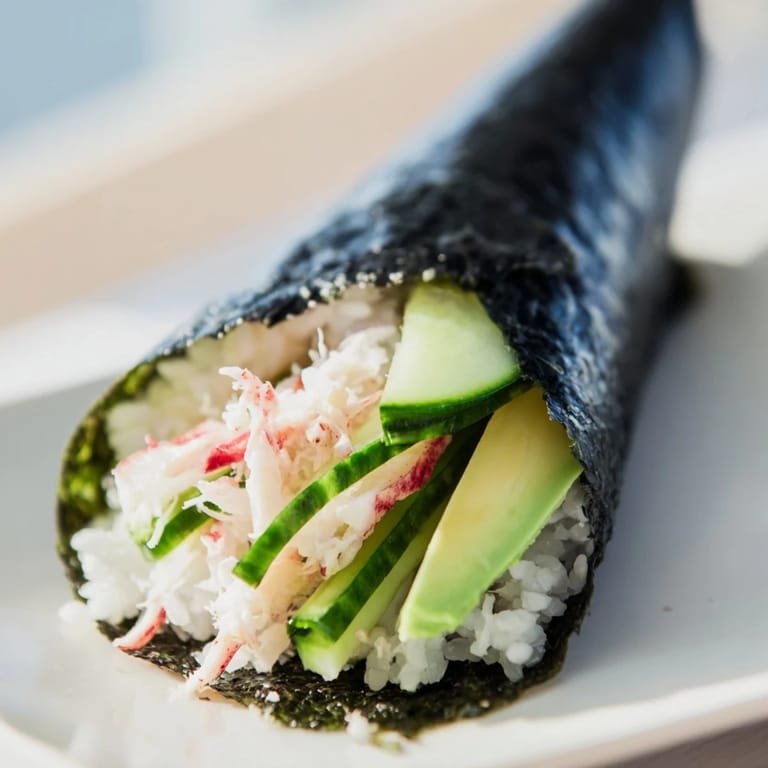
- Arrange fillings so each bite contains all elements. I like to place avocado next to the rice, followed by cucumber for crunch, then crowned with crab.
- Roll With Confidence:
- Begin rolling from the rice-filled corner, using your thumb to guide the filling while your fingers wrap the nori around. A few grains of rice will act as the perfect natural glue for sealing the edge.
 Save to Pinterest
 My daughter called me from college last week just to tell me she'd made these hand rolls for her roommates. Hearing her describe how everyone had customized their own creations with different combinations made me smile. That recipe had traveled from my kitchen to hers, carrying with it all those summer evenings we'd spent making them together when she was younger.
Flavor Variations
Sometimes I add a half teaspoon of wasabi to the mayonnaise before mixing it with the crab for a subtle heat that builds with each bite. Other favorite additions include thin strips of mango for sweetness, microgreens for peppery freshness, or even thin slices of seared tuna for special occasions. The beauty of hand rolls is their adaptability - once you understand the basic technique, the fillings become your creative playground.
Serving Suggestions
I've found that hand rolls shine brightest when served immediately after making, ideally eaten within minutes so the nori retains its crispness. When hosting, I prefer to set up an interactive station where everyone makes their own rather than preparing them all in advance. Alongside traditional accompaniments like soy sauce, wasabi, and pickled ginger, I sometimes offer a simple cucumber salad dressed with rice vinegar and sesame oil to cleanse the palate between rolls.
Storage and Make-Ahead Tips
While hand rolls are best enjoyed fresh, you can prepare components ahead of time to streamline the process. Cook and season the rice up to four hours before serving, keeping it covered with a damp cloth at room temperature. Slice vegetables and prepare proteins just before assembling to maintain optimal freshness and texture.
- Pre-cut nori sheets can be stored in their original packaging with a silica gel packet to prevent humidity from softening them.
- Keep avocado slices from browning by sprinkling with a little lemon juice if prepped slightly ahead.
- Have guests wash hands before the rolling begins to maintain food safety with the raw ingredients.
 Save to Pinterest
 There's something deeply satisfying about creating these little handheld treasures that connect us to culinary traditions while allowing for personal expression. Whether you follow my recipe exactly or use it as a springboard for your own creations, I hope these hand rolls bring as much joy to your table as they have to mine.
Recipe Frequently Asked Questions
- → What is the best type of rice for hand rolls?
Short-grain Japanese sushi rice is essential, as it has the right starch content for proper texture and seasoning absorption. Avoid long-grain varieties, which lack the necessary stickiness to hold the rolls together.
- → Can I prepare sushi rice in advance?
Yes, prepare rice up to 4 hours ahead and store it at room temperature in a covered container. Never refrigerate, as cold rice becomes hard and loses its ideal texture. Gently reheat if needed before assembling.
- → What are good substitutes for crab meat?
Cooked shrimp, smoked salmon, cooked chicken, or tofu work excellently as alternatives. For those with shellfish allergies, plant-based options maintain the dish's appeal while accommodating dietary needs.
- → How do I prevent nori from becoming soggy?
Always serve hand rolls immediately after assembly. Nori softens over time as it absorbs moisture from the rice and fillings. If preparing ahead, assemble just before serving for optimal crispness and texture.
- → Is a bamboo mat necessary for rolling?
No, a mat is optional since hand rolls are shaped into cones using your palm rather than rolled flat. However, a mat can provide stability if you prefer a more structured approach during assembly.
- → What makes the rice seasoning blend?
The vinegar, sugar, and salt mixture creates the traditional umami-forward flavor profile. Mix these ingredients thoroughly before folding into warm rice so they dissolve evenly and coat each grain for balanced seasoning throughout.