 Save to Pinterest
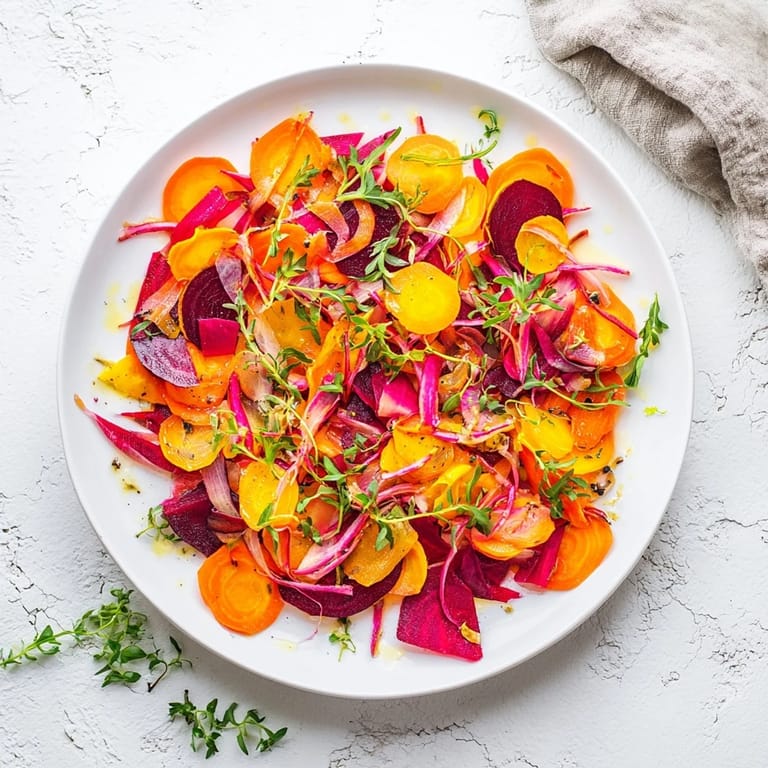
 I discovered this salad completely by accident while waiting for water to boil one evening, standing at my counter with a mandoline in one hand and a pile of vegetables in the other. Something about the way the light caught those impossibly thin ribbons of fennel made me pause—instead of chopping, I kept slicing, layering, spinning them into this hypnotic circle that actually made me smile at a plate of raw vegetables. That's when I knew this wasn't just salad; it was edible art that somehow tasted as good as it looked.
The first time I served this was at a dinner party where I was nervous I'd made something too fussy, too show-offy. But watching my friend's face as she bent over the plate, fork suspended in mid-air while she just looked at it for a moment—that's when I realized the presentation wasn't about impressing anyone. It was about giving people permission to enjoy something beautiful without apology.
Ingredients
- Fennel bulb: Thinly shaved fennel becomes almost lacy, with a subtle anise whisper that softens as it sits.
- Rainbow carrots: Hunt for these at farmers markets if you can—they add genuine color without extra effort, though regular carrots work just fine.
- Golden beet: Milder than red beets and won't stain everything pink, making this so much easier to plate.
- Red onion: A small amount adds a sharp note that keeps the salad from tasting too sweet or one-dimensional.
- Fresh dill and chervil: These feathery herbs are essential—they soften the rawness and add that wispy, almost ethereal quality.
- Microgreens: They're the final flourish, tiny and delicate, catching the light the way the vegetables do.
- Extra-virgin olive oil: Use something you'd actually taste on its own, because you will taste it here.
- Lemon juice: Fresh lemon, not bottled—it keeps everything bright and alive.
- Honey and Dijon mustard: A small amount of each creates balance, rounding out the acid without overpowering the delicate vegetables.
Tired of Takeout? 🥡
Get 10 meals you can make faster than delivery arrives. Seriously.
One email. No spam. Unsubscribe anytime.
Instructions
- Slice with intention:
- Using a mandoline or sharp peeler, bring each vegetable down in long, steady strokes. You're aiming for ribbons so thin you can almost see through them—the thinner they are, the more dramatic the final effect. This takes patience, but don't rush it.
- Crisp the vegetables:
- Drop those ribbons into ice water and let them sit for five to ten minutes. They'll curl and crimp naturally, gaining that delicate, almost-broken look that makes the salad feel alive rather than limp.
- Whisk the dressing:
- In a small bowl, combine oil, lemon juice, honey, and mustard. The honey dissolves into warmth, the mustard adds backbone, and the whole thing should taste like pure brightness with just enough richness to carry the flavors.
- Build the spiral:
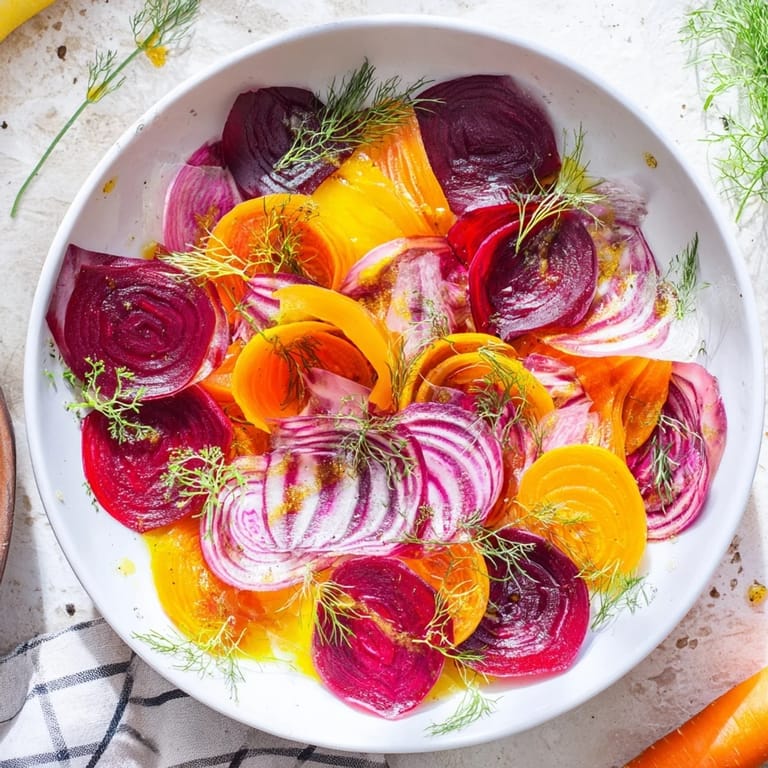
- Pat your vegetables completely dry, then start arranging them in a tight circle on your plate, overlapping as you go outward. Let the edges blur and extend unevenly—perfection here actually looks less interesting than a little controlled chaos.
- Scatter the herbs:
- Pile dill and chervil over the top, concentrating more toward the outer edges so the center feels anchored but the whole thing suggests movement. Finish with microgreens where they'll catch the light.
- Dress at the last moment:
- Drizzle the dressing just before serving. Any earlier and the salad loses its crispness, its visual punch, everything that makes it special.
 Save to Pinterest
 There was a moment during that same dinner party when the conversation stopped and everyone just ate in quiet appreciation, forks moving slowly, eyes up occasionally to admire what was on their plates. That's when this dish stopped being about technique and became about creating a moment where people felt genuinely cared for through something as simple as the way vegetables were arranged.
The Art of Vegetable Slicing
Learning to use a mandoline properly changed how I approach raw vegetables entirely. The blade demands respect and deliberation—you can't rush it, can't get distracted. This enforced slowness actually becomes meditative once you accept it, turning prep work into something almost contemplative. When you're slicing this thin, you're not just cutting; you're revealing the delicate structure hidden inside every vegetable.
Color and Visual Composition
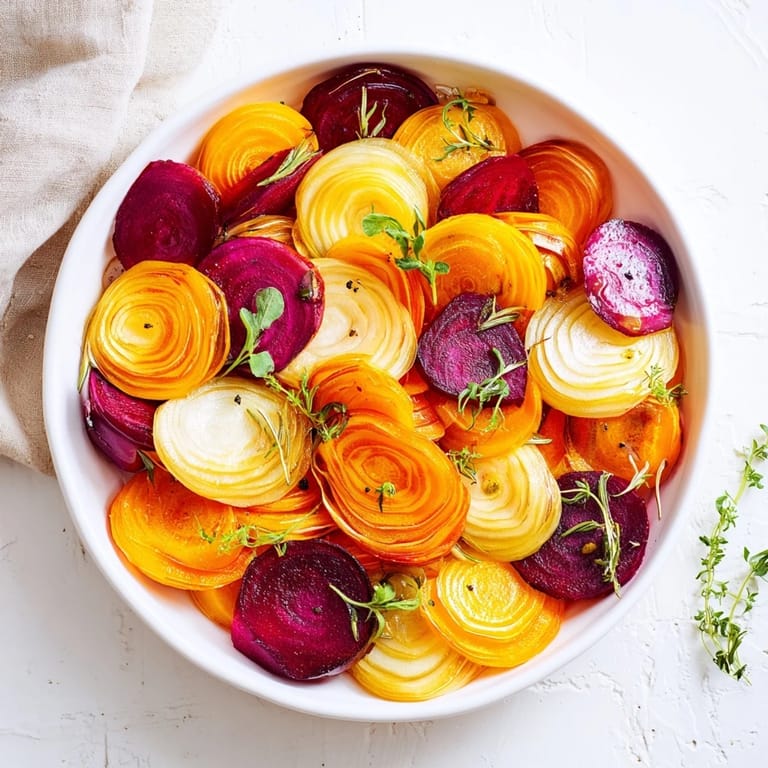
What makes this salad spin on the plate is the way color moves outward—warm golden beet fading into jewel-toned carrots, pale fennel catching light differently. If you're working with regular orange carrots, the effect is still beautiful, just quieter. The real magic is in the arrangement itself, in honoring each vegetable's natural color rather than fighting it. When you plate with intention instead of just dumping everything together, people actually taste the food differently—their eyes have prepared their palates before the fork even touches down.
Serving and Pairing Wisdom
This salad is an opener, a statement piece that tells your guests you're paying attention to detail. Serve it on your most beautiful plate, maybe in soft light where the herbs catch a gentle glow. It pairs naturally with something crisp and mineral—a white wine, sparkling water with herbs, even a delicate broth served alongside. The lightness of this dish means it never feels like filler before a main course; instead, it sets a tone of refinement and care that carries through the entire meal.
- Prep everything except final plating an hour ahead so you're calm and focused when guests arrive.
- If making for a crowd, plate individual servings rather than one large one—each person gets the full visual impact and the freshness stays intact.
- Trust that simplicity, when executed with care, is never boring.
 Save to Pinterest
 This dish reminded me that sometimes the most impressive food requires no heat, no complexity, just presence and attention. It's become one of my favorite things to make precisely because it forces me to slow down and remember that cooking is partly about beauty.
Recipe Frequently Asked Questions
- → How do you achieve the wispy texture for the vegetables?
Use a mandoline or vegetable peeler to shave the vegetables into thin ribbons, then soak them in ice water to curl and crisp the edges.
- → Which herbs complement this salad best?
Fresh dill, chervil or parsley, and microgreens provide brightness and delicate flavors that enhance the vegetables.
- → What dressing pairs well with the vegetable ribbons?
A light mix of extra-virgin olive oil, lemon juice, honey, and Dijon mustard adds balanced acidity and subtle sweetness.
- → Can this salad be prepared ahead of time?
For best texture and appearance, prepare shortly before serving to maintain the crispness and shape of the vegetables.
- → What tools make preparation easier?
A mandoline slicer or sharp vegetable peeler is essential for creating uniform, thin ribbons quickly and safely.