 Save to Pinterest
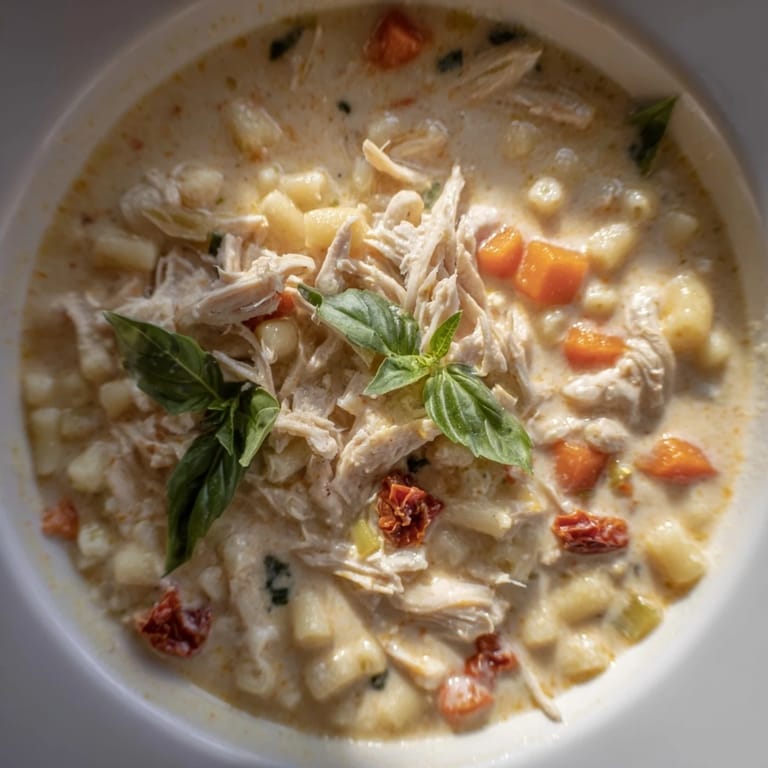
 There's something magnetic about a soup that tastes like someone's been waiting to feed you. I discovered Marry Me Chicken Soup on a chilly evening when I wanted something that felt both elegant and deeply comforting—no pretense, just real flavor. The trick, I learned quickly, isn't fancy technique but honoring each ingredient's moment in the pot. Sun-dried tomatoes bring a concentrated sweetness, the cream melts into the broth like silk, and somehow a simple chicken soup becomes the kind of meal that makes people linger at the table.
I made this for someone I wanted to impress without overthinking it, and halfway through the first spoonful, they looked up and asked for the recipe. That moment—when food stops being about effort and becomes about connection—is when you know you've got something special. The Parmesan and basil at the end feel like a small flourish that transforms the whole bowl.
Ingredients
- Boneless, skinless chicken breasts (about 450 g / 1 lb): Two breasts give you enough protein without overwhelming the broth; they'll shred beautifully once cooked through.
- Olive oil (1 tbsp): Just enough to get a light golden sear on the chicken—this step builds flavor before everything goes into the pot.
- Kosher salt and black pepper: Season early and taste as you go; it makes a real difference in the final depth.
- Yellow onion, carrots, and celery (diced): This holy trinity of aromatics is your flavor foundation—don't rush the sautéing, let them soften and release their sweetness.
- Garlic cloves (3, minced): Add it after the vegetables soften so it stays fragrant and doesn't burn on the edges.
- Sun-dried tomatoes (50 g / 1/3 cup in oil, drained): These are concentrated umami bombs; draining them keeps the broth from getting too oily, but don't waste that flavorful oil in the jar—use it for sautéing if you like.
- Low-sodium chicken broth (1 L / 4 cups) and water (240 ml / 1 cup): The combination gives you depth without being oversalted; taste yours first if it's particularly salty and adjust the water accordingly.
- Heavy cream (120 ml / 1/2 cup): This arrives at the very end, turning everything into something silky and luxurious.
- Parmesan cheese, freshly grated (30 g / 1/4 cup): Fresh is truly better here; the pre-grated stuff won't melt as smoothly into the warm broth.
- Ditalini pasta (120 g / 3/4 cup): Those small tubes catch the broth beautifully; if you can't find ditalini, small shells or even broken spaghetti work fine.
- Dried oregano and thyme (1 tsp each), red pepper flakes (1/4 tsp optional), bay leaf, fresh basil for garnish: Herbs are where you can taste your care; don't skip the bay leaf during cooking, but remember to fish it out before serving.
Tired of Takeout? 🥡
Get 10 meals you can make faster than delivery arrives. Seriously.
One email. No spam. Unsubscribe anytime.
Instructions
- Season and sear the chicken:
- Pat your chicken dry with paper towels, then season both sides generously with salt and pepper. Heat olive oil in your pot over medium heat until it shimmers—you'll hear a gentle sizzle when the chicken hits the pan. Sear for about 3–4 minutes per side until golden; the chicken won't be cooked through yet, and that's exactly right.
- Build the aromatic base:
- Add your diced onion, carrots, and celery to the same pot, scraping up any browned bits stuck to the bottom. Let them soften for 4–5 minutes, stirring occasionally, then stir in the minced garlic and let it bloom for about 1 minute until you smell that sweet, pungent aroma.
- Add the sun-dried tomatoes and herbs:
- Toss in your chopped sun-dried tomatoes, oregano, thyme, and red pepper flakes if you like a whisper of heat. Stir everything together so the dried herbs wake up and release their oils.
- Pour in the liquid and return the chicken:
- Add your chicken broth and water, then nestle the seared chicken back into the pot along with the bay leaf. The liquid should mostly cover the chicken.
- Simmer gently until the chicken is cooked through:
- Bring it to a gentle boil, then lower the heat and simmer uncovered for 15–20 minutes. You'll know it's ready when the chicken is no longer pink inside and the vegetables are tender enough to break easily with a spoon.
- Shred the chicken and return it to the pot:
- Remove the chicken breasts to a cutting board and let them cool for just a minute, then shred them with two forks—they'll fall apart easily once fully cooked. Return all those tender shreds back to the pot.
- Cook the pasta until al dente:
- Stir in your ditalini pasta and cook for 8–10 minutes, stirring occasionally so it doesn't stick to the bottom. You want it tender but with just a hint of resistance when you bite it.
- Finish with cream and Parmesan:
- Lower the heat to the gentlest simmer, fish out the bay leaf, then stir in the heavy cream and freshly grated Parmesan. Let it warm through for a minute or two—don't boil it, just let everything meld into something creamy and luxurious.
- Taste and serve:
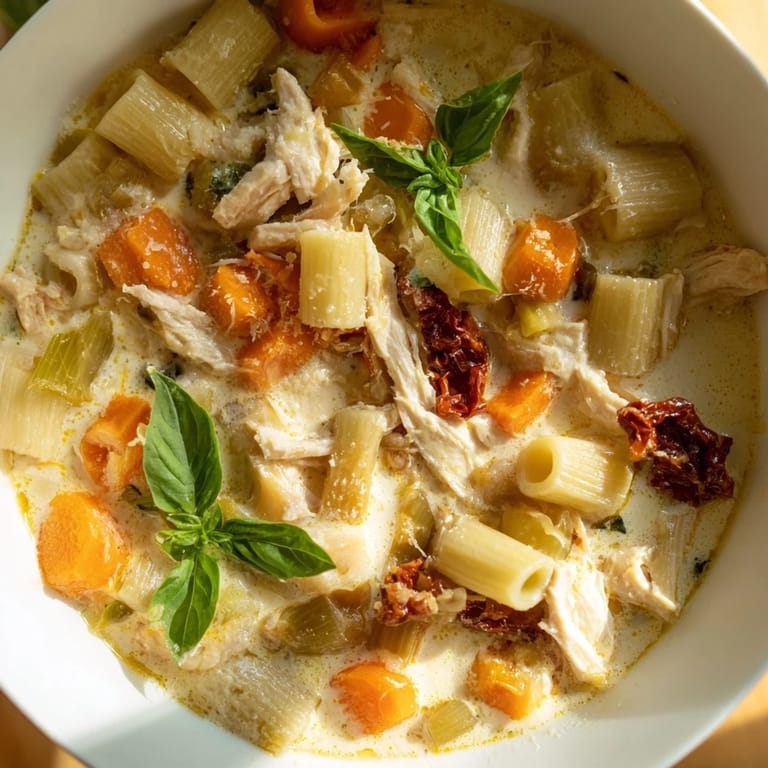
- Taste a spoonful and adjust the salt, pepper, or even add a squeeze of lemon juice if you want brightness. Ladle into bowls and top with fresh basil.
 Save to Pinterest
 The first time someone asked me to make this again, I knew it had crossed from recipe into repertoire. There's a quiet confidence that comes with mastering something warm and nourishing that people actually crave.
Why This Soup Works
The magic of Marry Me Chicken Soup is in its balance of flavors that seem to know each other. The sun-dried tomatoes bring a subtle sweetness and depth that cream alone can't achieve, while the shredded chicken becomes almost tender enough to disappear into the broth. It's one of those rare soups where every element—the pasta, the vegetables, the herbs—contributes to a whole that feels greater than its parts. The broth itself becomes the star, tasting like you've been simmering it for hours when really it's just borrowed time and intention.
Making It Your Own
This recipe is forgiving enough to welcome your own touches. Some mornings I'll stir in a handful of fresh spinach in the last minute, letting it wilt into the warm soup and add a subtle earthiness. Other times, if I'm short on time, I'll use rotisserie chicken instead—just shred it and add it with the pasta so it heats through. Fresh herbs make a visible difference too; if you have fresh thyme or oregano instead of dried, use about three times as much and add it at the end so it stays bright.
Serving and Storing
This soup tastes even better the next day, when the flavors have had time to mingle and deepen. Ladle it into bowls and top with a sprinkle of Parmesan and fresh basil—that final garnish feels small but changes everything about how the soup tastes. Pair it with crusty bread to soak up every last drop, and if you're in the mood, a chilled glass of Pinot Grigio or something similarly dry and crisp makes the whole meal feel like a quiet celebration.
- Store leftovers in an airtight container in the fridge for up to three days; it reheats gently on the stove with a splash of extra broth if needed.
- If you're meal-prepping, cook the pasta slightly under al dente so it doesn't get mushy by the time you reheat it.
- Freeze this soup without the pasta for up to two months, then cook fresh ditalini when you're ready to eat it.
 Save to Pinterest
 This is the kind of soup that reminds you why cooking for people matters. It's simple enough to feel effortless, but intentional enough to taste like love in a bowl.
Recipe Frequently Asked Questions
- → What type of pasta works best in this dish?
Ditalini pasta is ideal as it cooks quickly and holds broth well, but small pasta shapes like orzo or small shells can also be used.
- → Can I use pre-cooked chicken to speed up preparation?
Yes, shredded rotisserie chicken can be added directly during the simmering step to reduce cooking time.
- → How can I make the broth richer?
Incorporate heavy cream and freshly grated Parmesan cheese towards the end to add creaminess and depth to the broth.
- → Are sun-dried tomatoes essential for flavor?
Sun-dried tomatoes provide a tangy sweetness that enhances flavor; if unavailable, roasted tomatoes can be a substitute.
- → What herbs complement this dish best?
Dried oregano and thyme give earthy notes, while fresh basil added as garnish brightens the flavors.
- → Can this dish be prepared dairy-free?
Omit heavy cream and Parmesan, or substitute with plant-based alternatives to maintain creaminess without dairy.