 Save to Pinterest
 My first real encounter with tabbouleh wasn't in a restaurant but in a friend's cramped Beirut kitchen on a sweltering July afternoon. She moved around those narrow counters with such ease, grabbing handfuls of parsley like she was picking flowers, and I realized then that this wasn't just a salad—it was a living thing, something that needed the right hands and the right moment. The way she tossed it together, humming softly, made me understand that some dishes carry stories in every leaf.
I made this for a potluck once and watched people go back for thirds, each time with a slightly surprised expression, as though they'd expected something heavier. One guest asked if it was complicated, and I loved telling her it wasn't—that the secret was just good ingredients and not overthinking it. That's when I understood why this salad has endured for generations.
Ingredients
- Fine bulgur wheat: Half a cup is your foundation—it softens beautifully with boiling water and becomes tender without losing its subtle nuttiness.
- Boiling water: Three-quarters cup poured over the bulgur awakens it and needs just ten to fifteen minutes to do its work.
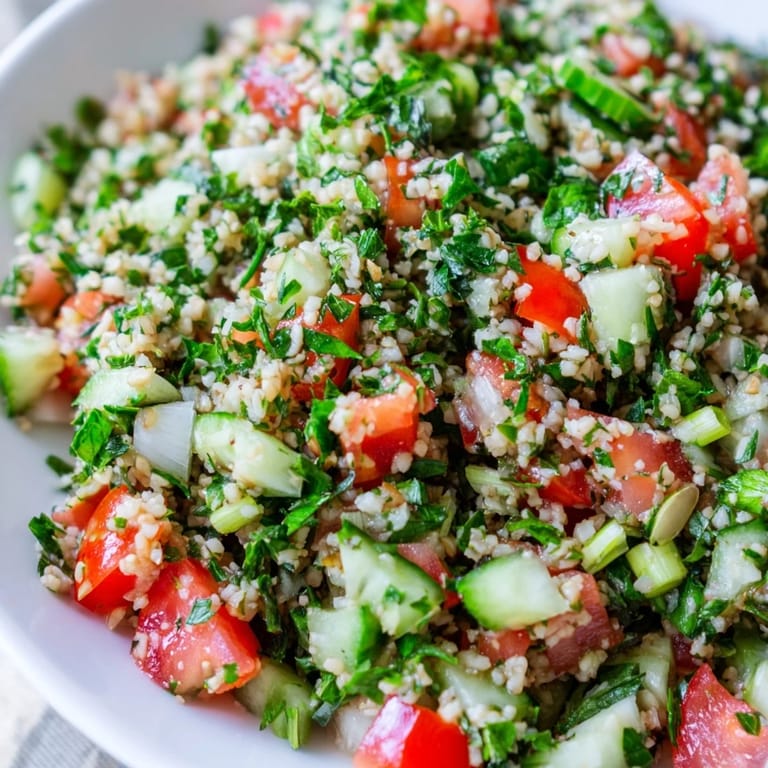
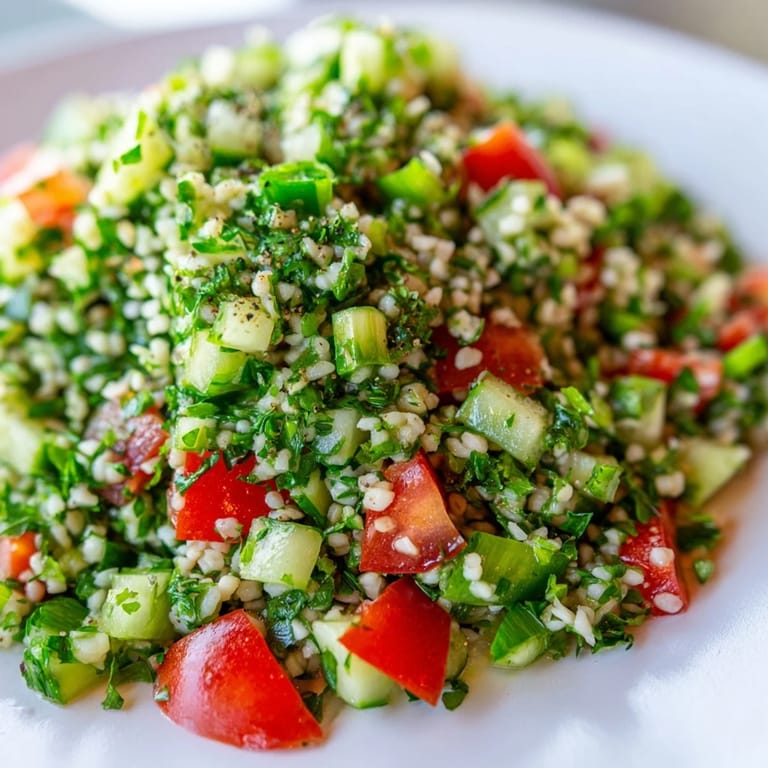
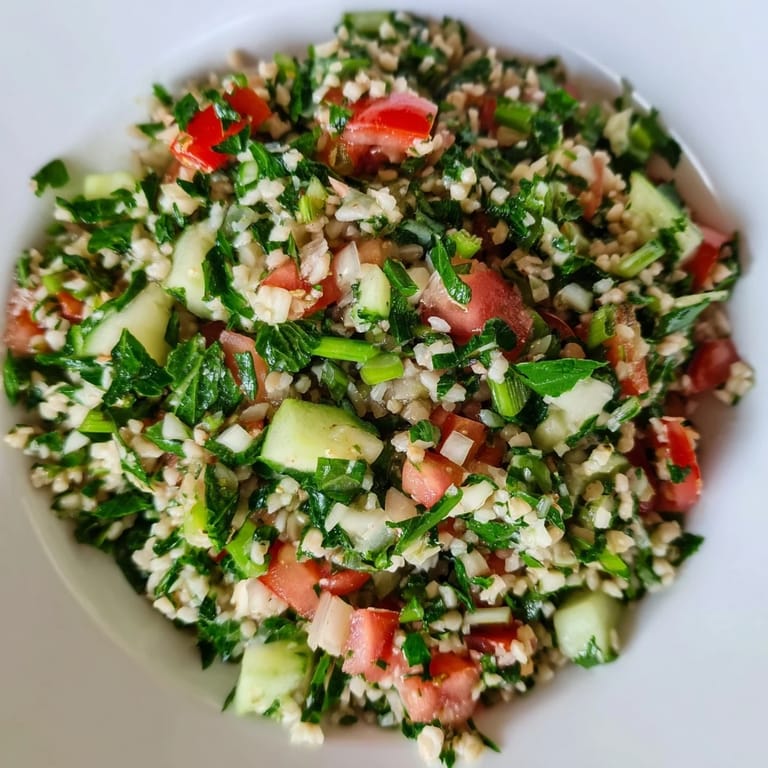
- Flat-leaf parsley: This is the soul of the dish—two large bunches, finely chopped, give you that vibrant green color and peppery freshness that defines real tabbouleh.
- Fresh mint: Half a cup of chopped mint adds cool brightness and a slight herbal complexity that elevates everything around it.
- Spring onions: Two of them, finely sliced, bring a gentle sharpness without overpowering the delicate balance.
- Tomatoes: Three medium ones, seeded and diced, release their sweetness and acidity into every bite.
- Cucumber: Half a medium cucumber, diced, adds crunch and a refreshing watery element that keeps the salad feeling light.
- Extra-virgin olive oil: Quarter cup of a good one—you'll taste the difference, I promise.
- Freshly squeezed lemon juice: Quarter cup from real lemons, not the bottled kind, brings the brightness that makes this taste alive.
- Sea salt and black pepper: Half teaspoon of salt and a quarter teaspoon of pepper seem small, but they're what tie everything into one coherent song.
Tired of Takeout? 🥡
Get 10 meals you can make faster than delivery arrives. Seriously.
One email. No spam. Unsubscribe anytime.
Instructions
- Awaken the bulgur:
- Pour boiling water over your half cup of bulgur in a small bowl and cover it. The steam will do the work for you—just wait ten to fifteen minutes, then fluff it gently with a fork to break up any clumps and let it breathe.
- Gather your herbs and vegetables:
- In a large bowl, combine your chopped parsley, mint, sliced spring onions, diced tomatoes, and cucumber. The fragrance at this point is almost enough to make you want to dive in.
- Bring it together:
- Once your bulgur has cooled slightly, add it to the herbs and vegetables. This is where it transforms from separate ingredients into something unified and whole.
- Make the dressing:
- In a small bowl, whisk together your olive oil, lemon juice, salt, and pepper until emulsified. Taste it on its own—it should make your mouth water.
- Dress and toss:
- Pour the dressing over the salad and toss gently, as if you're handling something precious. Let it mingle for a moment, then taste and adjust if needed—sometimes it needs just a whisper more salt or lemon.
- Serve:
- Eat it chilled or at room temperature, but eat it soon. Tabbouleh is best when the herbs are still assertive and the vegetables haven't begun to weep.
 Save to Pinterest
 There was a moment when I served this to my grandmother, and she closed her eyes after the first bite like she was transported somewhere—to a kitchen, a season, or a person she'd loved. She didn't say much, just nodded, and that's when I realized that some dishes speak a language older than words.
The Art of Chopping
The way you chop your parsley matters more than you might think. I used to be impatient with it, using a food processor, until someone told me that blade bruises the delicate leaves and releases bitter chlorophyll. Now I use a sharp knife on a cutting board, letting the herb's natural oils stay intact. The difference is subtle but real—your salad tastes greener, fresher, more alive. Take your time with it.
Storage and Timing
Tabbouleh is best eaten within a few hours of assembly, when the herbs are still vibrant and the vegetables haven't surrendered their water. If you need to make it ahead, keep the dressing separate and toss everything together just before serving. It will keep in the refrigerator for up to two days, though it's never quite the same as fresh.
Serving Suggestions
This salad is endlessly versatile—serve it alongside grilled chicken or lamb, nestle it into pita bread with hummus, or build a mezze platter and let it be one voice among many. It's equally at home at a casual lunch or a dinner party.
- Pair it with smoky grilled meats for contrast.
- Serve it with crispy falafel for a complete vegetarian meal.
- Use it as a filling for lettuce wraps or rolled into pita.
 Save to Pinterest
 There's something grounding about a salad this simple, this honest—one where every ingredient matters and nothing hides. Make it for people you care about.
Recipe Frequently Asked Questions
- → What is the main grain in this salad?
Fine bulgur wheat is the primary grain, soaked in boiling water to soften before mixing.
- → Can the salad be made gluten-free?
Yes, substituting bulgur with cooked quinoa makes it gluten-free while maintaining texture.
- → How should the herbs be prepared?
Flat-leaf parsley, fresh mint, and spring onions should be finely chopped for balanced flavor distribution.
- → What dressing complements the salad?
A simple mix of extra-virgin olive oil, freshly squeezed lemon juice, salt, and black pepper enhances brightness.
- → How should this salad be served?
It’s best served chilled or at room temperature, allowing the flavors to meld while keeping freshness.
- → What dishes pair well with this salad?
It pairs wonderfully with grilled meats, falafel, or as part of a mezze selection.