 Save to Pinterest
 My aunt's kitchen in Kuwait always smelled like this before every celebration—that particular blend of cardamom and saffron that made you know something important was about to happen. Biryani wasn't just dinner; it was the meal that said we're gathering, we're making time for each other. The first time I watched her layer the rice and meat, I realized it wasn't complicated, just patient and deliberate, each element contributing its own song to the final dish.
I made this for my roommates during their first winter away from home, and watching their faces when they tasted it—that quiet moment of recognition, of feeling cared for—made me understand why my family has been making this for generations. Food that takes time and intention carries that weight in a way nothing else does.
Ingredients
- Bone-in chicken or lamb (900 g): Bone adds flavor and moisture to the meat as it cooks; don't be tempted to use boneless cuts unless you're in a real rush.
- Plain yogurt (1 cup): This is your tenderizer and flavor anchor—full-fat yogurt makes a difference in richness.
- Ginger-garlic paste (1 tbsp): Fresh is always better than jarred if you have time; it brings a cleaner, sharper bite to the marinade.
- Ground spices (turmeric, cumin, coriander, chili powder, garam masala): Toast them lightly before grinding if you have whole spices; the aroma will tell you they're at their peak.
- Basmati rice (3 cups): Long-grain basmati is essential here—it stays separate and doesn't turn mushy, which is the whole point.
- Whole spices for rice (cloves, cardamom, cinnamon, bay leaf): These steep into the rice as it cooks, creating the backbone of the fragrance everyone notices first.
- Ghee (5 tbsp total): Ghee carries flavors in a way butter can't quite match; if you don't have it, clarified butter works in a pinch.
- Large onions (2), thinly sliced: These become golden, caramelized, almost jammy—that's where the sweetness comes from.
- Fresh herbs (coriander and mint leaves): Chop these just before using; the brightness matters and fades if they sit too long.
- Saffron threads with warm milk: Soak it in milk to coax out the color and flavor; this is where the magic happens visually.
- Toasted almonds or cashews (1/4 cup): The toasting step is non-negotiable—it wakes them up and adds a subtle crunch that anchors each bite.
- Fried onions (1/4 cup for garnish): These stay crispy on top and add texture; add them right before serving, never earlier.
Tired of Takeout? 🥡
Get 10 meals you can make faster than delivery arrives. Seriously.
One email. No spam. Unsubscribe anytime.
Instructions
- Build your marinade foundation:
- Whisk together yogurt, lemon juice, ginger-garlic paste, and all the ground spices in a large bowl. The mixture should smell assertive and warm, not timid. Add your meat pieces and coat thoroughly, making sure each piece is nestled into that yogurt coating, then cover and let it rest in the refrigerator for at least an hour—overnight is even better if you have the time.
- Prepare the rice properly:
- Rinse your basmati under cold water, rubbing it gently between your fingers until the water runs nearly clear; this removes the starch that would otherwise make it gluey. Soak it in fresh cold water for 30 minutes while you attend to other tasks.
- Par-cook the rice with aromatics:
- Bring 5 cups of water and salt to a rolling boil, then add your drained rice along with the whole spices—cloves, cardamom pods, cinnamon stick, and bay leaf. Let it cook for about 6 to 7 minutes, until the rice is still slightly firm with just a hint of bite; you're aiming for about 70 percent done. Drain it carefully in a fine mesh sieve and set aside.
- Caramelize your onions with patience:
- Heat ghee in your ovenproof pot over medium heat and add the thinly sliced onions. Stir occasionally and let them turn golden, then deeper brown, almost mahogany in color—this takes 12 to 15 minutes but creates the sweetness that balances the spices. Remove about half of them to a plate for garnish at the end.
- Sear and begin cooking the meat:
- Add your marinated meat directly to the pot with the remaining onions, letting it sit undisturbed for a minute or two to develop color, then stir and sear for 5 to 7 minutes. Lower the heat, cover, and let it braise gently for 20 to 25 minutes if using chicken, or 35 to 40 minutes for lamb, until the meat is tender but not falling apart; add a splash of water if the bottom starts to stick.
- Layer your biryani with intention:
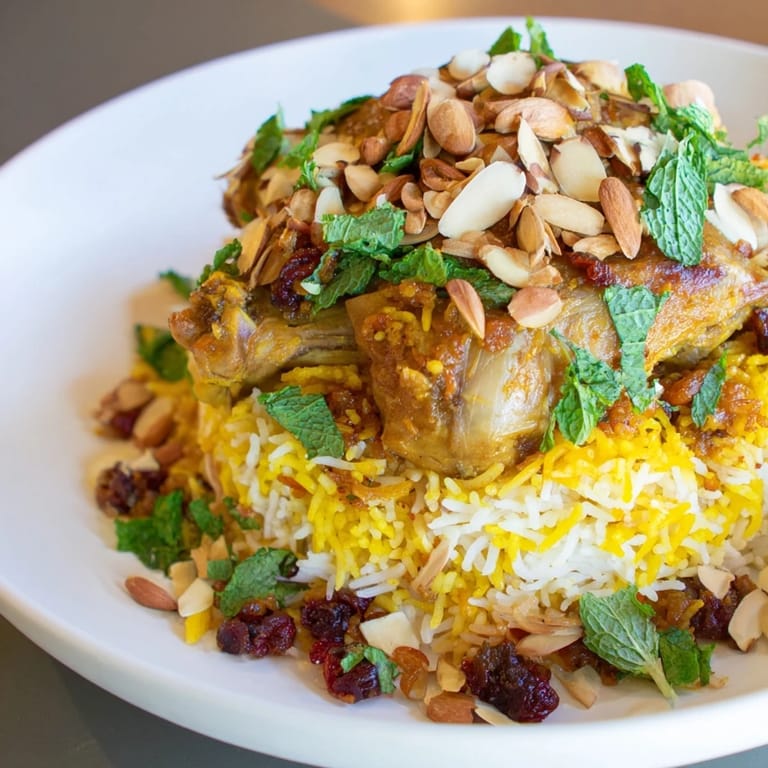
- Scatter half of your chopped herbs, raisins, and toasted nuts over the cooked meat. Now carefully layer half of your par-cooked rice over this, pressing gently. Sprinkle the remaining herbs, raisins, and nuts, then crown it all with the remaining rice, spreading it gently so you don't break the grains.
- Infuse with saffron and seal:
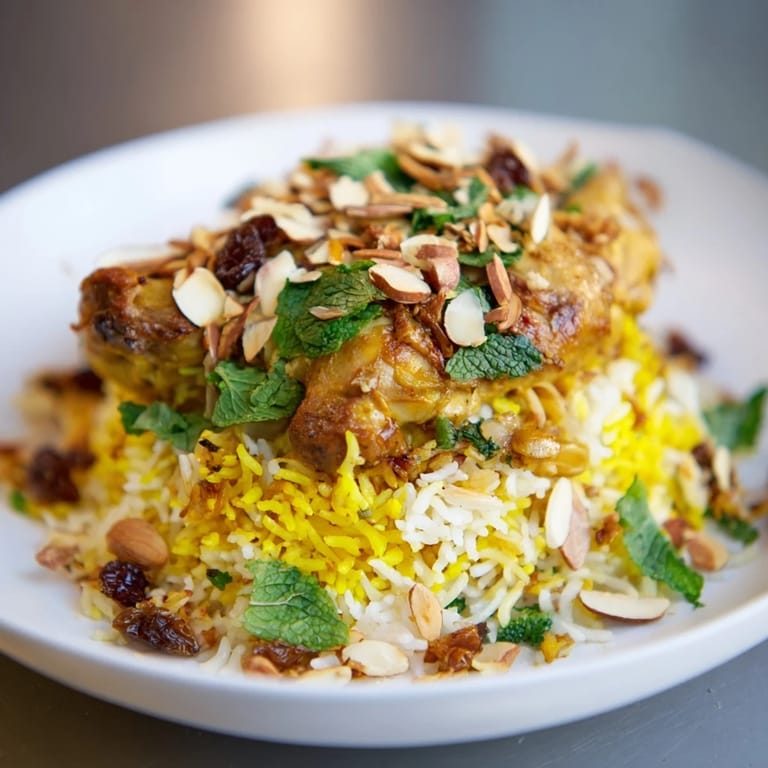
- Drizzle the saffron-soaked milk evenly over the top layer of rice—you should see little golden streams soaking in. Dot the surface with a few pieces of ghee or butter scattered about. Cover the pot very tightly first with foil, pressing it down to seal, then place the lid on top to trap all the steam.
- Bake until the rice blooms:
- Place in a preheated 180°C (350°F) oven for 30 to 35 minutes; resist the urge to peek, as every lift of that lid releases precious steam. You'll know it's ready when the pot smells impossibly fragrant and you can hear the faintest sizzle at the edges.
- Rest and reveal:
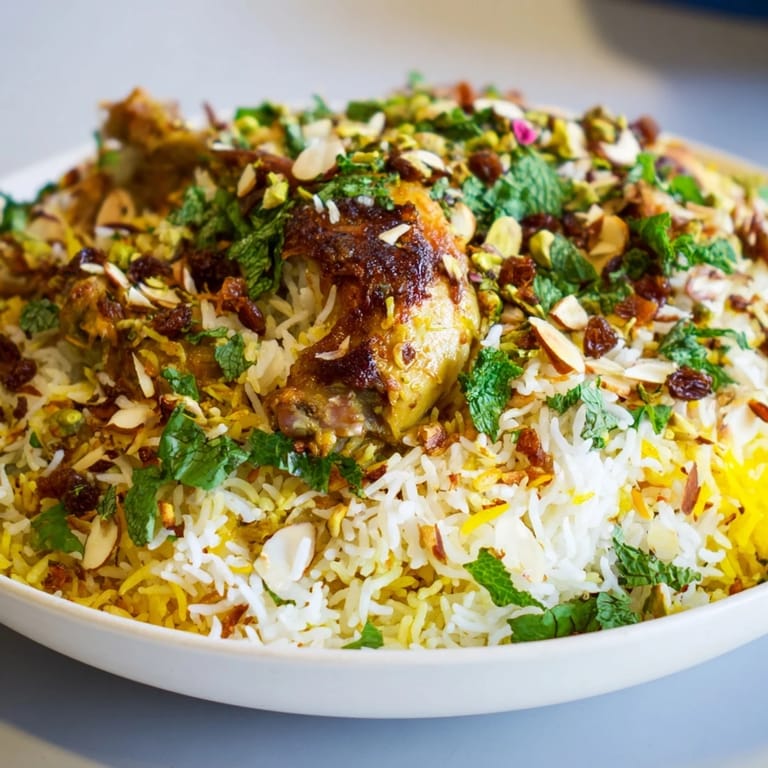
- Remove from the oven and let it sit undisturbed for 10 full minutes—this allows the rice to settle and the flavors to meld. Gently fluff with a fork, as if waking something precious, and transfer to a serving platter. Top with the reserved caramelized onions and fried onions just before serving.
 Save to Pinterest
 Years later, I realize biryani taught me something about cooking that goes beyond recipe mechanics—it's that the best meals come from the space between following instructions and trusting your instincts. When you're layering rice and meat and herbs, you're not just assembling ingredients; you're building something meant to be shared.
Timing and Temperature
The oven temperature matters more than you might think—too hot and the rice on top burns while the inside stays underdone, too cool and you lose that essential sizzle that seals in the flavors. Stick with 180°C unless your oven runs particularly cool or hot, in which case you'll develop a feel for it after the first time. The 10-minute rest after baking isn't just tradition; it's the moment when the steam redistributes and every grain becomes fluffy instead of dense.
Customizing Without Losing the Soul
Biryani is forgiving enough to work with what you have, but it rewards precision when you can manage it. Some families add a pinch of rose water with the saffron milk for a floral note, others swear by adding a few strands of mace or a touch of nutmeg to the rice water. You can absolutely use ghee alternatives, but pure ghee carries the spices in a way nothing else quite replicates—it's worth seeking out if you can. If nuts are a concern or preference, reduce them or omit them entirely without guilt.
- Vegetarian versions work beautifully with marinated paneer or a mix of roasted vegetables layered in place of meat.
- A simple raita or cucumber salad alongside cuts through the richness and cleanses the palate between bites.
- Leftover biryani reheats gently in a covered pot with a splash of water, and somehow often tastes even better the next day.
The Science of the Seal
The foil-and-lid combination creates a micro-environment where steam circulates and cooks the rice without any direct contact with dry heat. This dum pukht method—literally cooking in its own steam—is what transforms layered ingredients into something unified and harmonious. If your pot doesn't have a tight-fitting lid, wrap extra foil around the edges to ensure nothing escapes; the moisture inside is what creates that tender rice and keeps the meat from drying out.
 Save to Pinterest
 This biryani carries the weight of generations and celebrations, but it's also just dinner when you need it to be—something warming and deeply satisfying. Make it, serve it warm with love, and watch how it becomes part of someone's memory.
Recipe Frequently Asked Questions
- → What type of meat is best for this dish?
Bone-in chicken pieces or lamb cut for serving work best, absorbing the marinade deeply for rich flavor.
- → How is the basmati rice prepared before layering?
The rice is rinsed until clear, soaked, then par-cooked with aromatic whole spices until about 70% done, retaining firmness.
- → Can I make this dish ahead of time?
Marinating the meat overnight enhances flavor, and the layered dish can be assembled in advance before baking.
- → What role do saffron threads play?
Saffron soaked in warm milk adds a delicate aroma and warmth, enriching the color and taste of the rice layers.
- → Are there vegetarian variations suitable for this method?
Yes, marinated paneer or mixed vegetables can replace meat, maintaining the layered and spiced character.