 Save to Pinterest
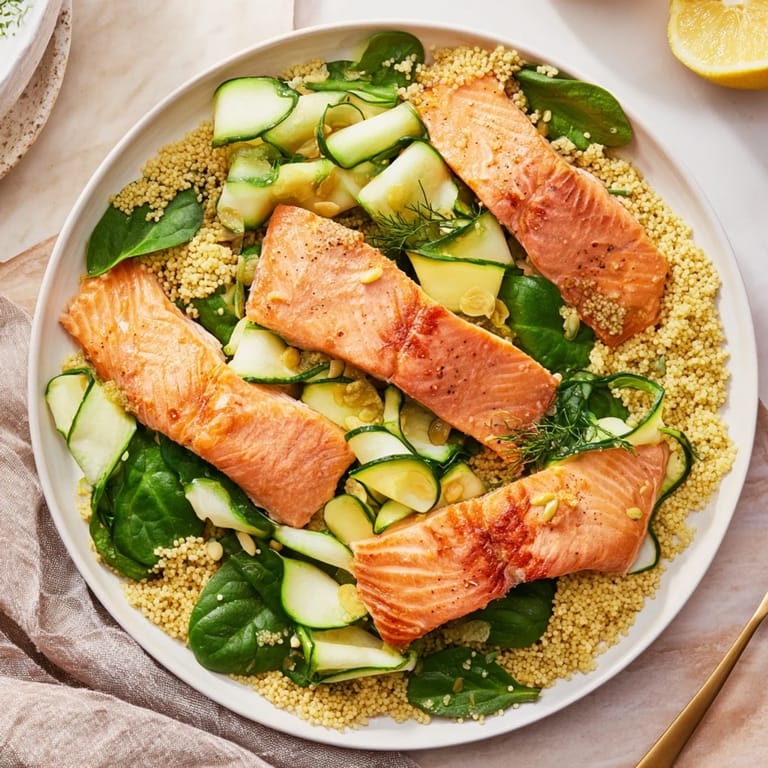
 I'll never forget the first time I saw a figure-eight plated on a chef's canvas—it was at a small bistro overlooking the Mediterranean, and watching the server present it felt like witnessing edible art. That moment inspired me to create the Infinity Loop Flow, a dish that celebrates the continuous journey of flavors rather than separate ingredients on a plate. When I finally recreated it in my own kitchen, I understood why the presentation mattered so much: it's not just about how it looks, but how it invites you to taste everything in a flowing, intentional sequence.
I made this dish for my sister's birthday dinner, and I still remember her sitting at the table, unwilling to break the figure-eight because she wanted to photograph it first. Once she did taste it, the way her eyes lit up at the balance of the crisp vegetables against the flaky salmon and that silky yogurt dressing—that's when I knew this recipe had something special. It became less about the presentation and more about the moment we shared.
Ingredients
- Fresh salmon fillets (2, about 300 g): Skinless salmon is essential here because you want the delicate flesh to be the star; look for fillets that are pale pink with no dark spots, which indicates freshness. I learned to buy from fishmongers rather than supermarket cases because they handle the fish with more care.
- Pearl couscous (1/2 cup): This isn't your everyday couscous—the larger pearls hold their shape beautifully when arranged and have a pleasant chew that contrasts perfectly with the soft vegetables.
- Zucchini, carrot, and fennel bulb (1 medium each, thinly sliced): These three vegetables form the backbone of your figure-eight; a mandoline makes quick work of slicing, but a sharp knife works just as well if you take your time.
- Baby spinach leaves (1 cup): These add both color and a subtle earthiness that bridges the lighter elements with the richness of the salmon.
- Greek yogurt (2 tbsp): This is your creamy anchor; full-fat yogurt will give you the best texture and flavor, far superior to the low-fat versions.
- Fresh dill (1 tbsp, finely chopped): Dill and salmon are a classic pairing, and the anise-like notes elevate everything around them.
- Lemon zest (1 tsp): This brightens the entire dish; I always zest the lemon before cutting it, and I learned to use a microplane for the finest, most fragrant zest.
- Capers (1 tbsp, rinsed and drained): These little bursts of briny flavor are what make people pause and ask what that taste is—always rinse them to remove excess salt.
- Toasted pine nuts (1 tbsp): Toast them yourself in a dry pan for just a minute or two; the difference between store-bought toasted and freshly toasted is remarkable.
- Olive oil, salt, and black pepper: Quality matters here since these are your only seasonings for the salmon; use a good extra-virgin olive oil and freshly ground pepper.
Tired of Takeout? 🥡
Get 10 meals you can make faster than delivery arrives. Seriously.
One email. No spam. Unsubscribe anytime.
Instructions
- Heat your oven and gather your ingredients:
- Start by preheating your oven to 180°C (350°F). While it warms, arrange all your ingredients on the counter so everything is ready to go—this is the cook's meditation moment, where you set the intention for the meal you're about to create.
- Cook the pearl couscous with intention:
- Bring the vegetable broth to a boil in a small saucepan, then add the pearl couscous and reduce the heat to low. Cover it and let it simmer for about 10 minutes, listening for the quiet bubble of the broth being absorbed into the grains. When you fluff it with a fork, each pearl should be tender but still slightly toothy. This is your foundation.
- Blanch the vegetables until they're just tender:
- Bring a large pot of salted water to a rolling boil—the water should taste like the sea. Working quickly, drop in your zucchini, carrot, and fennel slices and watch them transform in color within 1–2 minutes. You're not cooking them through; you're teaching them to be tender while keeping their vibrancy. Fish them out with a slotted spoon and immediately plunge them into ice water to stop the cooking. This is the trick that keeps them looking jewel-like on the plate.
- Prepare the salmon with care:
- Pat your salmon fillets dry with paper towels—moisture is the enemy of good browning. Rub them gently with olive oil, then season simply with salt and pepper. Place them on a parchment-lined tray and bake for 12–15 minutes. You'll know they're done when they flake easily with a fork and the center is just opaque. Let them cool for a moment, then break them into large, beautiful flakes. These flakes are your artwork.
- Mix the yogurt dressing with love:
- In a small bowl, fold together the Greek yogurt, lemon zest, and fresh dill. Taste it and let the brightness surprise you—this is the sauce that brings everything together.
- Create your infinity loop:
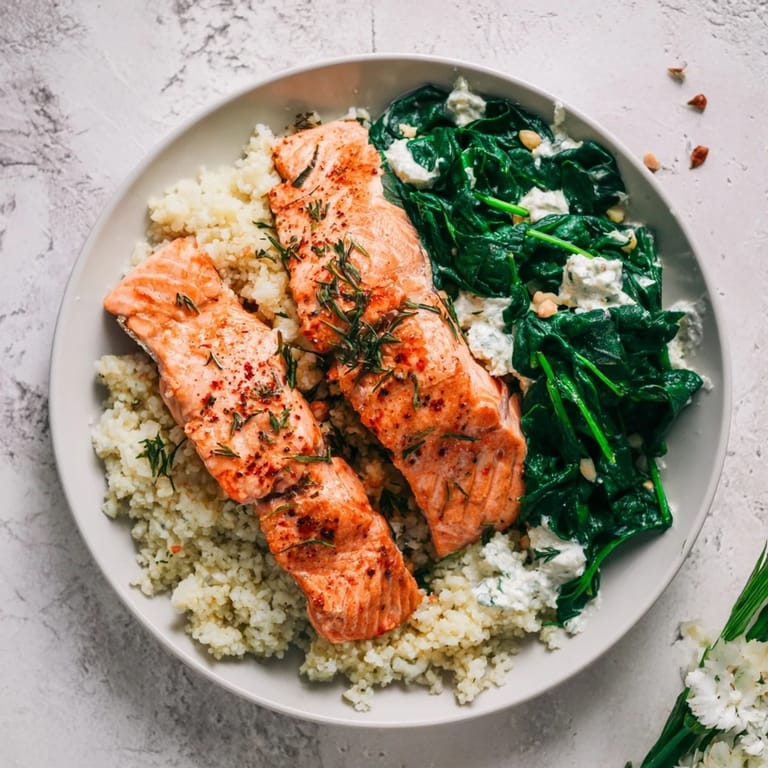
- Now comes the part that feels like painting. On a large serving platter, use the back of a spoon to create a figure-eight shape with the pearl couscous. Along this path, alternate your blanched vegetables and spinach leaves, thinking about color contrast and flow. Tuck the salmon flakes into the curves where they'll nestle naturally. Dot the Greek yogurt dressing around the loop with a small spoon, then scatter the capers and toasted pine nuts over the top. Step back and look at what you've made.
- Serve with intention:
- Bring this to the table while it's still fresh, and watch as people pause before eating, moved by what they're about to experience.
 Save to Pinterest
 The beauty of this dish revealed itself when I realized that presentation isn't superficial—it's a promise to the person eating it that you've thought about their experience. The moment someone follows the infinity loop with their fork, tasting the progression of salmon, vegetables, and couscous in that deliberate sequence, the dish becomes a conversation between you and the person at your table.
The Art of Arrangement
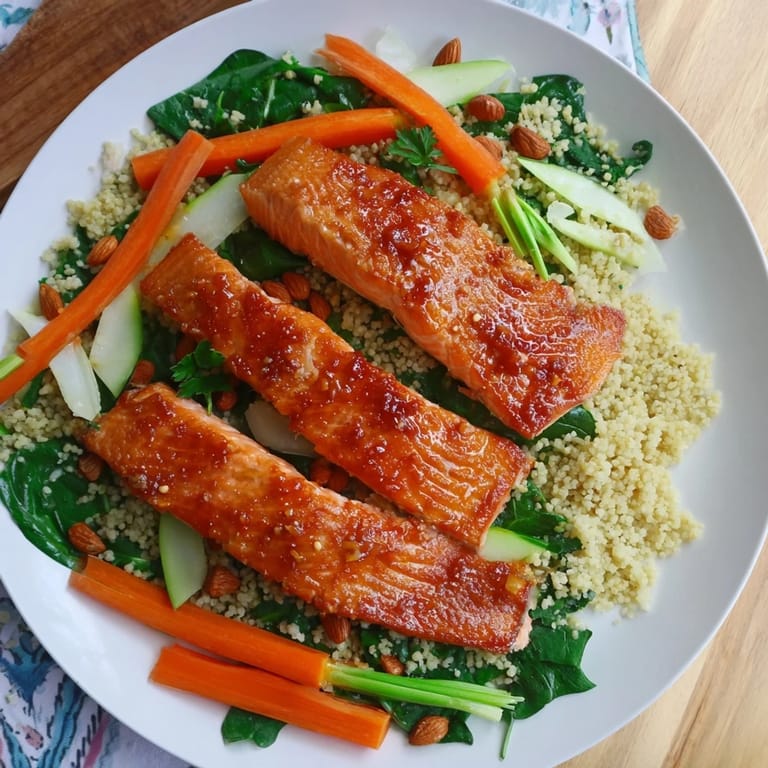
I learned that plating this dish is as much about geometry as it is about cooking. The figure-eight isn't just pretty—it's functional. When you arrange ingredients in this pattern, you're naturally creating a path for the fork, a rhythm for the meal. The alternating colors of the vegetables (golden carrot, pale green zucchini, white fennel) create visual interest without needing anything fancy. I always step back and look at the platter from above before serving, imagining how each person at the table will approach it.
Understanding Your Ingredients
This dish taught me that when you have fewer ingredients, each one has to earn its place on the plate. There's nowhere to hide, which means everything needs to be impeccable. The salmon needs to be fresh enough that you'd eat it raw (though we're cooking it). The vegetables need to be in their prime—farmers market perfect, if possible. The yogurt dressing isn't a mask; it's an enhancement. This is minimalist cooking at its finest, which paradoxically demands the most attention.
Making It Your Own
Once you've made this dish once, you'll find yourself wanting to play with it. I've added thin slices of radish for a peppery note, added roasted beet for earthiness, and even substituted trout when I couldn't find good salmon. The beauty of the Infinity Loop is that it's a template, not a prescription. What matters is maintaining the balance: something light and fresh, something creamy, something with textural contrast, and always, always the flow. Some evenings I serve it with a crisp Sauvignon Blanc, other times a light-bodied Pinot Gris. The wine should feel like part of the conversation, not a distraction.
- If you're preparing this for someone with nut allergies, skip the pine nuts and instead add a final sprinkle of fleur de sel for that textural contrast
- The entire dish can be prepped ahead up until the final assembly—that part should happen just before serving to keep everything fresh and the presentation pristine
- This recipe doubles beautifully if you're feeding a crowd; the infinity loop just gets bigger and more impressive
 Save to Pinterest
 This dish is a reminder that cooking for people is really about showing them they matter—that you spent time thinking about their pleasure, not just filling their belly. The Infinity Loop Flow, with its continuous path of flavors and careful arrangement, is my way of saying, 'I was thinking of you while I made this.'
Recipe Frequently Asked Questions
- → How should the couscous be prepared for this dish?
Cook the pearl couscous in boiling vegetable broth for about 10 minutes until tender, then fluff with a fork before shaping.
- → What is the best way to cook the salmon fillets?
Rub the salmon with olive oil, season with salt and pepper, and bake at 180°C (350°F) for 12–15 minutes until just cooked.
- → How can I keep the vegetables vibrant and crisp?
Blanch sliced zucchini, carrot, and fennel briefly in salted boiling water, then cool immediately in ice water to preserve color and texture.
- → What ingredients contribute to the dish’s tangy dressing?
The dressing combines Greek yogurt, fresh dill, and lemon zest to add a bright and creamy component.
- → Can this dish accommodate other fish types?
Yes, trout or cod can be substituted for salmon without compromising the flavor balance.
- → What garnishes add texture and flavor variety?
Toasted pine nuts add crunch, while capers provide bursts of briny flavor throughout the dish.