 Save to Pinterest
 I'll never forget the moment I first tried to create something that felt as much like art as it was food. I was hosting a dinner party and wanted to move beyond the standard cheese board, something that would make my guests pause and smile before they even tasted anything. That's when the idea struck me—a fractal tree, branching outward in perfect mathematical harmony, but made entirely of the good things we love to eat. As I arranged each element that evening, I realized I wasn't just building a platter; I was creating an edible conversation starter that somehow made everyone feel like they were part of something special.
I made this for my sister's engagement party, and what started as an appetizer became the thing people kept returning to all evening. They were picking at branches long after the main course arrived, and I realized the magic wasn't just in the flavors—it was in how the platter invited people to play with their food, to break off pieces with their hands, to feel like kids again while actually enjoying sophisticated ingredients.
Ingredients
- 1 large breadstick (about 25–30 cm long): This is your anchor, your tree trunk. Choose one with a sturdy crust that won't crack under the weight of arrangement. I learned the hard way that thinner breadsticks can shift and collapse—go for something substantial, almost rustic
- 6 slices prosciutto or vegetarian deli slices: The silky, salty foundation of your first branches. If using prosciutto, let it come to room temperature for a few minutes so it drapes elegantly rather than shattering
- 6 mini mozzarella balls or small cheese cubes: These catch the light and add a creamy contrast. Fresh is better than aged here—you want that delicate flavor that doesn't overpower
- 6 baby pickles or gherkins: The briny punctuation mark. They add acidity and keep things from feeling too rich
- 12 cherry tomatoes, halved: Choose ripe but not soft ones; they should have structure to sit prettily without weeping juice
- 12 thin cucumber slices: The cool, refreshing branch. Slice them just before assembly to keep them crisp
- 12 green or black olives: These add visual depth and that essential umami note. I prefer ones with pits because they feel more intentional, more real
- 18 small basil leaves: Fresh, fragrant, and the tiniest branch. These should be added last to prevent wilting
- 18 roasted red pepper strips: If you can roast these yourself, do it—jarred ones work fine, but there's something about the caramelized edges of homemade that feels like you really tried
- 18 small crackers or crostini: The very tips of your tree. Choose something delicate but sturdy enough to hold toppings
Tired of Takeout? 🥡
Get 10 meals you can make faster than delivery arrives. Seriously.
One email. No spam. Unsubscribe anytime.
Instructions
- Lay Your Foundation:
- Place that beautiful breadstick right in the center of your largest platter. This is your anchor. Step back and feel the weight of it—you're about to build something that has intention and structure. Make sure it's positioned where everyone can reach it without leaning too far across the table
- Create the First Branches:
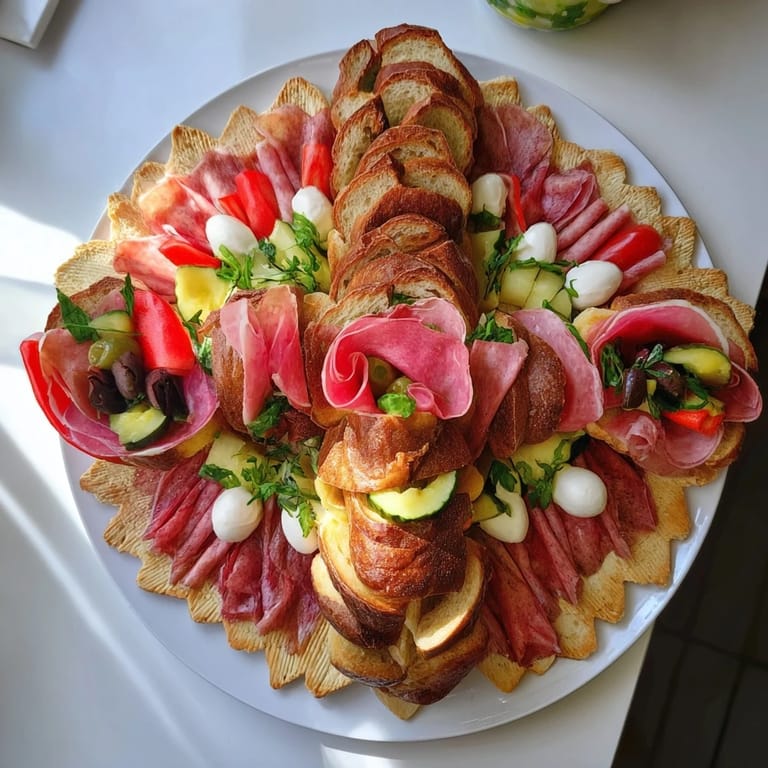
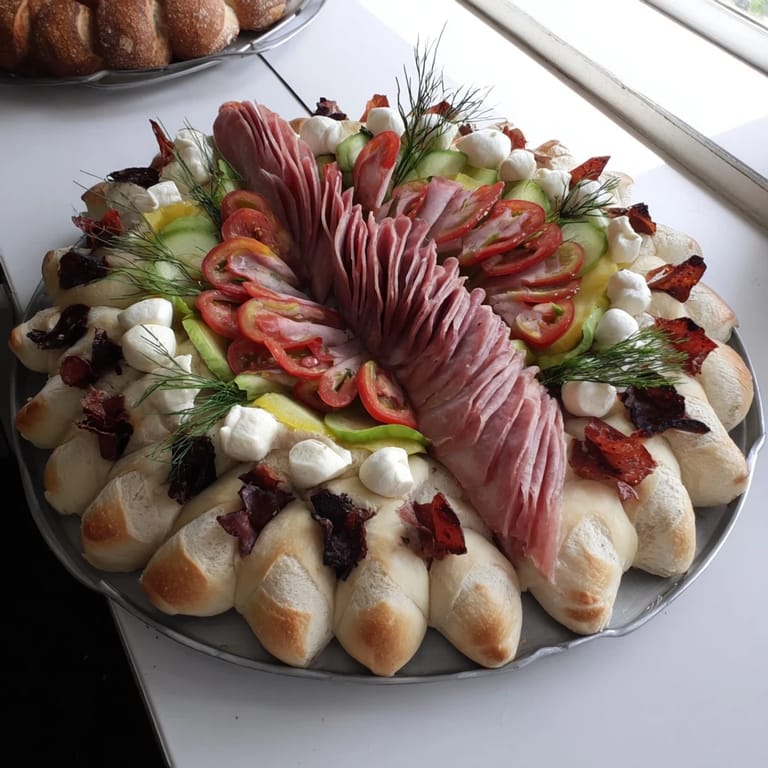
- Now comes the satisfying part. Arrange your prosciutto slices, mozzarella balls, and baby pickles in radiating pairs, branching outward from the breadstick like the limbs of a tree reaching toward light. I usually do three or four pairs on each side, creating symmetry that feels almost musical in its balance. These are your statement branches—make them proud
- Build the Middle Layers:
- This is where the platter starts to feel alive. Add your cherry tomato halves, cucumber slices, and olives as a second ring, branching off from where the larger ingredients end. The key here is to think of them as growing from the branches above them, not just floating randomly. Stagger them so the fractal pattern is clear—each ingredient should look like it's naturally extending the one before it
- Add the Finest Details:
- Here's where patience becomes your friend. The basil leaves, roasted red pepper strips, and tiny crackers form the delicate tips of your tree. Arrange them in smaller and smaller groupings as they radiate outward. This is the moment where the mathematical beauty of fractals becomes visible—each smaller branch echoes the shape of the larger ones. Feel the rightness of it
- Perfect the Spacing:
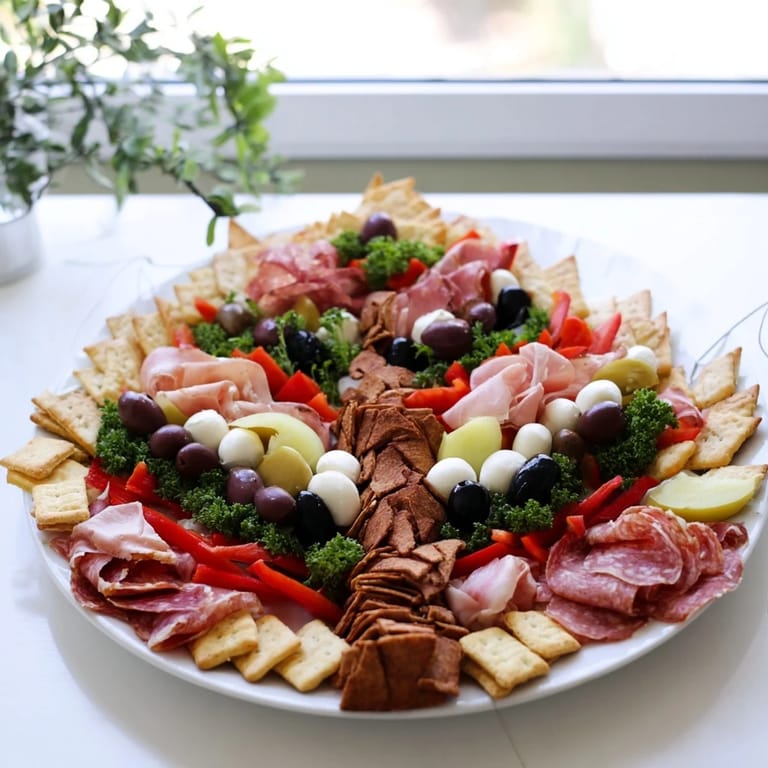
- Step back. Look at your creation from above. The eye should be able to follow the branching pattern, understanding how each layer flows from the one before it. If something feels crowded, give it breathing room. Adjust, tweak, trust your instincts. This is art now
- Serve with Intention:
- Bring this to the table like you're unveiling something special, because you are. Let your guests know they're welcome to pick from the branches, to explore the fractal tree you've created. Watch their faces light up
 Save to Pinterest
 There was a quiet moment during that dinner party where I watched my guests leaning in, studying the platter before taking their first pieces. An older cousin traced the fractal pattern with her finger, and she said, "It's like nature built into appetizers." That's when I understood this wasn't just food—it was geometry made delicious, a reminder that beauty and nourishment can exist together on the same plate.
Building the Fractal Pattern
The magic of this platter lives in understanding fractals—the way nature repeats patterns at different scales. When you're arranging your ingredients, think of each layer as an echo of the one before it, just smaller. The prosciutto branches might span eight inches, the tomatoes four, and the basil leaves two. This isn't random arrangement; it's the same shape repeating itself at different sizes, exactly like a fern or a tree's branches in winter. Once you see this pattern, you can't unsee it, and suddenly your hands know what to do. The platter stops feeling chaotic and starts feeling inevitable, like it was always meant to look this way.
Adapting for Every Table
This platter is endlessly flexible, which is part of its gift to the home cook. For vegetarians, swap the prosciutto for grilled vegetables or paper-thin slices of smoked cheese. For those avoiding dairy, use plant-based cheese that still has some substance to it. Want to lean into Italian flavors? Add marinated artichokes and sun-dried tomatoes to your middle branches. Prefer something brighter? Swap olives for fresh herbs or thin lemon slices. The structure remains the same; you're just changing the story the branches tell. I've made this with roasted mushrooms and crispy sage, with smoked salmon and dill, with vegan meats and cashew cheese. Every version has felt true and complete.
The Final Flourishes
The platter is built, but here's where it becomes something more. Just before serving, consider a light drizzle of good olive oil—the kind that tastes like it means something. A scatter of cracked black pepper adds sophistication and warmth. Some fresh thyme or oregano sprinkled across the whole thing brings fragrance and depth. These aren't necessary, but they're the difference between a nice platter and one that tastes like you understand flavor.
- If you're serving this alongside wine, a dry white wine or sparkling water lets the clean flavors shine without competition
- Set this on a platter slightly larger than you think you need—white space makes the arrangement feel more intentional, more gallery-like
- Have small napkins nearby because this is hand food, meant to be enjoyed without pretense, and that's the whole point
 Save to Pinterest
 This platter has become my signature move at gatherings, the thing people ask me to bring, the centerpiece they photograph and share. But the real joy isn't in the Instagram moment—it's in knowing you've created something that feels like love made visible on a plate.
Recipe Frequently Asked Questions
- → How do I create the fractal tree structure?
Start with a central breadstick as the trunk, then arrange meats and cheeses in pairs radiating out as large branches, followed by smaller layers of vegetables and crackers to mimic branch layers.
- → Can I make this platter vegetarian?
Yes, replace cured meats with extra cheese slices or grilled vegetables to maintain the branching design without animal products.
- → What types of cheese work best for this platter?
Mini mozzarella balls or small cubes are ideal due to their size and shape, allowing for neat arrangement along the branches.
- → Are there suggestions to enhance flavor?
Drizzling olive oil and sprinkling cracked pepper over the layered ingredients adds depth and brightness to each bite.
- → How should I serve this platter?
Serve immediately after assembly on a large platter, encouraging guests to pick from outer branches inward for an interactive experience.
- → Can I accommodate gluten or dairy allergies?
Use gluten-free breadsticks and crackers, and substitute plant-based cheese options to suit dietary restrictions.