 Save to Pinterest
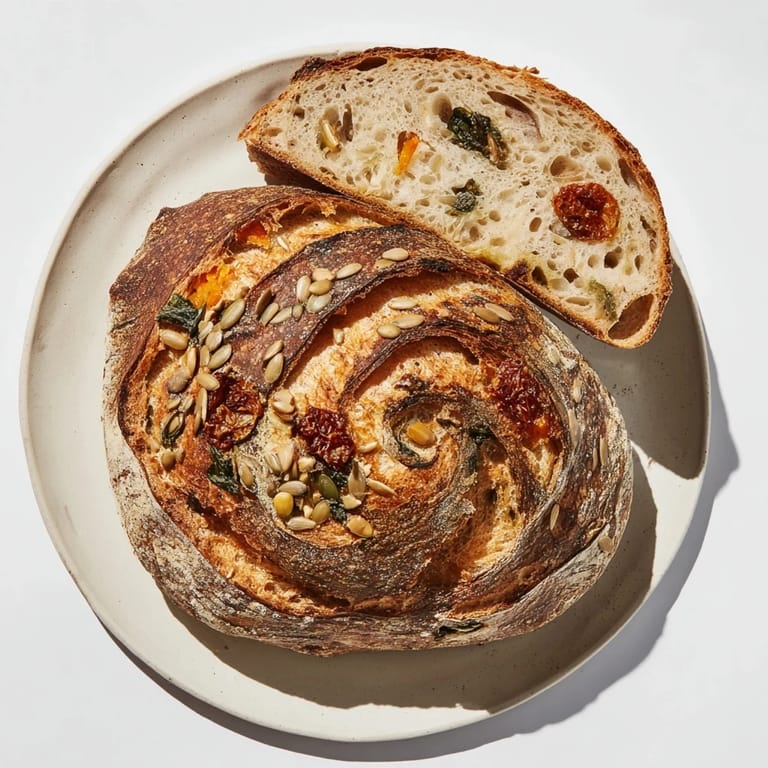
 I'll never forget the afternoon I discovered the Fibonacci spiral in my kitchen—not in a mathematics textbook, but while shaping bread dough. I was experimenting with layering different ingredients into a sourdough, each addition building upon the last, when it suddenly clicked: the ancient spiral pattern that appears in nature could transform a simple loaf into edible art. That day, I created something that looked almost too beautiful to slice, yet tasted even better than it looked.
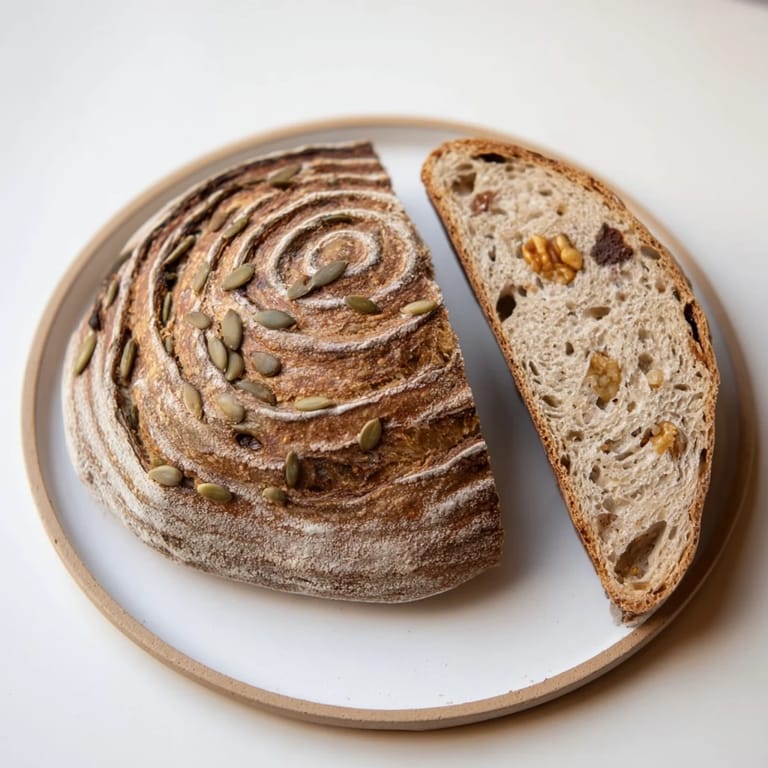
I remember baking this bread for my mother's birthday brunch, and watching her face light up when she saw the cross-section for the first time. She said it looked like art she should hang on the wall rather than eat. By the end of that morning, there was nothing left but crumbs and the happy memory of her breaking bread with us.
Ingredients
- 500 g strong bread flour: This is the backbone—high protein content gives you the structure to support all those delicious additions while still achieving that open, airy crumb
- 350 ml lukewarm water: The ratio here is crucial for creating that perfect sticky dough that will hold everything together
- 100 g active sourdough starter or 7 g instant yeast: If you have sourdough starter, use it—the long fermentation develops complexity that yeast alone can't match, though instant yeast absolutely works if you're just beginning
- 10 g fine sea salt: Don't skip this or reduce it; salt strengthens gluten and brings out the flavors of every layer you'll build
- 15 ml olive oil: Adds richness and keeps the crumb tender as the bread ages
- 20 g toasted sunflower seeds: Start small here—these anchor the first spiral and add a gentle nuttiness
- 30 g chopped walnuts: Toast them lightly if you have time; they deepen in flavor and add textural contrast
- 40 g pumpkin seeds: These grow heartier as the spiral expands, mirroring the Fibonacci pattern itself
- 50 g grated hard cheese (Gruyère or Parmesan): The umami bomb—choose good cheese you'd enjoy eating on its own
- 60 g sun-dried tomatoes, drained: The tanginess here bridges the savory and slightly sweet notes building through the loaf
- 70 g mixed olives, pitted and chopped: Briny and bold, they announce themselves in the final spirals
- 80 g sautéed spinach, well-drained: This is the crown jewel—earthy and rich, it finishes the spiral with elegance and depth
Tired of Takeout? 🥡
Get 10 meals you can make faster than delivery arrives. Seriously.
One email. No spam. Unsubscribe anytime.
Instructions
- Begin with the autolyse—let flour and water become friends:
- In a large bowl, combine flour and water until they're just mixed together—you're not going for smooth yet, just combined. Cover this and walk away for 30 minutes. This rest period does something magical: the flour fully hydrates and the gluten begins organizing itself without any kneading. You'll feel the difference when you return.
- Bring the dough to life:
- Add your sourdough starter (or yeast), salt, and olive oil. Mix everything until a shaggy, sticky dough forms. Now knead on a lightly floured surface for 8–10 minutes. You're looking for smooth, elastic dough that springs back when you poke it. This is where your forearms get a workout, but it's meditative.
- Let time do the heavy lifting:
- Place your dough in a lightly oiled bowl, cover it, and let it rise at room temperature for 8–12 hours. Sourdough is patient—it doesn't care if you check on it every hour or forget about it for a bit. It will roughly double in size, though sourdough rises more subtly than commercial yeast. You'll know it's ready when you poke it gently and the indent stays.
- Divide and conquer:
- Turn your risen dough onto a lightly floured surface and gently divide it into 7 equal portions. Resist the urge to be rough here—you've built so much structure, so treat it kindly.
- Build the spiral with intention:
- This is where the magic happens. Take the smallest portion and gently knead the toasted sunflower seeds into it until they're evenly distributed. Feel how the dough becomes speckled and alive. Move to the next portion and knead in the walnuts, then pumpkin seeds, then cheese, then sun-dried tomatoes, then olives, and finally the sautéed spinach into the largest portion. Each one gets denser, richer, more flavorful—just like Fibonacci intended.
- Roll into ropes and coil into glory:
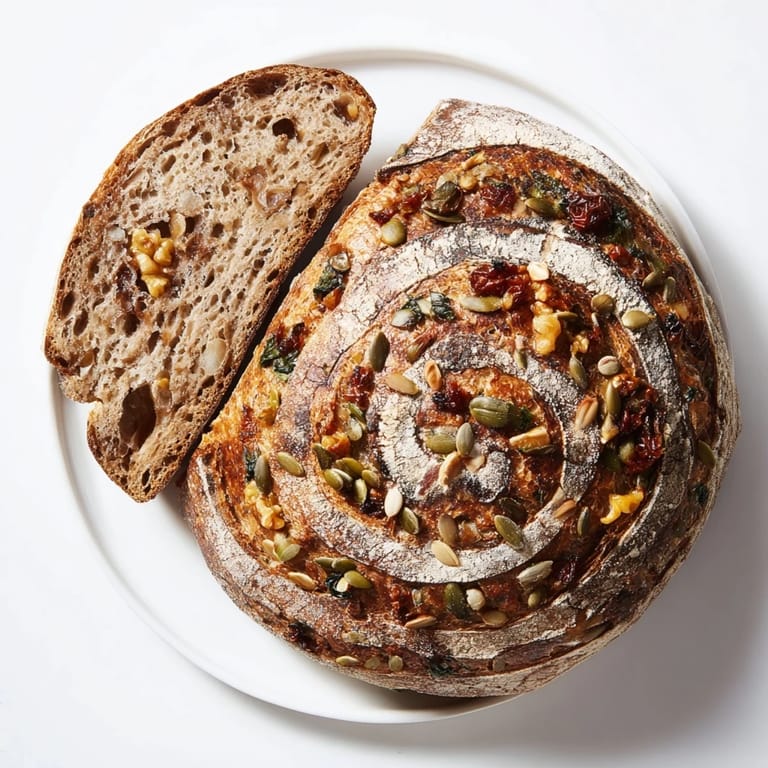
- Roll each portion into a rope shape. Now comes the architectural moment: on a parchment-lined baking sheet, coil the smallest rope around a central point, then wrap the next rope around it, and the next, spiraling outward. Each new rope hugs the previous one, creating that perfect Fibonacci spiral. Press the ends together to seal.
- Final rise with patience:
- Cover your spiral loosely and let it rise for 1.5 hours until it looks puffy and slightly jiggly when you gently shake the pan. It shouldn't double dramatically—just enough to signal it's ready for heat.
- Create steam and heat:
- Preheat your oven to 230°C (445°F) and place an empty tray on the bottom oven rack. Dust your loaf generously with flour. Using a sharp blade or lame, score along the spiral lines in gentle curves—these slashes guide expansion and create that beautiful crust pattern.
- The final transformation:
- Pour a cup of hot water into the preheated tray for steam—this is non-negotiable for crispy crust development. Slide your bread in and bake for 40 minutes, rotating the pan halfway through. You're looking for deep golden brown and a crust that sounds hollow when tapped.
- Rest before the reveal:
- Cool completely on a wire rack before slicing. I know it's torture, but this cooling period sets the crumb structure. Cut into it too soon and you'll have gummy slices. Wait, and you'll have perfect ones.
 Save to Pinterest
 The first time someone asked for a second slice of this bread, I realized it wasn't just the visual spiral that captivated them—it was the journey of flavors, the way each layer told its own story while contributing to something larger. That's when I understood: the Fibonacci spiral isn't just a mathematical pattern; it's a way of building flavor that feels natural, inevitable, and deeply satisfying.
Understanding the Fibonacci Magic
The Fibonacci sequence—where each number is the sum of the two before it (1, 1, 2, 3, 5, 8, 13)—appears everywhere in nature: spiral galaxies, sunflower seed arrangements, ocean waves. When you apply it to bread, increasing the quantity of ingredients as you spiral outward, something remarkable happens. The bread isn't just visually stunning; the flavor architecture mirrors natural growth patterns. You taste the delicate sunflower seeds first, then each subsequent layer builds complexity and richness. It's like eating mathematics in the most delicious way possible, and I love that bakers can use geometry as a flavor-building tool.
Choosing and Preparing Your Additions
The seven spiral segments are designed to be flexible, but there's wisdom in the progression. Start light and delicate, then build toward bold and hearty. I've experimented with different combinations: sometimes I swap the walnuts for almonds, or use fresh herbs instead of spinach. The key is maintaining that increasing density principle. Whatever you choose, prepare everything before you start building your spiral—having toasted seeds, chopped nuts, drained vegetables, and grated cheese ready means you can stay focused on the beautiful work of coiling dough. There's something almost meditative about building layer by layer, knowing each one makes the next one matter more.
Sourdough Versus Commercial Yeast
If you have active sourdough starter, this bread becomes a 13-hour journey that develops such incredible flavor and digestibility. The long fermentation breaks down gluten naturally, creating that open, airy crumb that sourdough is known for. However, if you're using instant yeast, the timeline compresses—you might be slicing this bread in 4–5 hours total instead. The flavor will be more straightforward, less complex, but still absolutely delicious. There's no shame in using yeast; it's just a different story. Both versions will yield stunning spirals and tender crumb. Choose based on your schedule and what you have on hand.
- Sourdough starter needs to be actively bubbly and doubled in size before using—if it looks sluggish, feed it and wait a few hours
- If converting between starter and yeast, remember that 100 g of active starter roughly equals 7 g of instant yeast in rising power, though the timeline differs
- Either way, trust the dough's appearance more than the clock—fermentation speeds vary with kitchen temperature
 Save to Pinterest
 This bread changed how I think about cooking—it reminded me that technique, art, and flavor don't have to compete; they can spiral together into something extraordinary. Make this when you want to feel like an artist in your kitchen.
Recipe Frequently Asked Questions
- → What type of flour is best for this bread?
Strong bread flour is recommended to provide good gluten development for a sturdy yet tender loaf.
- → How do the different spiral segments enhance flavor?
Each segment contains increasing amounts of nuts, seeds, cheese, and vegetables, creating layered textures and progressive flavor intensity in every bite.
- → Can the rising time be adjusted?
While the long ferment (8–12 hours) helps develop flavor and texture, shorter rising may be possible but could affect crumb quality.
- → What is the purpose of steaming the oven?
Adding steam creates a humid baking environment, which helps develop a crisp, golden crust while allowing the loaf to expand properly.
- → Are there substitutions for the cheese layer?
Yes, vegan cheese alternatives can be used or the cheese omitted to suit dietary preferences without sacrificing overall structure.