 Save to Pinterest
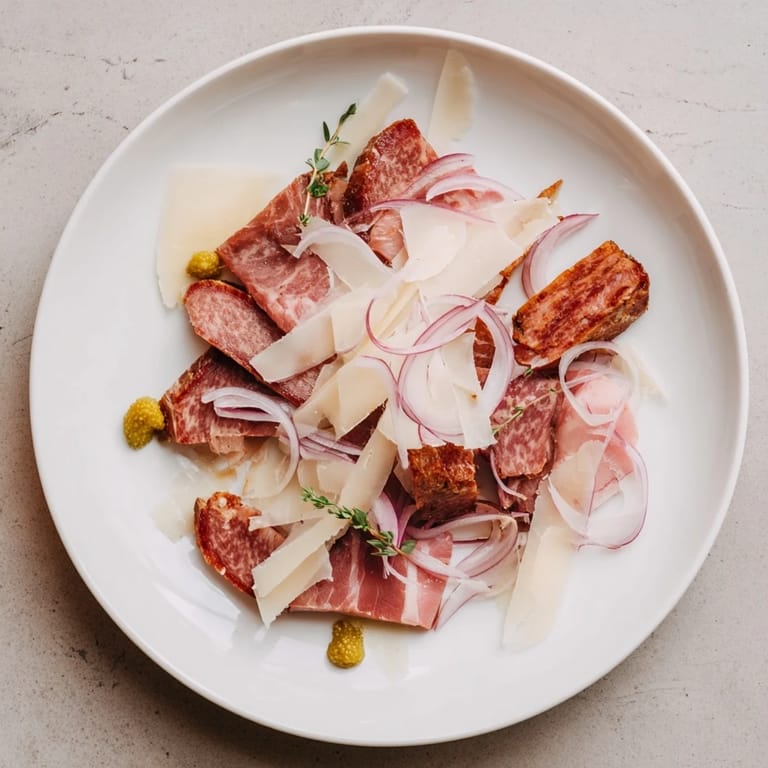
 The first time I assembled a proper charcuterie board, I was nervous about getting it "wrong." My neighbor, who always seemed to make entertaining look effortless, casually mentioned that the secret was mixing textures—rough and delicate, bold and refined. That conversation stuck with me, and when I finally tried layering thick, hand-torn meats alongside gossamer-thin cheese shavings, something clicked. The Burlap & Lace became my go-to platter for unexpected guests, because it somehow feels both approachable and impressive without requiring any actual cooking.
I remember putting this together for a small dinner party on a rainy Sunday, and my friend Sarah kept sneaking pieces of the aged Manchego while I was still arranging it. Watching people naturally gravitate toward different combinations—some loading up on meat, others carefully building little cheese-and-cornichon moments—reminded me that the best platters are the ones people feel invited to explore.
Ingredients
- Smoked beef, 120 g: Hand-tear it for a rustic, generous look that invites guests to do the same. Thickly sliced also works beautifully and is more forgiving if you don't want to shred it by hand.
- Rustic country ham, 120 g: The rough chop matters here—it keeps things looking intentionally imperfect, not pre-packaged and sterile.
- Smoked sausage, 120 g: Cut into thick rounds or wedges; thin slices disappear too quickly and feel less substantial on the board.
- Parmigiano Reggiano, 60 g: Use a vegetable peeler or proper cheese plane to shave it impossibly thin; those delicate shards catch light and add elegance instantly.
- Aged Manchego, 60 g: Similar treatment—thin ribbons that drape softly and look more refined than chunks.
- Gruyère, 60 g: Its nutty edge brings warmth to the spread, and shaving it thin reveals those gorgeous translucent edges.
- Cornichons, 1 small handful: Their briny snap cuts through richness and gives the board visual anchor points of color.
- Red onion, 1 small, thinly sliced: Soften these slightly in a splash of vinegar if you'd like a milder bite, or leave them raw for peppery punch.
- Grainy mustard, 2 tbsp: A dollop strategically placed invites people to experiment; it's a flavor bridge between meats and cheese.
- Fresh thyme or rosemary sprigs, 1 small bunch: Both aroma and garnish—scatter them around to add dimension and hint at what's coming.
- Rustic country loaf or crusty baguette, sliced: Optional, but I always include it because some people want a vehicle for the meats and cheese.
Tired of Takeout? 🥡
Get 10 meals you can make faster than delivery arrives. Seriously.
One email. No spam. Unsubscribe anytime.
Instructions
- Build Your Foundation:
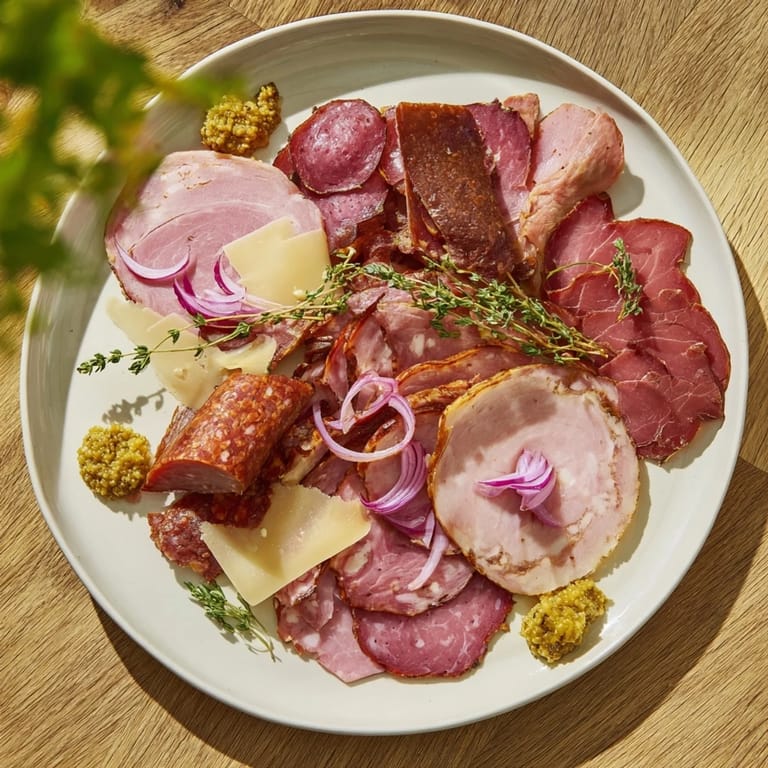
- Arrange the rough-cut meats in overlapping layers or casual mounds on your wooden board or platter, creating natural height variation. Think less symmetrical, more intentional—let the tears and texture show.
- Layer in the Elegance:
- Using a vegetable peeler or cheese plane, shave each cheese into thin, translucent ribbons and drape them artfully over and beside the meats. Work slowly here; watching the shavings curl is meditative and the result is stunning.
- Fill in the Spaces:
- Scatter cornichons and sliced red onion around the board, then add small, strategic dollops of grainy mustard. These elements aren't just flavor—they're visual punctuation.
- Garnish and Finish:
- Tuck fresh thyme or rosemary sprigs throughout for color, aroma, and a hint of rusticity. Step back and look at the whole thing; if something feels unbalanced, adjust.
- Serve with Intention:
- Bring it to the table immediately so the cheeses stay cool and delicate. If including bread, slice it just before serving so it's still warm and inviting.
 Save to Pinterest
 I once made this platter for my sister's book club, and afterward she told me it was the part of the evening where everyone actually paused their conversations. No one was reaching for their phone or anxious about what came next—they were just present, choosing a piece of cheese, a sliver of meat, a cornichon. That's when I realized a good charcuterie board isn't about impressing people; it's about creating a moment where slowing down feels natural.
The Art of Asymmetry
The most important thing I've learned about arranging meat and cheese platters is that perfection is actually boring. When I first started making these, I'd line everything up in neat rows, thinking that looked more professional. Then I watched a friend who grew up in Tuscany casually toss things onto a board with beautiful abandon, and I understood—the roughness is the point. Overlapping layers, a meat hanging slightly off the edge, cheeses draping irregularly—that's what makes it look alive and inviting, not sterile.
Timing and Temperature Play
There's a narrow window where this platter is absolutely perfect, and it's about 15 minutes after assembly. The cheeses have warmed just enough to release their flavor but are still holding their shape beautifully. The meats aren't sweating, the mustard hasn't started to separate, and everything tastes like it was made with intention. If you're making this ahead, assemble the meats and board first, then add cheeses and fresh elements only minutes before serving—your future self will thank you.
Pairing and Improvisation
This board pairs brilliantly with bold red wine or a crisp, dry white, but I've also served it alongside an ice-cold Vermentino on a summer evening, and it felt equally right. The beauty of Burlap & Lace is that it's forgiving and flexible—toasted walnuts add unexpected crunch, dried figs bring sweetness that bridges meats and cheese, and fresh honeycomb, if you can find it, transforms the whole experience into something almost decadent. The structure is solid, but the details are yours to play with based on what you have on hand and what feels right for the moment.
- Try adding toasted walnuts or candied pecans for textural surprise.
- A small dish of honey or fig jam gives people a secret flavor dimension to discover.
- Swap cheeses seasonally—creamy burrata in summer, aged Comté in winter—and let the board evolve with your mood.
 Save to Pinterest
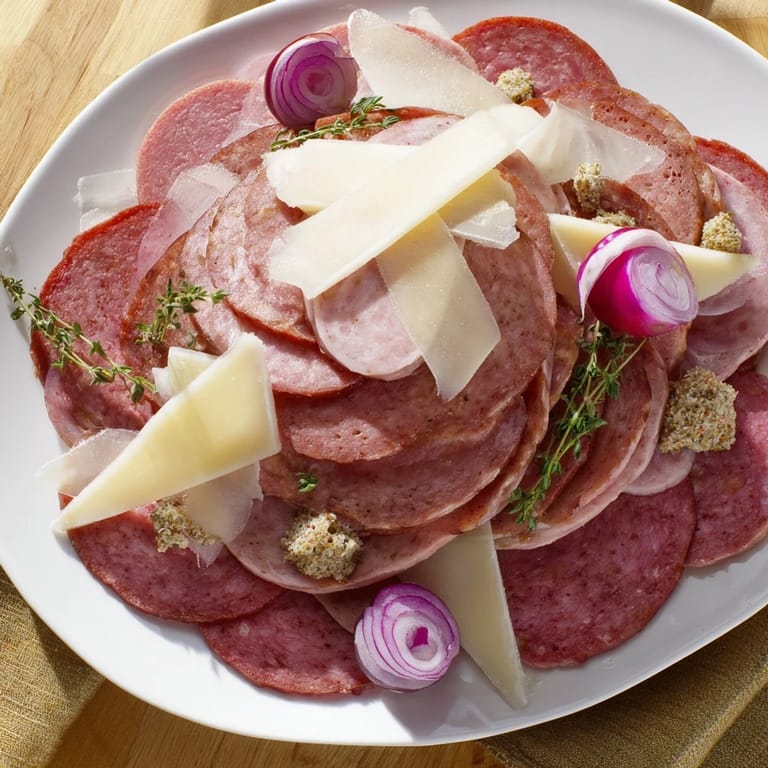
 This is the kind of recipe that feels like it requires technique, but what it really asks for is presence. Slow down while you're shaving the cheese, listen to the quiet scrape of the blade, notice how the translucent edges catch light. That's the real luxury of it.
Recipe Frequently Asked Questions
- → What meats work best for this platter?
Hearty smoked beef, rustic country ham, and smoked sausage provide a balanced mix of textures and flavors that complement the cheeses well.
- → How should the cheeses be prepared?
Use a vegetable peeler or cheese plane to shave the cheeses into thin, translucent ribbons for delicate layering over the meats.
- → Can I add any garnishes to enhance flavor?
Fresh thyme or rosemary sprigs bring aromatic notes, while cornichons, sliced red onion, and grainy mustard add bursts of zesty and tangy flavor.
- → Is bread necessary to serve alongside?
Serving with rustic country loaf or crusty baguette is optional but recommended to complement the robust meats and cheeses.
- → How can I customize the cheese selection?
Substitute with other aged, firm cheeses to suit your taste while maintaining the delicate texture and flavor profile.